9 Signs It's Time to Cut an Energetic Cord

Knowing a cord exists and knowing you're actually ready to release it are two different questions, and most guides online answer only the first one. If you've already recognized the signs of an energetic cord and you're wondering whether now is the moment to actually do something about it, these nine signals point to genuine readiness, not just awareness. A few of these might surprise you, especially the ones about why you formed the cord in the first place.
1. Awareness Alone Has Stopped Being Enough
Recognizing the pattern used to bring some relief. Now, simply naming it — "oh, that's the cord again" — doesn't change how it feels. When insight stops doing the work insight used to do, that's usually a sign the next step is action, not more understanding.
2. You've Done the Emotional Processing, and the Pull Is Still There
This is one of the clearest and most reliable signals. You've grieved, journaled, talked it through with a therapist or a friend, made peace with what happened, and the pull is still active anyway. Cord work tends to be most effective after emotional processing, not as a substitute for it, so if you've genuinely done that work and something is still tugging, the cord itself, rather than unresolved feeling, is likely what's left to address.
3. The Connection Has Become One-Directional
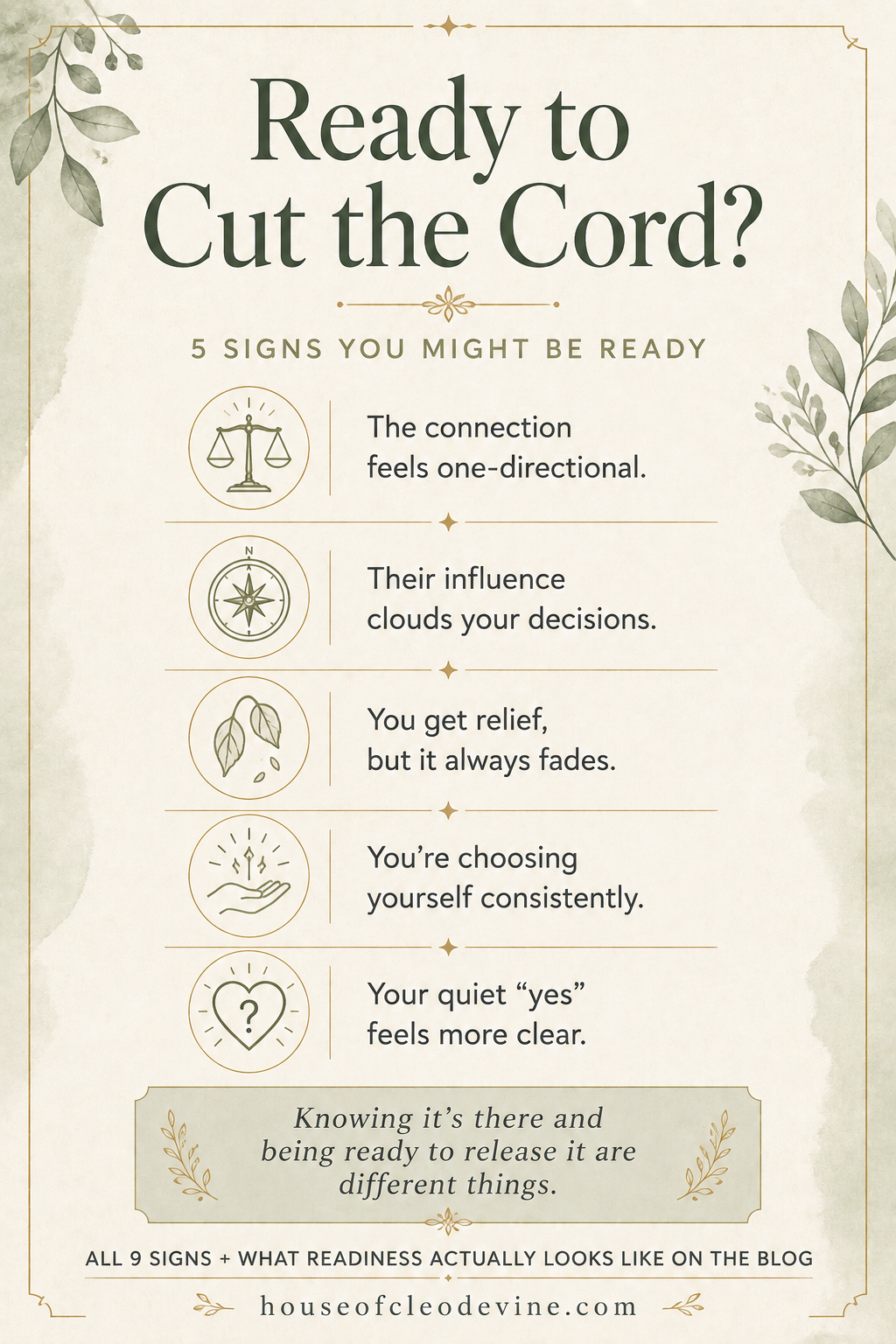
Every cord isn't a problem. What tends to indicate it's time to release one is a clear energetic imbalance — you're giving far more than you're receiving, thinking about them constantly while they've apparently moved on, or carrying emotional weight from a relationship that isn't reciprocating any care back to you. A cord that feels mutual and warm rarely needs urgent release. One that feels one-sided and draining usually does.
4. It's Interfering With Something You Actually Want
Not vague "personal growth," but something specific: a new relationship that keeps stalling because part of you is still elsewhere, a decision you can't make because you're weighing their imagined reaction, an opportunity you're hesitant to take because it would mean truly letting go. When a lingering connection starts costing you something concrete in your present life, that's a strong practical case for release, separate from how spiritually significant the cord feels.
5. You're Making Decisions Based on What They Might Think or Feel
This is subtler than obsessive thinking, and it's worth watching for specifically. If you find yourself editing your choices, your social media, or even your mood around an imagined version of their reaction, that's the cord functioning as a kind of invisible audience in your decision-making. Releasing it often restores a sense of making choices for yourself again, rather than for an audience of one who may not even know they're watching.
6. Light Release Practices Only Bring Temporary Relief
A salt bath, a journaling session, a quick guided visualization: if these genuinely help but the pull returns within days, it's a sign the connection may be a deeper cord rather than a surface-level psychic tie, and it likely needs more thorough, intentional release work rather than repeating the same light practice and expecting a different result.
7. You Understand Why You Formed (or Kept) the Cord — and You're Ready to Let That Reason Go
This is the sign most guides skip entirely, and it might be the most important one. Cords don't form randomly; they served a purpose, whether that was safety, comfort, identity, or simply not being alone with a painful ending. Genuine readiness usually includes some honest reckoning with what the connection gave you and a real willingness to live without that particular source of it. If you haven't yet identified what the cord was doing for you, it's worth sitting with that question before the ritual, not just what you want to be free of, but what you're actually asking yourself to give up.
8. Physical or Energetic Symptoms Are Increasing, Not Fading
Fatigue, tightness in the chest, disrupted sleep, a heaviness that shows up around specific triggers. If these have been present for a while and are getting worse rather than gradually easing, that trajectory, worsening rather than settling, is generally a stronger signal for intentional release than the mere presence of symptoms on their own.
9. When You Imagine Actually Cutting It, You Feel a Quiet Yes
This is worth checking honestly, because a lot of people move toward cord-cutting work while still deeply ambivalent, hoping the ritual will somehow preserve a version of the connection while removing only the painful part. If picturing the release brings something more like a settled clarity than a flinch of resistance or a hidden hope for reconnection, that's a genuine readiness signal worth trusting. If it brings up more hesitation than relief, that ambivalence deserves attention first. Cord work done with a fully unresolved "but what if" tends to be less effective than work done with clear intention.
What If You're Not Sure Yet?
If several of these don't quite fit, that's useful information, not failure. It may mean you need more time processing the emotional side before the ritual will land the way you want it to, or that what you're carrying is genuinely mutual and healthy rather than something urgently needing release. There's no prize for cutting a cord before you're ready, and forcing the timing rarely makes the release stick.
Frequently Asked Questions
How is this different from just checking if I have an energetic cord at all? Recognizing that a cord exists and recognizing that you're ready to release it are separate questions. You can be aware of a cord for a long time before you're actually ready to do the release work, and that gap is normal, not a problem to fix quickly.
Can I cut a cord even if I still love the person? Yes. Cord work releases the compulsive, draining, or imbalanced part of a connection, not the love or the memory. Many people describe feeling more at peace with someone after a release, not less connected to what the relationship meant.
What if I do the ritual and I'm still not sure it "took"? This is common, and it's often a sign the light version of the work addressed a surface-level tie rather than a deeper cord, or that some emotional processing is still needed alongside the ritual. It doesn't necessarily mean the practice failed.
Is it possible to cut a cord too soon? Yes, in the sense that a ritual done with real ambivalence, especially a hidden hope for reconnection, tends to be less effective than one done with settled intention. There's no harm in waiting until the "quiet yes" feels more present than the hesitation.
Do I need to know exactly why the cord formed before I can release it? Not exactly, but having some honest sense of what the connection was giving you tends to make the release more thorough. If you skip this step entirely, the same kind of cord can sometimes re-form in a new relationship that serves the same unmet need.
How often is it normal to need cord-cutting work? This varies. Some people do meaningful release work once for a specific relationship and feel done. Others find that certain patterns, particularly with family or repeating relationship dynamics, call for occasional maintenance release rather than a single, final cut.
Readiness isn't about hitting every sign perfectly. It's about recognizing that awareness has done what it can, and that what's left is a decision. If several of these signs are resonating, that's usually enough to trust.
If you're ready to move forward, the Cord Cutting Session is built for exactly this kind of considered, ready release. And if you cut the cord and want to know what to actually expect afterward, Signs a Cord Cutting Worked (and What Happens Afterward) walks through what genuine release tends to feel like.
Further Reading From House of Cleo Devine
11 Signs You Have an Energetic Cord With SomeoneThe natural companion piece for readers who haven't yet confirmed a cord exists before assessing readiness to release it.
How to Cut Energetic Cords and Heal Soul Ties After a BreakupThe practical ritual guide for readers who've confirmed they're ready, based on the signs in this piece.
The Difference Between an Energy Cleanse and a Cord Cutting (And When You Need Each One)Helps readers who are ready decide which specific service actually fits.
Grief, Trauma Bonding, or Energetic Cord? How to Tell What You're Actually FeelingImportant for readers whose "processing" (sign #2) may not be as complete as it feels, particularly if a trauma-bond pattern is involved.