
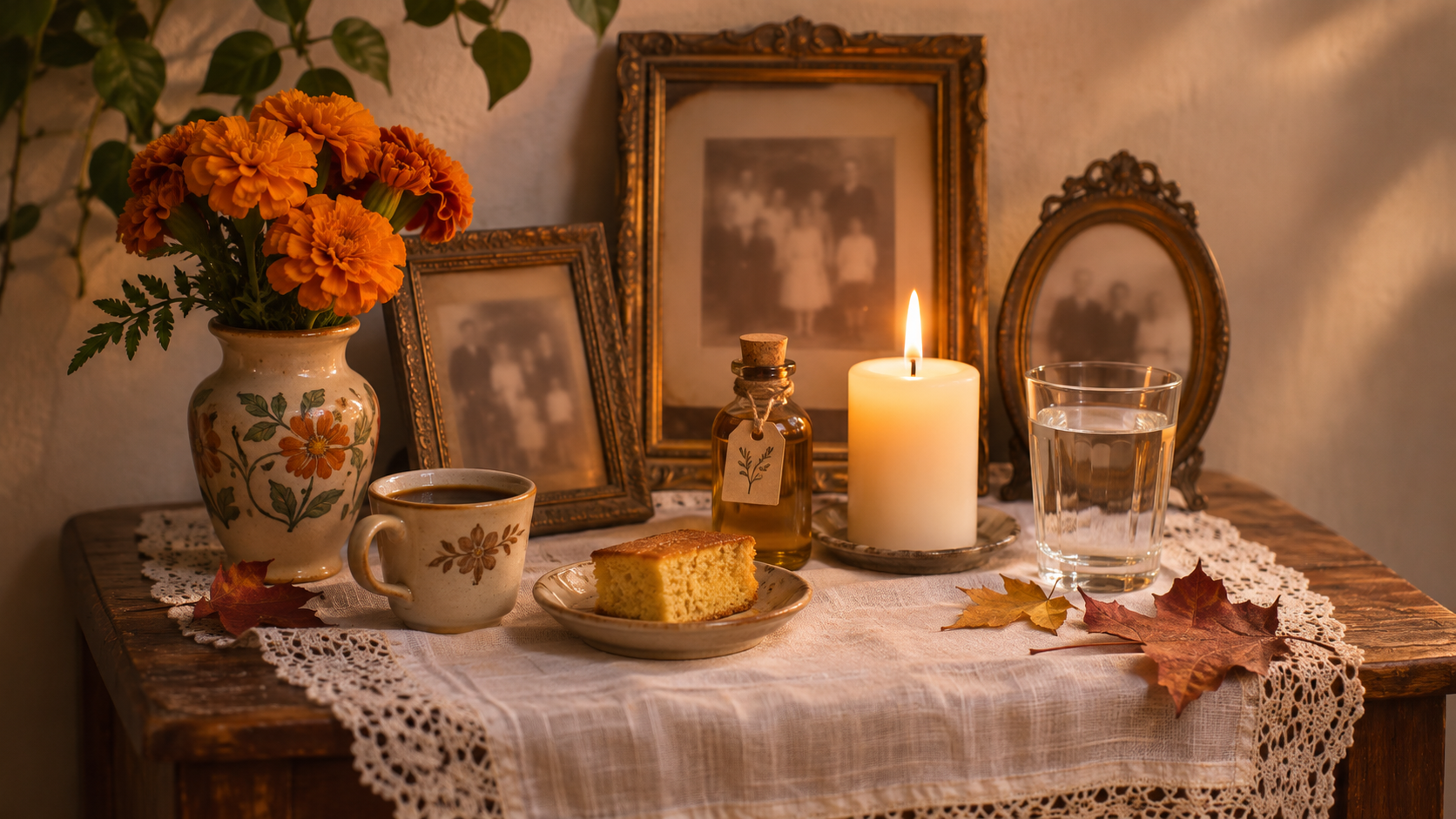
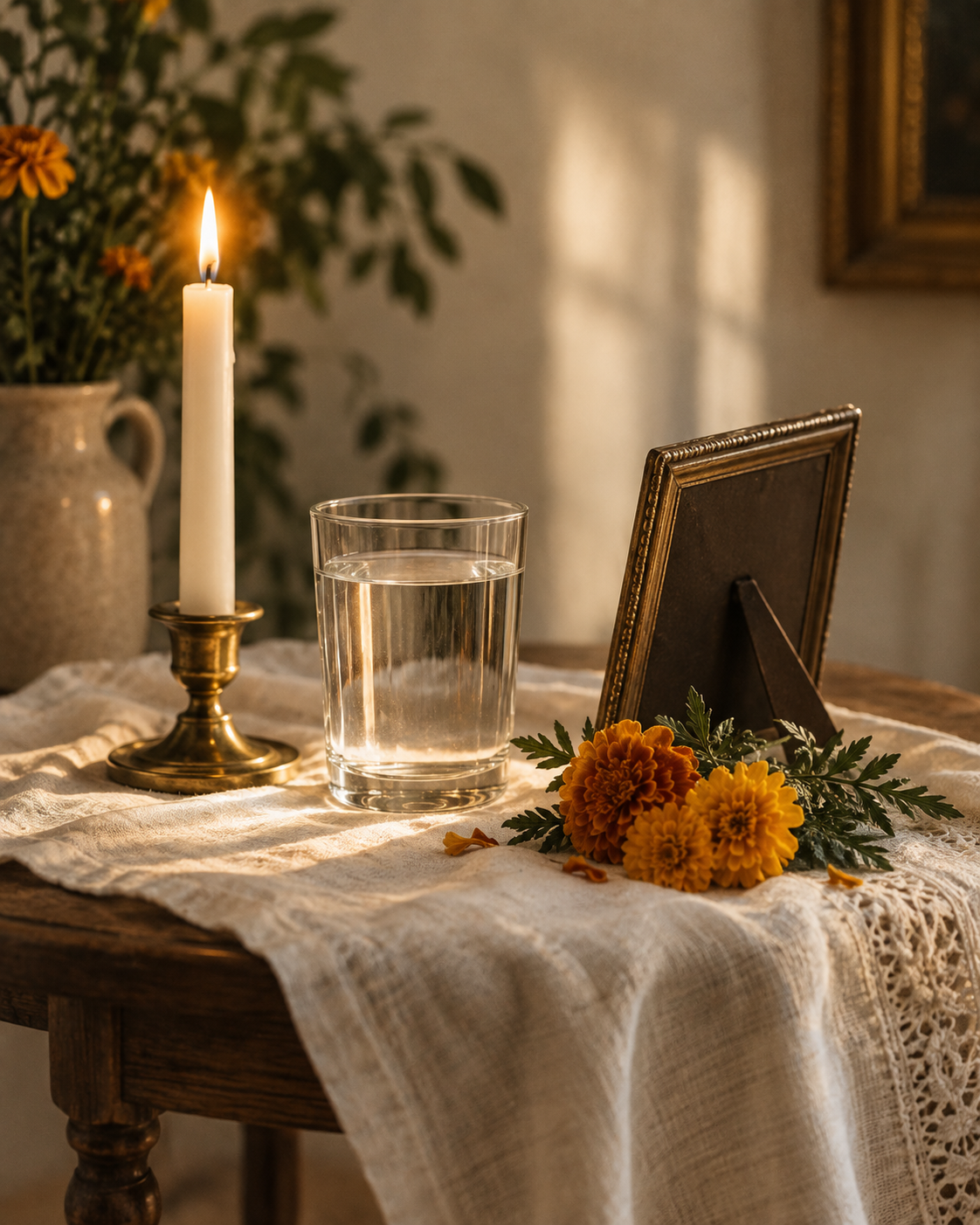
Quick answer: An ancestor altar is a small, dedicated space in your home for remembering and honoring people who came before you. To build one, choose a quiet surface, cleanse it, add photos or written names, a white candle, a glass of fresh water and a simple offering. Then speak to your ancestors by name. All Souls' Day, November 2, is a traditional day to begin, but you can keep an ancestor altar all year.
The leaves are down. The nights come early. And for many of us, the people we have lost feel closer than they have all year. A grandmother's recipe suddenly matters again. A song comes on, and you can almost hear your father humming it.
That feeling is old. People have honored their dead at this time of year for centuries. Samhain on October 31, All Saints' Day on November 1, All Souls' Day on November 2, and Día de los Muertos across the first days of November all hold the same truth at their center: love does not end when a life does.
An ancestor altar gives that love somewhere to go.
What is an ancestor altar?
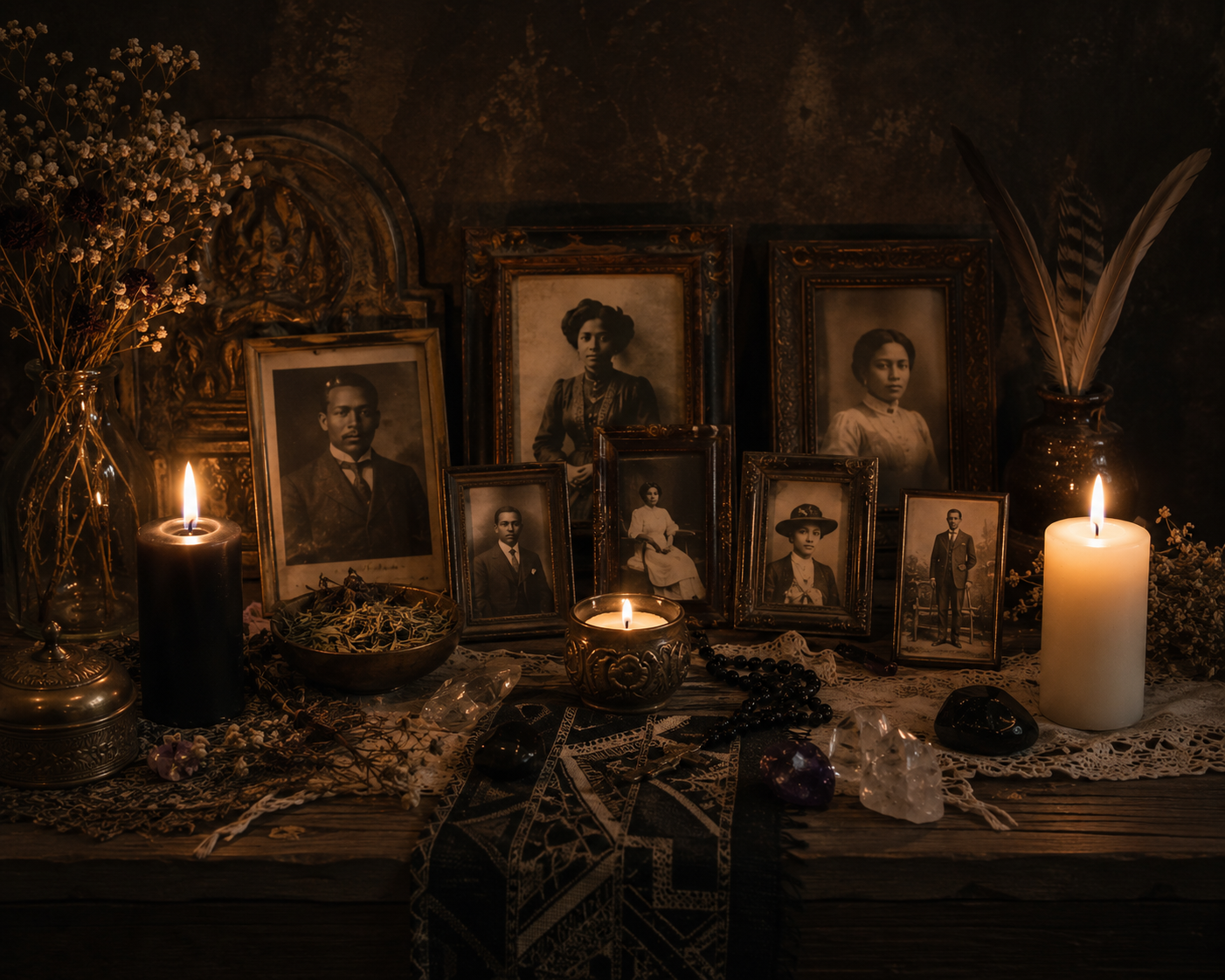
An ancestor altar is a dedicated space for remembering, honoring and speaking with those who came before you. That can include family, chosen family, and spiritual or cultural ancestors.
It does not need to be large or expensive. A windowsill, the top of a dresser or a small shelf is enough. What matters is that the space is set apart, kept clean and tended with intention.
Many traditions keep ancestor altars, and each has its own customs. If your family or culture has a tradition, start there. Día de los Muertos ofrendas, for example, have deep roots and specific meanings in Mexican culture. This guide offers a simple, general practice that anyone can begin with, and it is not a replacement for those traditions.
How to build an ancestor altar, step by step
1. Choose the place
Pick a surface that will not be disturbed and that you will see often. Avoid the bedroom if you can, so rest and remembrance stay separate. Many people choose a space near a window or in a quiet corner of the living room.
2. Cleanse it first
Wipe the surface with salt water or a cleansing wash. Open a window. Ring a bell or clap through the space to break up stagnant energy.
If your home has felt heavy lately, or you have been through a hard season of loss, cleanse yourself as well. Our Uncrossing Spiritual Cleansing Oil is worked for clearing deep, lingering heaviness when a simple cleanse does not seem to reach it.
3. Lay a cloth
A white cloth is traditional for peace and clarity. You can also use a cloth that belonged to someone you are honoring, such as a scarf, a handkerchief or a table runner from a family home.
4. Add photos or names
Place photos of the people you want to honor. If you have no photos, write their names on paper in your own hand. You can also include ancestors you never knew by writing "my ancestors of blood and spirit."
Only place the photos of people who have passed. Keep photos of the living elsewhere.
5. Light a white candle
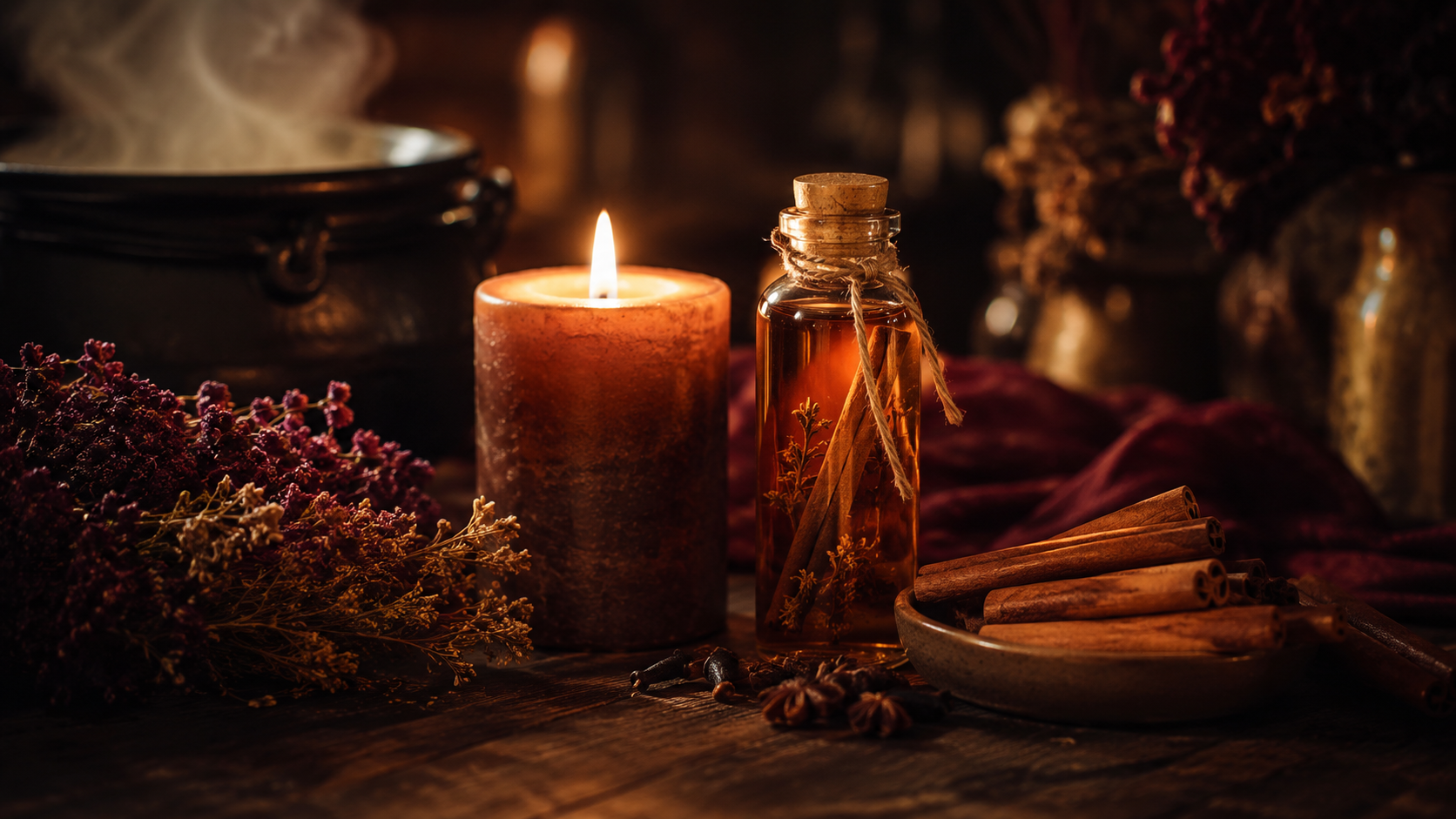
A white candle is the heart of most ancestor altars. Before you light it, anoint it with an oil that matches your intention.
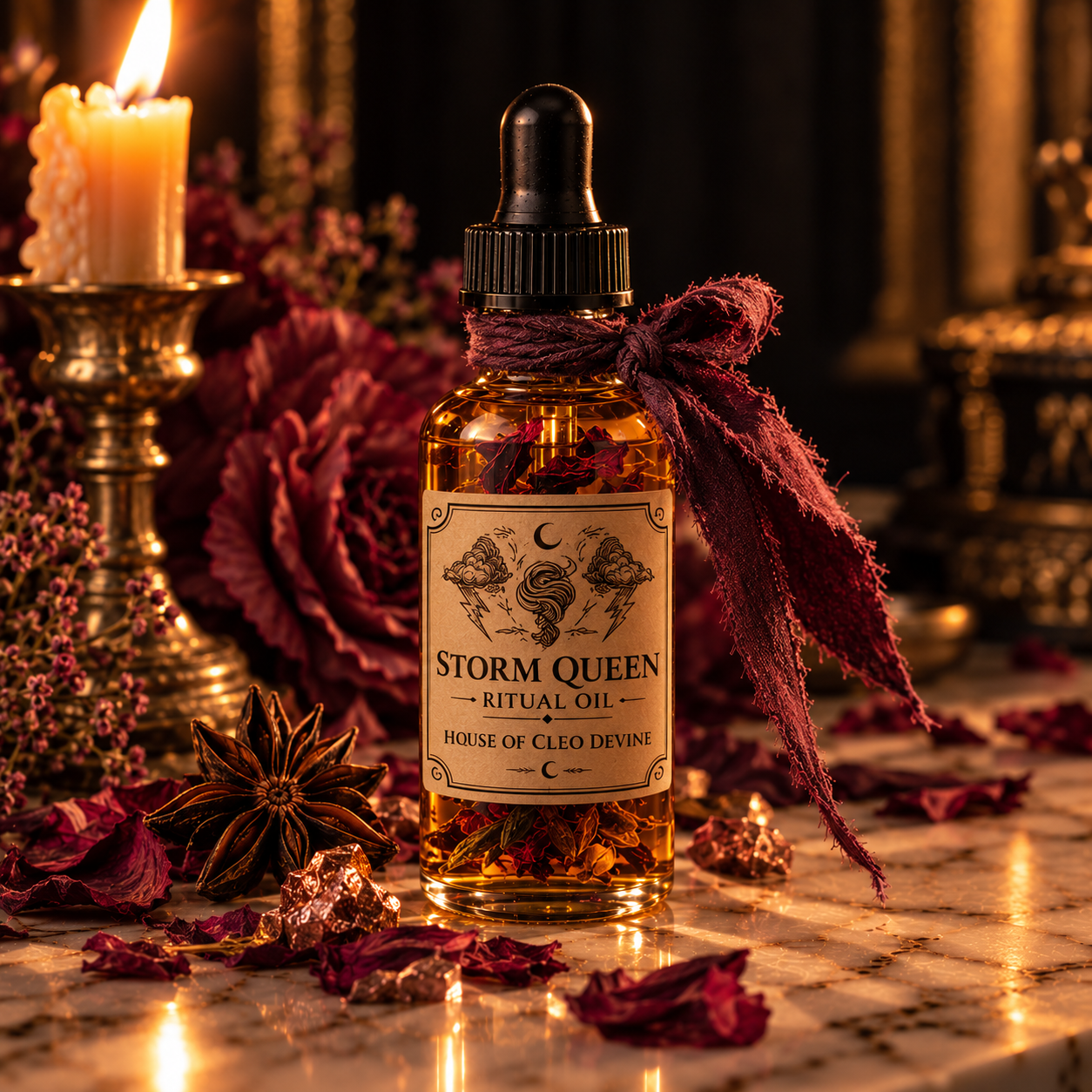
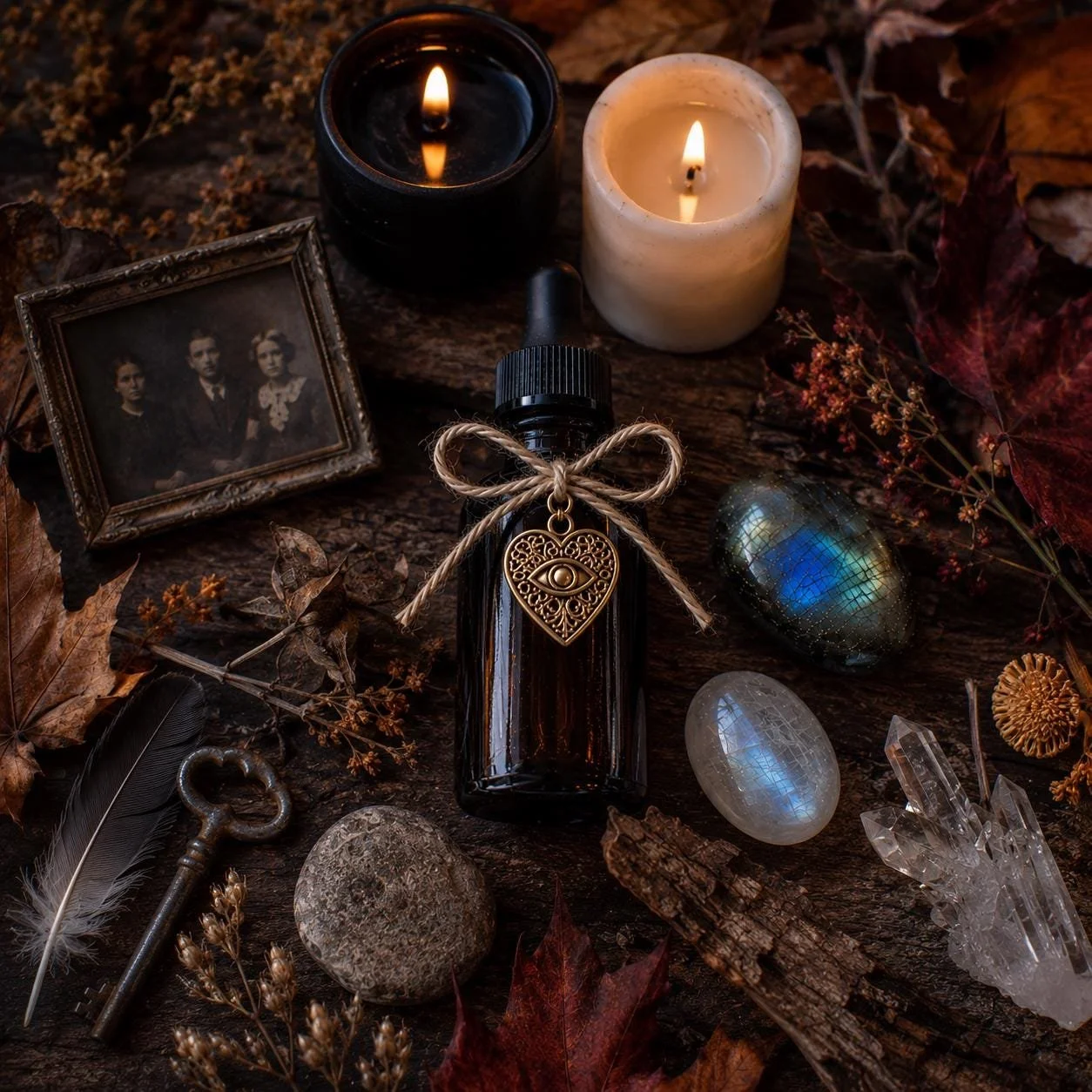
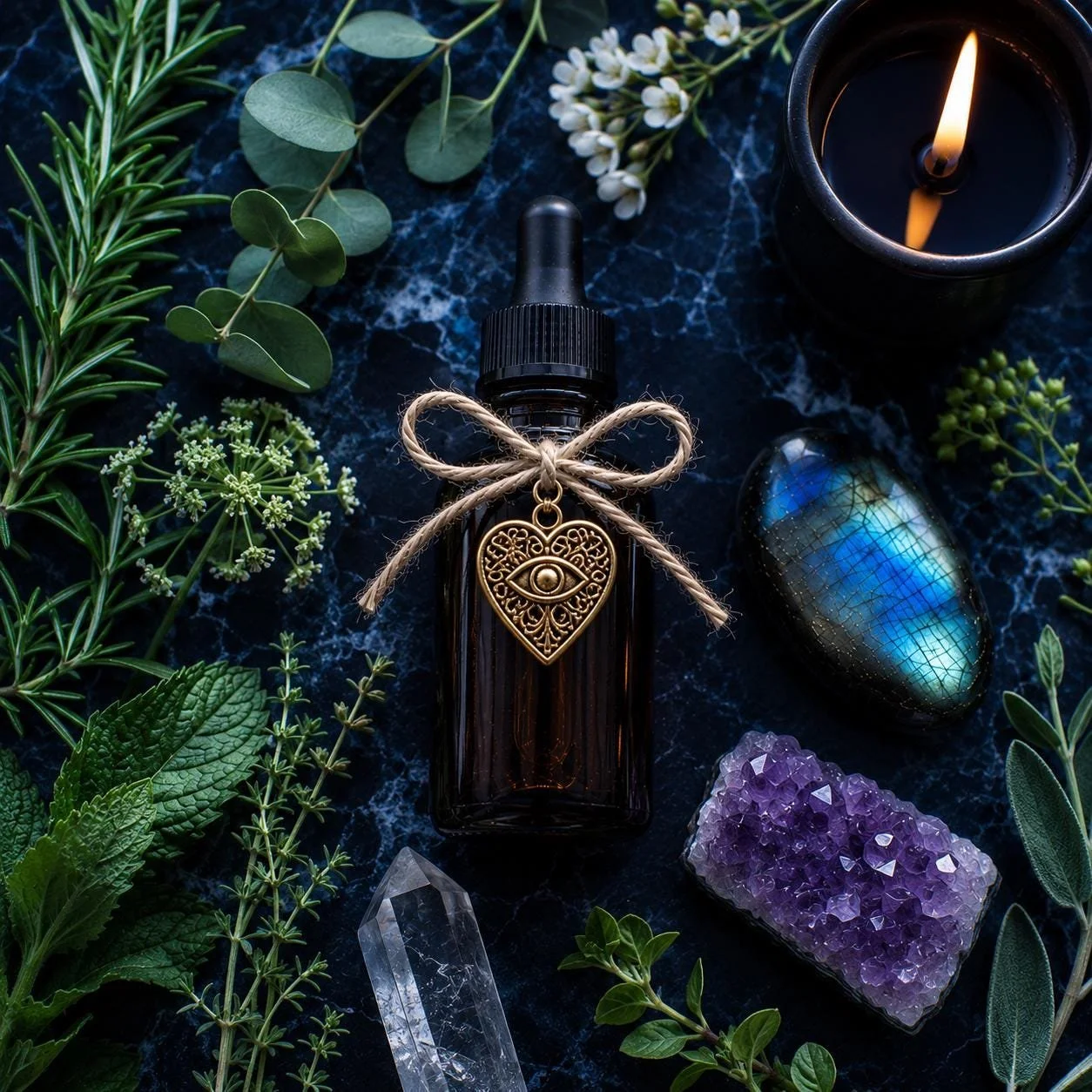
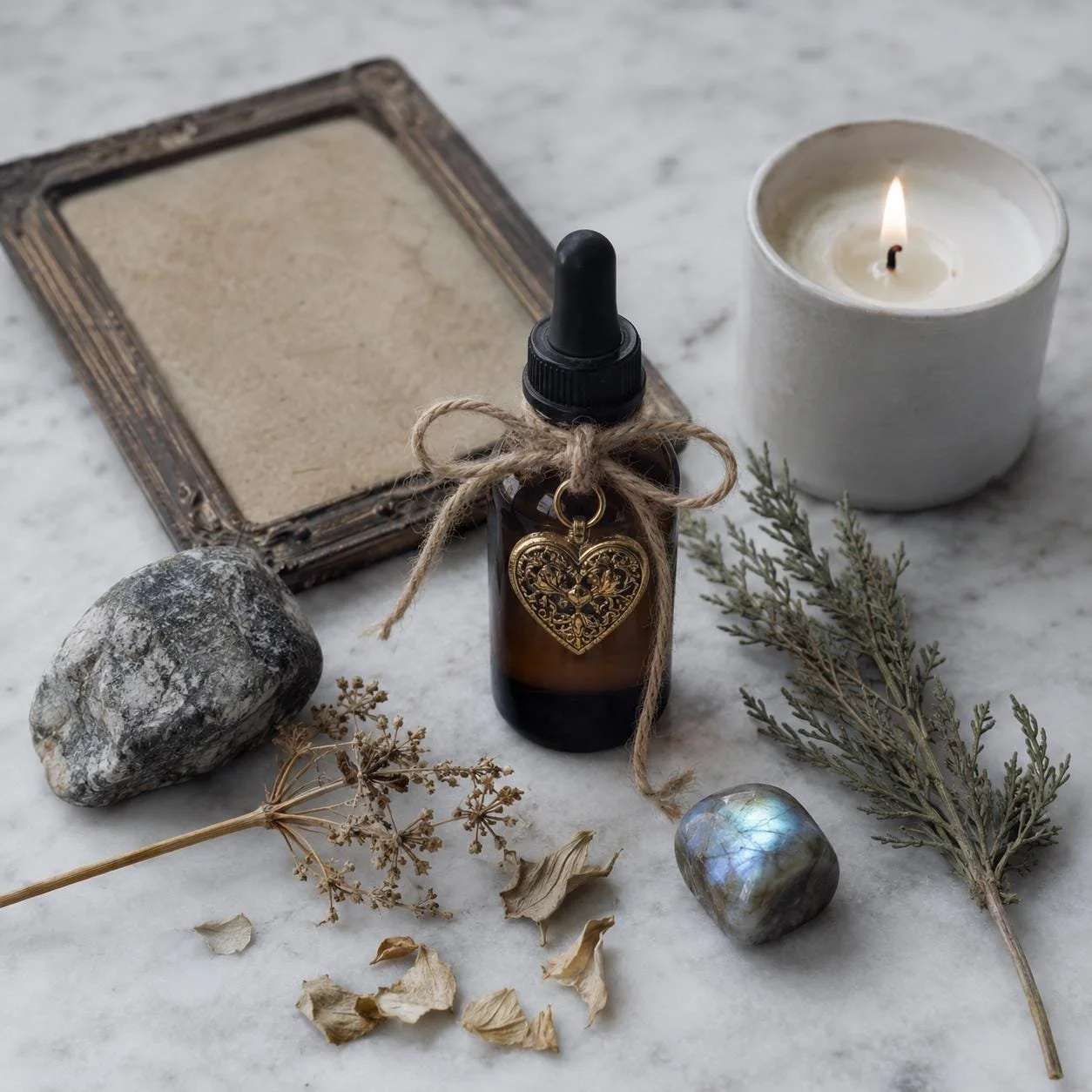
Queen of the Great Below, our Ereshkigal oil, is for grief and honoring the dead with dignity. Pomegranate Queen, our Persephone oil, is for connection between the worlds. Keys of Hekate honors the goddess of crossroads and spirits, who traditionally guides souls between the living and the dead.
6. Pour fresh water
A clear glass of fresh water is one of the oldest offerings. It is said to refresh the spirits and give them a place to rest. Change it at least once a week.
7. Offer what they loved
Coffee with too much sugar. A slice of cornbread. Their brand of cigarettes. Marigolds, or whatever flowers they kept in the yard. Small, personal offerings tend to mean more than elaborate ones.
Remove food offerings before they spoil. Many people leave them for a day, then return them to the earth or dispose of them respectfully.
8. Speak to them
Sit in front of the altar. Say each name aloud. Tell them what is happening in your life, thank them, and ask for their guidance and protection if you wish.
You do not need special words. Speak the way you would have spoken to them at the kitchen table.
What if the relationship was difficult?
Not every ancestor was kind, and you are not obligated to honor anyone who caused harm.
You can honor your lineage as a whole, and your well and loving ancestors in particular, without inviting in anyone who hurt you. Name only those you want present. If you want to state it clearly, say: "Only those who love me and wish me well are welcome here."
To add a protective boundary around your altar, Mother of Night, our Nyx oil, is made for protection in the dark. Anoint the four corners of the altar cloth with it.
How to keep your ancestor altar going
An altar is a relationship, not a decoration. Once a week, change the water, dust the surface and light the candle for a few minutes. Speak to your ancestors on birthdays, anniversaries and holidays, or whenever you need them.
If an altar ever feels heavy rather than peaceful, clean it, change the water and start fresh.
Grief can surface in unexpected ways when you begin this work. An altar is a place to hold it, but it is not meant to carry everything. If your grief feels overwhelming, reach out to someone you trust or a grief counselor as well.
Want help with ancestor work?
If you are not sure where to begin, or you want guidance on a specific situation, such as a difficult ancestor, a recent loss or a sense of being blocked by your lineage, send us a private inquiry. Inquiries are answered within 24-48 hours, Monday through Friday.
Frequently asked questions
When is All Souls' Day in 2026? All Souls' Day is Monday, November 2, 2026. It follows All Saints' Day on November 1.
What do you put on an ancestor altar? The basics are a clean cloth, photos or written names, a white candle, a glass of fresh water and a small offering of food, drink or flowers your ancestors enjoyed.
What is the difference between All Souls' Day, Día de los Muertos and Samhain? All Souls' Day is a Christian day of prayer for the dead, held on November 2. Día de los Muertos is a Mexican tradition celebrated around November 1–2, with ofrendas and family gatherings. Samhain is a Gaelic festival on October 31 that marks the turn toward winter. All three honor the dead at the same time of year.
Do I need to be religious to have an ancestor altar? No. Ancestor altars are kept by people of many faiths and of none. The practice is about remembrance, gratitude and connection.
Can I honor ancestors I never knew? Yes. Write "my ancestors of blood and spirit" on a slip of paper to include everyone who came before you, named and unnamed.
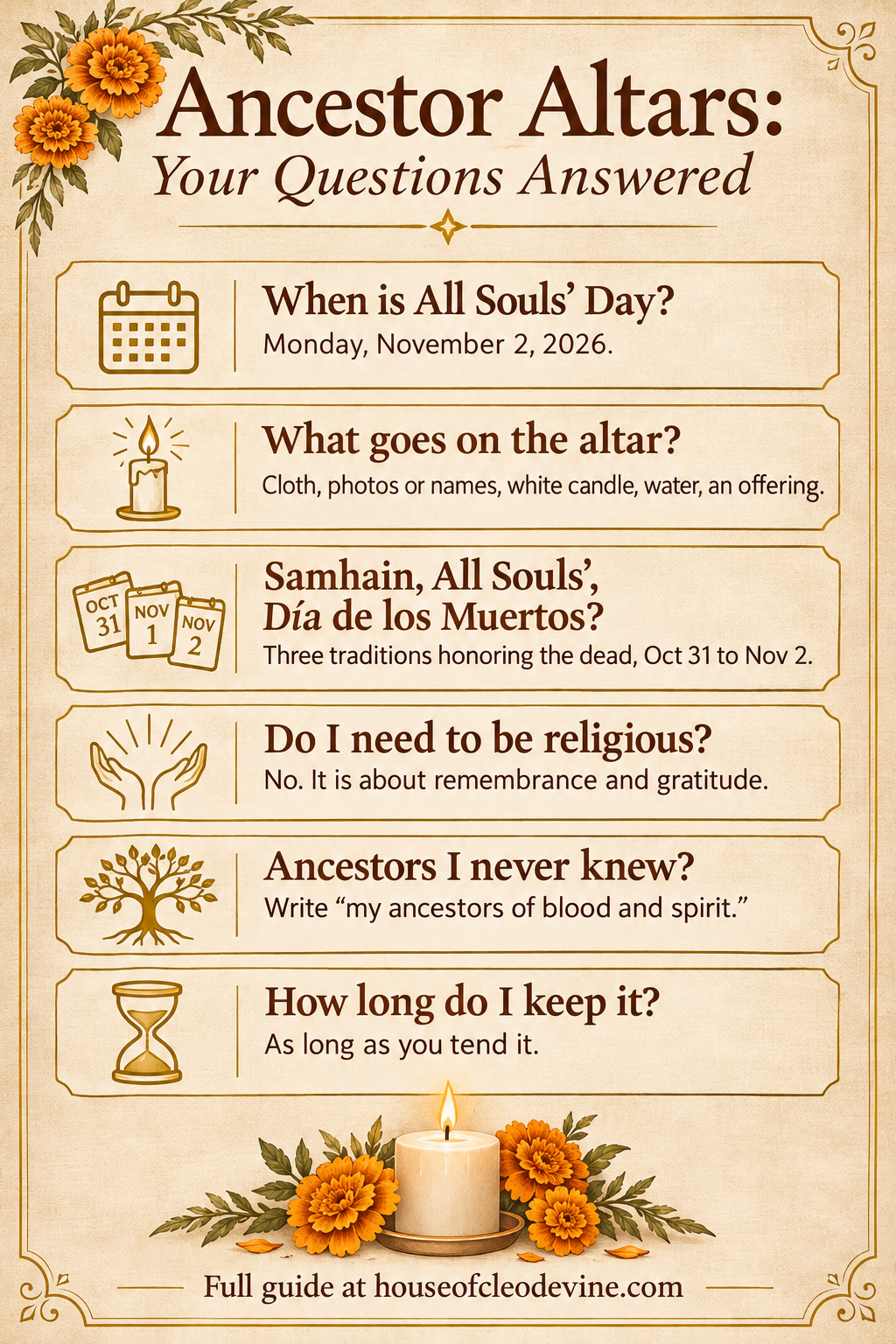

How long should I keep an ancestor altar up? As long as you want to tend it. Some people build one only for early November. Others keep a permanent altar and refresh it weekly.
For the seasons when the work is not to escape the dark, but to learn how to stand inside it. Queen of the Great Below is made for grief rituals, honoring loss and pain, underworld work, shadow work, grounding, endings, and finding your roots when life has stripped something away.