

How to Build an Ancestor Altar: A Beginner's Guide to Ancestral Practice
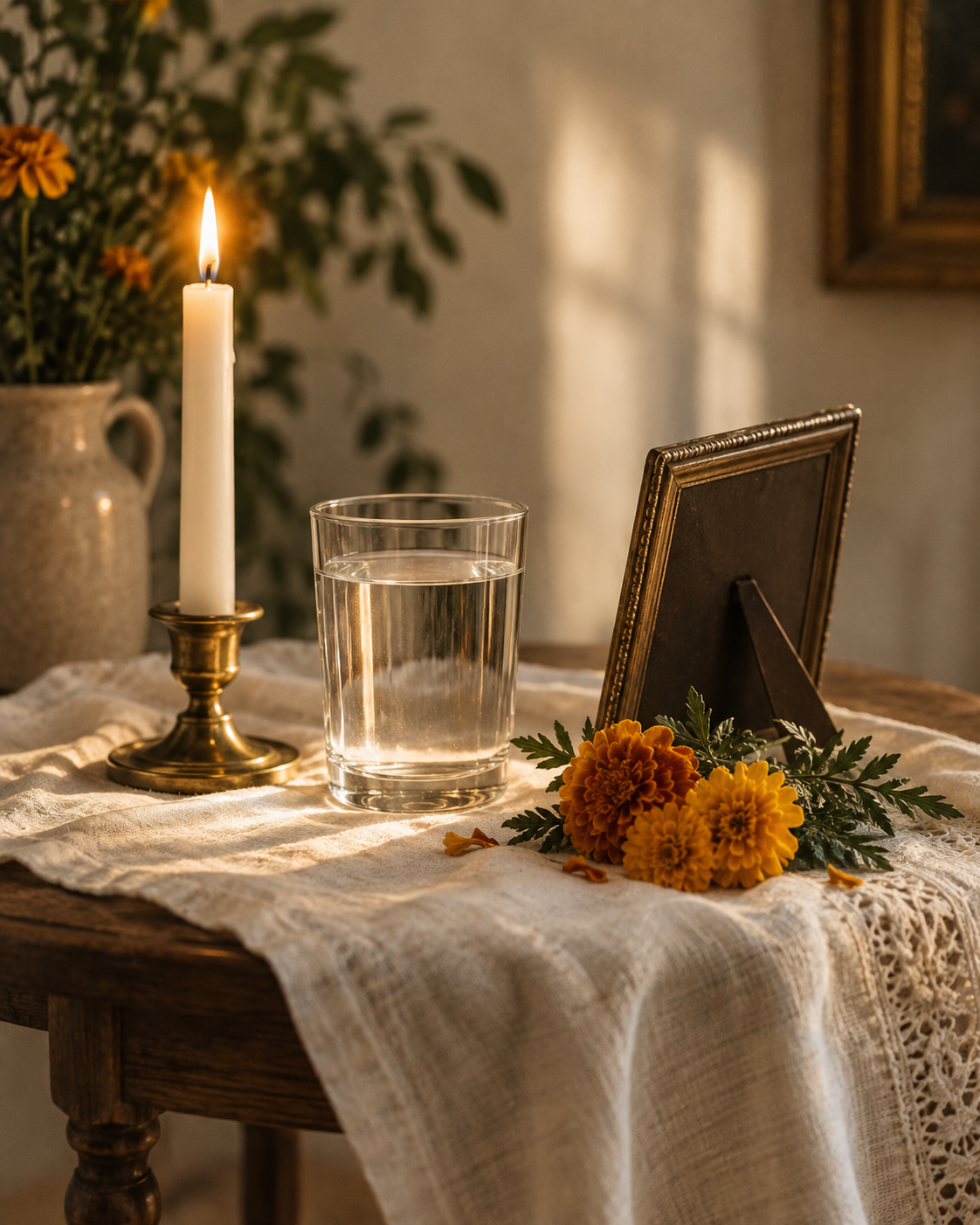
An ancestor altar isn't a shrine to the dead in the way that phrase might first suggest. It's closer to a standing invitation, a dedicated space that says, plainly, I remember you, I'm listening, walk with me. If you're building your first one, here's how to do it thoughtfully, including where this specific practice actually comes from and how to hold it with the respect its history deserves.
What an Ancestor Altar Actually Is
An ancestor altar, sometimes called a table or a shrine, is a dedicated space for honoring, communicating with, and making offerings to those who came before you. Within the Hoodoo tradition specifically, it's worth naming an important distinction many newcomers miss: ancestors are venerated, not worshipped. Worship, within this framework, is reserved for the Divine; ancestors are honored as respected family members who have transitioned and are understood to now hold a kind of spiritual wisdom and clarity beyond what the living currently have access to. That distinction matters, both spiritually and as a matter of getting the practice right.
Where This Practice Comes From
This is worth being direct about, because ancestor veneration carries real historical weight that deserves more than a passing mention. According to the National Park Service's documentation of Hoodoo as an African American religious tradition, Hoodoo developed among enslaved Africans in North America, drawing on Central and West African religious practices, including the veneration of African ancestors, and blending with Christianity under conditions where practicing African traditions was often criminalized outright by slave codes.
Because of this, early ancestor veneration frequently had to happen in secret. Practitioners built altars outdoors, in the woods or near water sources, places they could commune with ancestors away from watching eyes, sometimes disguising these spaces as ordinary offerings to nature or to Christian saints. Over generations, as circumstances changed, these practices gradually moved indoors, but the core relationship, the understanding that the dead remain active, present participants in the life of the living, endured and continues today.
This history isn't incidental background. It's part of why the practice looks the way it does: simple, portable, adaptable, built to survive being hidden. Understanding that gives the altar you build real weight beyond its physical materials.
A Note on Other Ancestral Traditions
Ancestor veneration exists across many distinct cultures and traditions, and it's worth being clear that this guide focuses specifically on the Hoodoo approach rather than presenting ancestor work as one interchangeable practice. Within more structured Yoruba-based traditions, ancestral work develops into what's known as an Egun shrine, following specific spiritual protocols and lineage requirements that go well beyond what's covered here. Vodou and Espiritismo have their own distinct ancestral practices and structures. East Asian ancestral traditions often involve more formally structured altars, including named tablets for the deceased and carefully prescribed food offerings following their own cultural protocols. If any of these traditions are part of your own heritage or practice, they deserve their own dedicated guidance from within that tradition, rather than being folded into the Hoodoo-specific approach described here.
The Four Elements: A Simple Structure to Build From
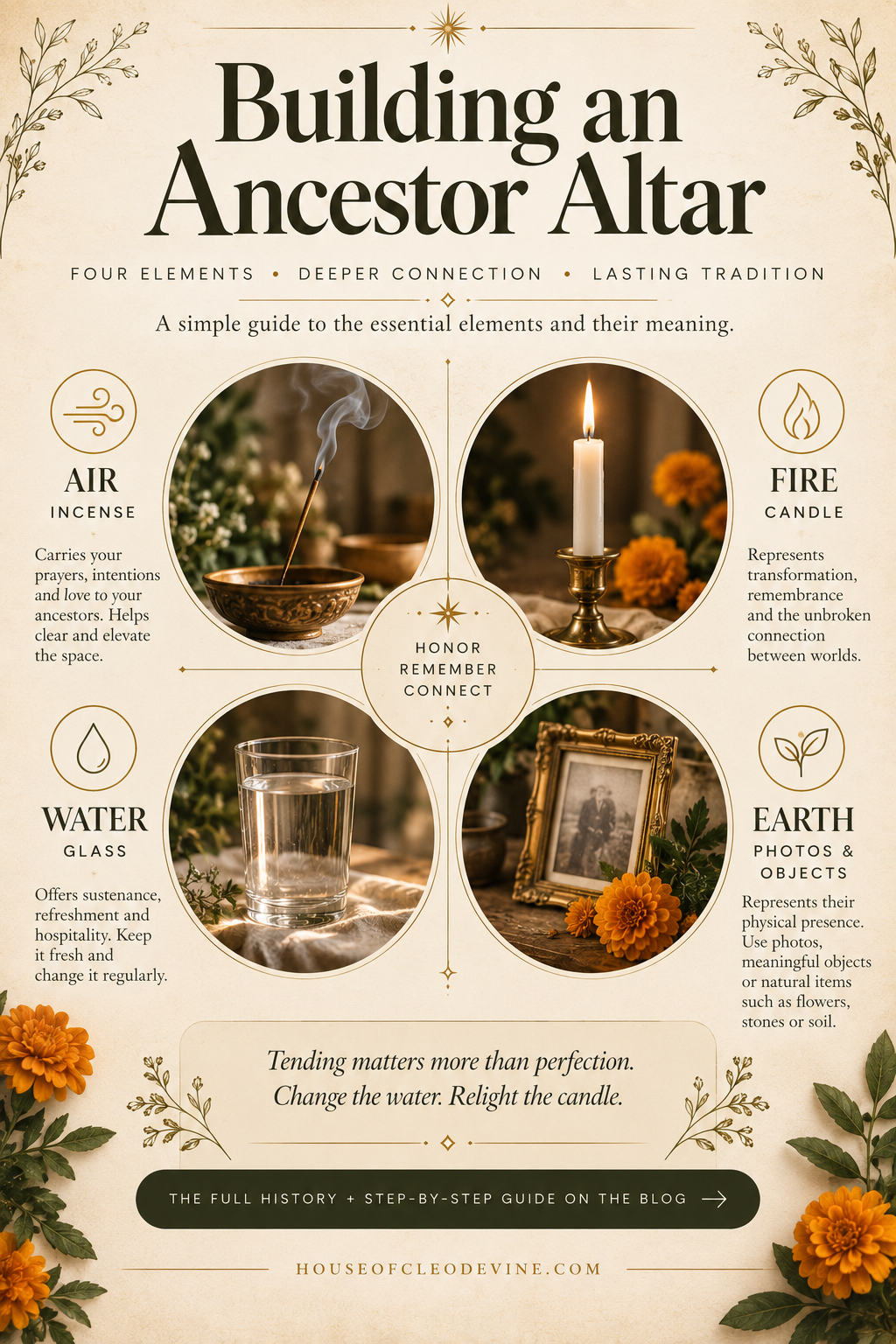
A traditional Hoodoo altar is often built around a representation of the four elements, which gives beginners a genuinely useful, uncomplicated structure to work from rather than guessing at what belongs.
Air, typically represented through burning incense.
Fire, most often a candle, traditionally white to represent cleansing and renewal.
Water, a cup or glass of fresh water, or traditionally Kananga water, a standard offering across this practice, kept clear and regularly refreshed.
Earth, represented through photographs, personal objects, or written names connecting the altar to the specific people it honors.
Building Your Altar, Step by Step
1. Choose a space you'll actually see regularly. A dedicated table, a shelf, even a small corner works, as long as it's somewhere you'll pass by often enough to maintain a real relationship with it rather than forgetting it exists.
2. Lay down a white cloth as your foundation. This simple, consistent starting point appears across nearly every source on this practice, symbolizing a clean, receptive space for the work ahead.
3. Add your water. A glass or cup of fresh water is one of the most essential elements here, understood as a primary way spiritual communication and presence are supported.
4. Add a candle. White is traditional, understood to represent cleansing and renewal, though some practitioners use colors with specific personal meaning to their family or lineage.
5. Add photographs or objects representing specific people. This is where the altar becomes personal rather than generic. Photographs, handwritten names, or a meaningful object that belonged to someone specific ground the space in real relationship rather than an abstract concept of "ancestors" in general.
6. Add offerings that meant something to them specifically. Favorite foods, a particular drink, flowers, tobacco, or anything genuinely connected to who they were in life. This is a place where specificity, what they actually loved, matters more than what a generic list suggests you should include.
What to Put on an Ancestor Altar
If you're gathering materials, a few practical additions beyond the essentials above make the practice easier to sustain: a dedicated candle holder kept only for this purpose, a small offering dish for food or drink, simple frames for photographs, an incense holder if you're working with that element, and a small journal for recording what you learn, remember, or want to ask as your practice develops. None of this needs to be expensive or elaborate; consistency and intention matter far more than the materials themselves.
Tending Your Altar
An altar that's set up once and never revisited loses much of its meaning. Water should be changed regularly so it stays clear, candles relit as needed, and dust cleared away. One source describes this maintenance simply and well: you wouldn't leave a beloved elder sitting at your table with a dirty plate and cold food, and the same care applies here. Refreshing the altar isn't a chore attached to the practice; it is the practice, an ongoing act of relationship rather than a one-time setup.
What If You Don't Know Your Ancestors, or Your Family History Is Complicated?
This deserves real, honest attention, because it's an extremely common situation, not a rare exception. Adoption, estrangement, lost family records, or genuinely painful family history all complicate what a straightforward "add a photo of your grandmother" instruction assumes is simple. If you don't have photographs or names, a general representation, a candle, a written acknowledgment of "those who came before me, known and unknown," or a symbolic object still constitutes a genuine altar. If your family history includes real harm, some practitioners speak honestly about carrying complicated lineage, including descent from both the enslaved and enslavers, and describe the altar as a place to begin repair rather than requiring a fully resolved relationship with the past before you're allowed to start. You don't need a perfect family history to do this work sincerely.

Frequently Asked Questions
Do I need to be part of a specific spiritual tradition to build an ancestor altar? The Hoodoo-specific practice described here has real cultural and historical roots, and it's respectful to engage with that lineage thoughtfully rather than casually. That said, honoring one's own ancestors in some form is a broadly human practice found across cultures; if you're drawn to this specific approach, approaching it with genuine respect for its origins is what matters most.
How often should I visit or update my altar? Regular, even brief attention, changing water weekly, relighting candles as needed, tends to matter more than occasional elaborate visits. Many practitioners describe checking in daily or every few days as part of an ongoing relationship rather than a scheduled ritual.
Can I include ancestors I never met, or only distant relatives? Yes. Many people build altars honoring ancestors many generations back, known only through family stories or records, alongside more recently departed relatives they knew personally.
Is it okay to include pets or non-blood family, like close chosen family? Many practitioners include beloved pets or chosen family who functioned as genuine family, since the practice centers on real relationship and love rather than strict genealogy.
What if I feel nothing when I sit at my altar? This is common, especially early on, and doesn't mean you're doing it wrong. Like any relationship, connection with an ancestor altar often deepens gradually with consistent attention rather than arriving fully formed from the first visit.
Should I take the altar down after a certain amount of time? No. Unlike a seasonal or single-purpose ritual setup, an ancestor altar is generally understood as an ongoing practice meant to be maintained indefinitely, evolving as your relationship with it and with those it honors deepens over time.
Building an ancestor altar is less about following a precise formula and more about beginning, and sustaining, a real relationship. Start simply, stay consistent, and let the practice deepen naturally rather than trying to get every element perfect from the first day.
If you'd like guidance connecting more specifically with what a particular ancestor might be trying to communicate, a General Tarot Reading can offer a focused space to explore that question further.
For the seasons when the work is not to escape the dark, but to learn how to stand inside it. Queen of the Great Below is made for grief rituals, honoring loss and pain, underworld work, shadow work, grounding, endings, and finding your roots when life has stripped something away.