

The Witch's Fall Apothecary: 15 Herbs to Keep for Protection, Love, Money & Cleansing
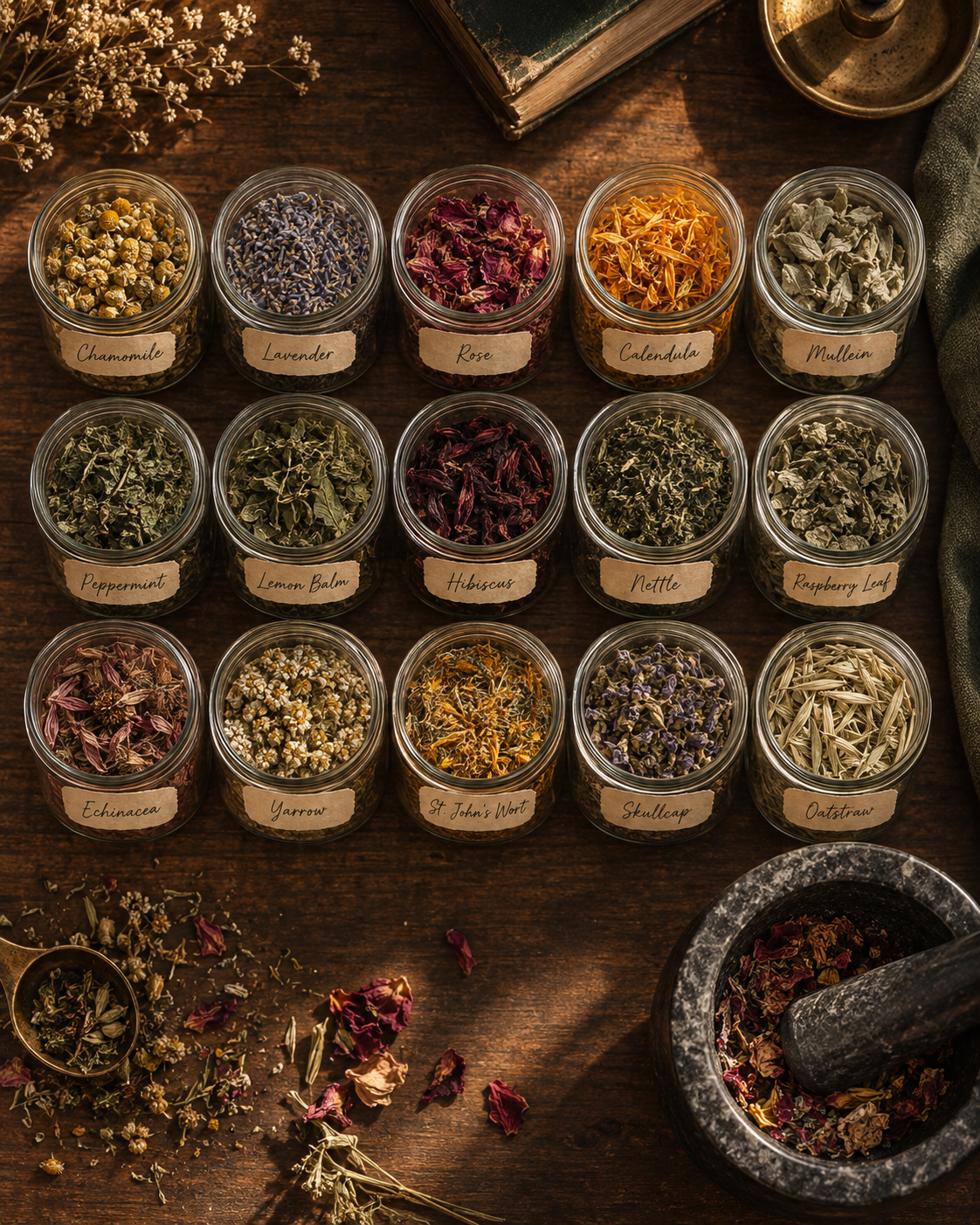
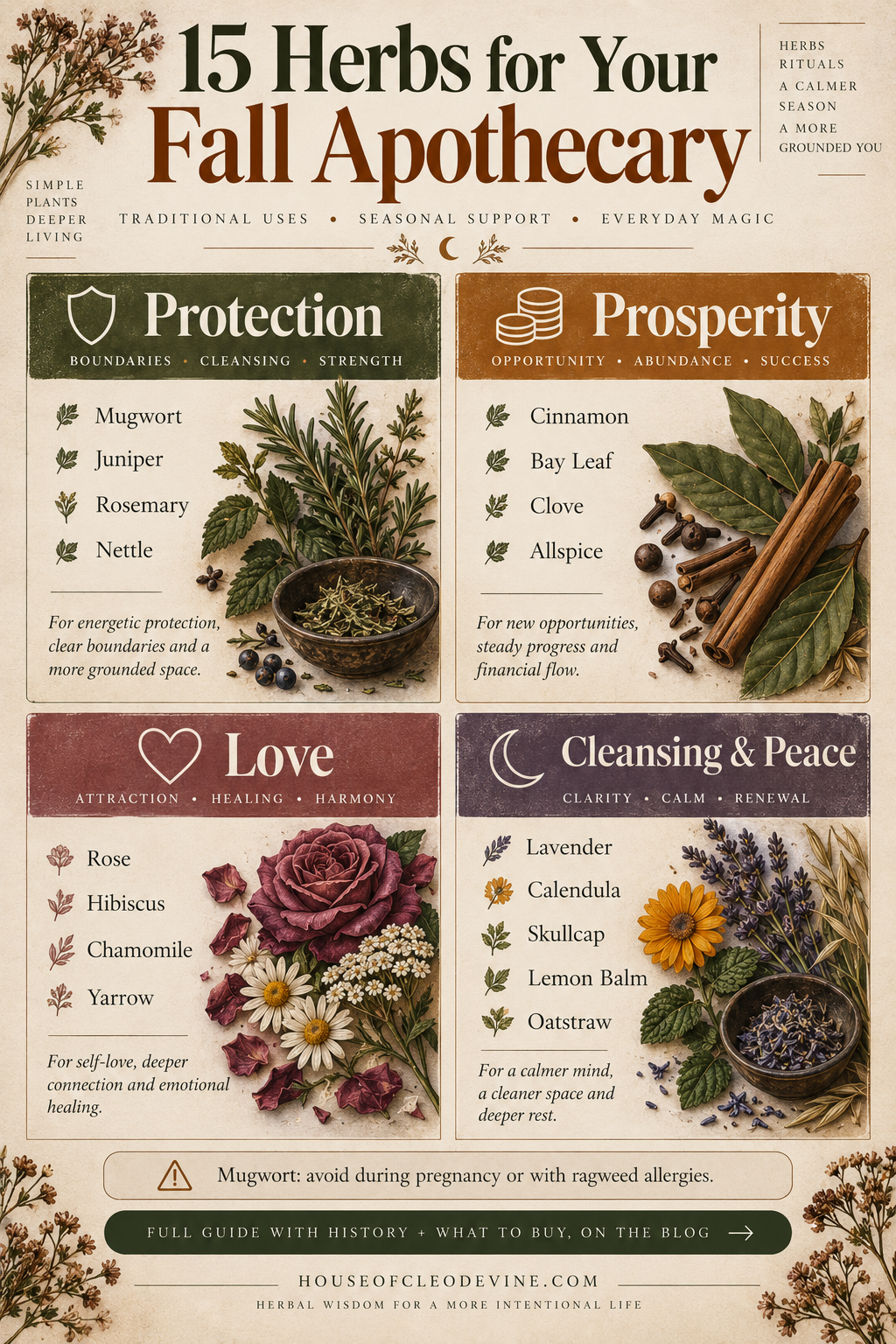
You don't need fifty jars and a botanical encyclopedia to build a working apothecary. You need fifteen herbs, chosen well, that actually cover the ground most kitchen witchcraft calls for: protection, prosperity, love, and cleansing. Here's a small, practical shelf worth building this fall, with real history behind the herbs that have it, and an honest caution on the one that needs it.
Protection
Rosemary. The most versatile protection herb in Western folk practice, often described as able to substitute for nearly any other protective herb in a pinch. Its history runs deep: ancient Greek scholars wore rosemary crowns believed to strengthen memory, and it was traditionally carried at both weddings and funerals as a symbol of remembrance and loyalty. Keep dried rosemary near your door, or add fresh sprigs to bread while baking to work protection into something you'll actually eat.
Bay leaf. Traditionally used for both protection and manifestation, bay leaves are a favorite for wish-work specifically, write an intention on a leaf and burn it safely to release the wish outward.
Clove. A warming, protective spice traditionally associated with banishing negativity and drawing in good fortune at once, clove works well added to protective sachets or simmered on the stove as a simple, effective home-clearing method.
Black pepper. Sharper and more assertive than the other protection herbs here, black pepper is traditionally used specifically for banishing and repelling unwanted energy, a good addition when your intention is less about maintaining a boundary and more about actively pushing something out.
Prosperity & Money
Cinnamon. One of the fastest-acting herbs in traditional correspondence, associated with fire, prosperity, and speed. When a working needs momentum rather than a slow build, cinnamon is the herb most consistently reached for.
Basil. Linked to prosperity, protection, and love all at once, basil has a long practical history: sprinkled in a wallet or purse, it's traditionally believed to attract money, while basil planted near a home's entrance is thought to bring general good fortune to the household.
Orange peel. Bright, warm, and traditionally associated with abundance and joy, dried orange peel is an easy, low-cost addition to money sachets and prosperity jars, and doubles as a genuinely pleasant natural fragrance.
Allspice. Carrying warmth and luck in equal measure, allspice is traditionally worked into money and luck-drawing blends, often alongside cinnamon for a fuller prosperity profile.
Love
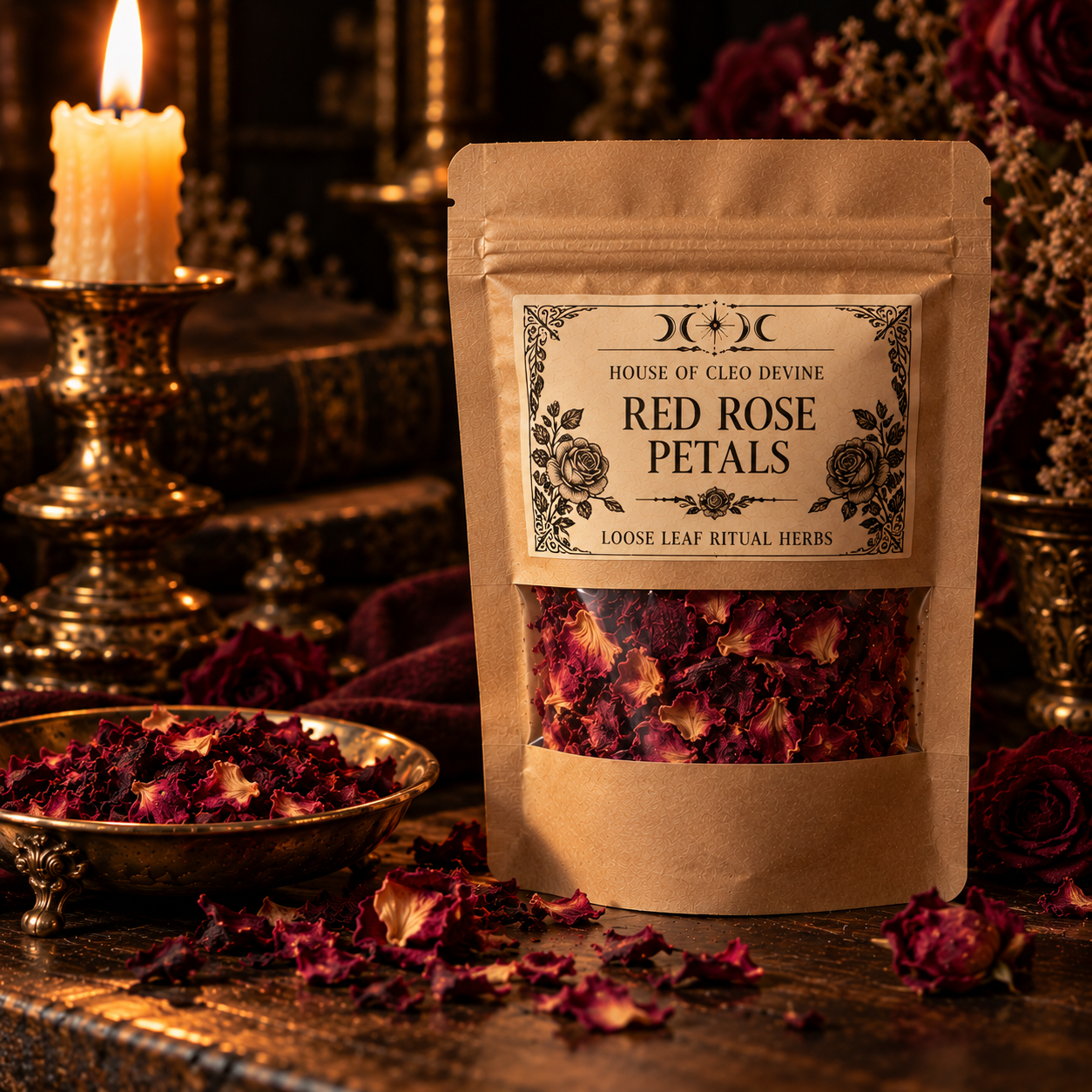
Rose. The primary love herb across nearly the entire Western tradition, rose petals have been used across many cultures throughout history to call in love and beauty, and are also traditionally worked for spiritual protection and easing a broken heart, a rare herb that spans both tenderness and resilience.
Cardamom. Associated with passion and warmth, cardamom brings an intensifying quality to love work, often used in smaller amounts alongside rose for a fuller emotional register.
Vanilla. Comforting rather than intensifying, vanilla is traditionally worked into gentler love and self-love blends, a good addition when the intention is warmth and ease rather than passion specifically.
Cleansing & Peace
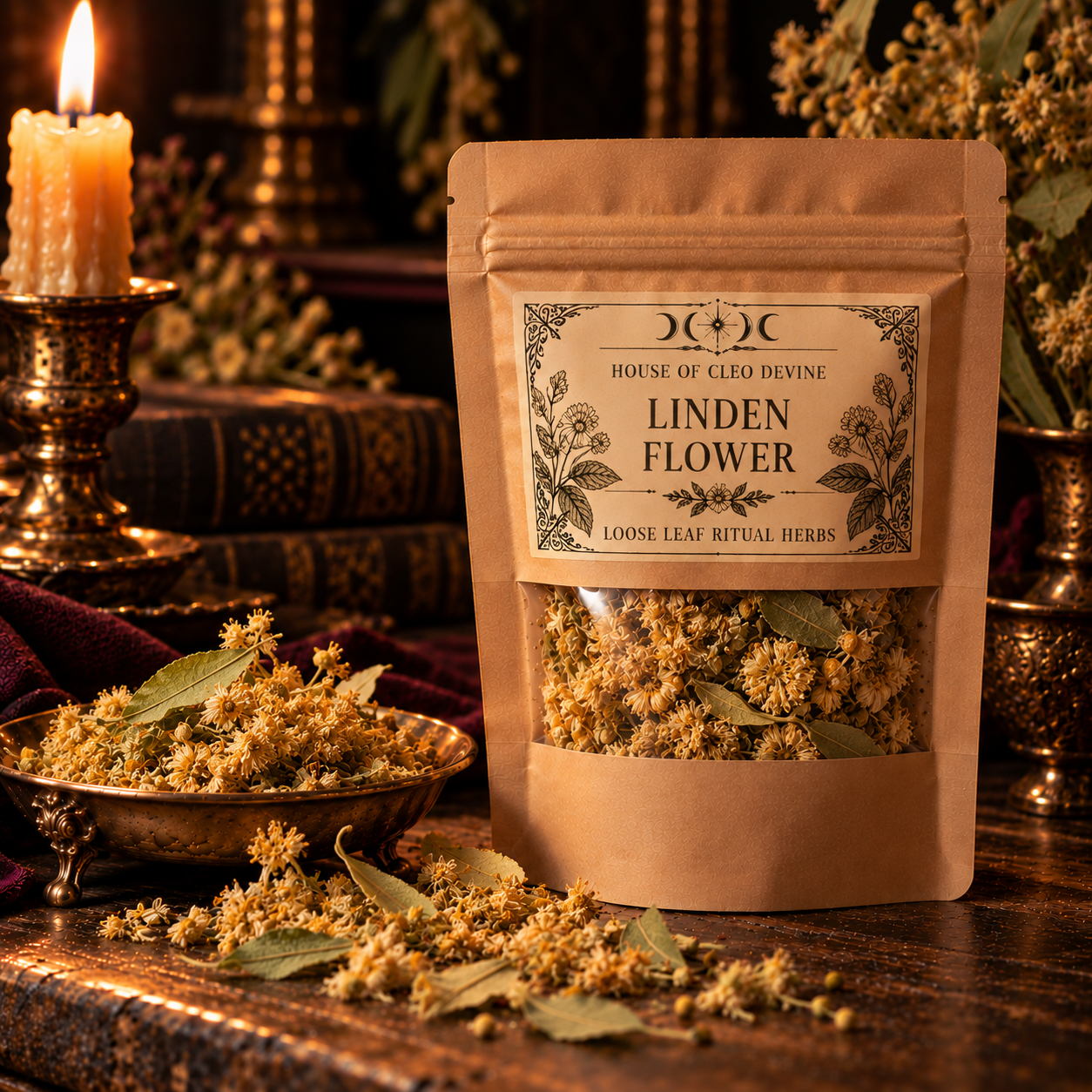
Lavender. One of the most historically documented cleansing herbs available. In ancient Rome, lavender was burned as incense during religious ceremonies and used to scent both baths and homes; by the medieval period, it was sewn into clothing or placed around homes specifically to ward off illness. Its dual reputation, purification and calm, makes it one of the most useful all-purpose herbs on this list.
Garden sage. If you're building a cleansing practice, garden sage, distinct from white sage, which carries real sourcing and cultural concerns we've written about elsewhere on this site, carries its own rich European folk history for wisdom, purification, and protection, and is far easier to source sustainably.
Mugwort. Traditionally associated with divination, dream work, and psychic sight, mugwort is a genuinely useful herb for anyone building a divination practice. It's worth a direct safety note, though: mugwort should be avoided during pregnancy and by anyone with ragweed allergies, and it's not intended for ingestion in the way culinary herbs on this list are. Used in a dream sachet or burned in small amounts for divination work, it's safe for most people; treat it with a bit more care than the rest of this apothecary.
Chamomile. Gentle, calming, and traditionally used for peace and emotional balance, chamomile rounds out this apothecary as the herb most suited to simple, everyday practice, a cup of tea that doubles as a small ritual of calm.
Building the Shelf
A few practical additions make this apothecary genuinely usable rather than just decorative: small labeled glass jars to keep each herb identifiable and fresh, a simple mortar and pestle for grinding blends by hand, and a dedicated altar spoon for measuring without cross-contaminating your kitchen tools.
A Note on Correspondences
It's worth being honest about something most herb guides skip: these correspondences aren't a single, universal rulebook. They come from a blend of folklore, regional tradition, and practical use built up over centuries, and different traditions sometimes assign a given herb slightly different meanings. Use this as a genuine starting reference, work with what resonates with your own practice, and don't feel locked into a rigid system if your own experience with a particular herb differs from what's written here.
Frequently Asked Questions
Do I need to buy all 15 herbs at once to start a practice? No. Rosemary alone can substitute for most protection work in a pinch, and starting with three or four herbs, one from each category, is a perfectly complete way to begin.
Are these herbs safe to use if I have allergies or health conditions? Most are common culinary herbs and safe for typical use, but mugwort specifically should be avoided during pregnancy and by anyone with ragweed allergies. If you have any health conditions or are pregnant, it's worth checking with a healthcare provider before regularly ingesting any herb, even familiar culinary ones, in concentrated amounts.
Can I substitute a different herb if I don't like or can't find one on this list? Yes. Correspondences are a flexible, traditional shorthand rather than a fixed rule, and locally available herbs with similar traditional associations work perfectly well as substitutes.
Is white sage on this list? No, deliberately. Garden sage is included instead; white sage carries real sourcing and cultural considerations worth knowing about before using it, which we've covered in more depth elsewhere on the site.
How should I store these herbs to keep them fresh and effective? Small, labeled glass jars kept out of direct sunlight preserve both scent and potency far longer than herbs left in their original packaging or exposed to light and heat.
Can I use these herbs in cooking and in spellwork at the same time? Yes, and many practitioners consider this the whole point. Working an intention into a meal you're already cooking, rosemary in bread for protection, basil in a sauce for abundance, is one of the most sustainable, low-effort ways to keep a consistent practice going.
Fifteen herbs, chosen with intention, will genuinely carry you further than fifty collected at random. Build the shelf slowly, use what you have with real attention, and let the practice grow from there.
If you're ready to build a more structured seasonal practice around this apothecary, Fall Equinox Spiritual Meaning offers nine rituals that pair naturally with these herbs.
Organic dried raspberry leaf, a humble household herb with a place in folk magic surrounding protection, love and fertility. The leaf is used rather than the fruit.