

Fall Equinox Spiritual Meaning: 9 Rituals for Release, Abundance & a Fresh Start
The fall equinox, arriving around September 22nd or 23rd each year, is one of only two days annually when day and night sit in almost exact balance before the year tips toward darkness. That balance is real and astronomically ancient. What's sold to you as an unbroken ancient ritual tradition around it, less so. Here's an honest look at what this moment actually marks, where the popular rituals around it really come from, and nine ways to work with it that don't require pretending the history is older than it is.
What the Fall Equinox Actually Marks
The equinox itself is a genuine astronomical event: the moment the sun crosses the celestial equator, producing close to equal hours of daylight and darkness everywhere on Earth. Ancient peoples tracked this moment with real precision, evidenced by equinox alignments built into structures like Stonehenge and other sites around the world, dating back thousands of years. This part of the tradition is exactly as old as it's often claimed to be. Whatever spiritual framework you bring to it, the equinox marks a genuinely observed turning point that human beings have been tracking for millennia.
Where "Mabon" Actually Comes From
Here's the part most seasonal content skips entirely, and it's worth knowing if you want an honest relationship with this holiday rather than a mythologized one. The specific name "Mabon," now widely used for the modern pagan autumn equinox celebration, was coined in 1974 by American Wiccan writer Aidan Kelly, who was assembling a calendar of pagan holidays and wanted a poetic name for the equinox to match the Gaelic names already used for other festivals like Beltane and Samhain. Kelly borrowed the name from Mabon ap Modron, a figure in Welsh mythology, largely because the story loosely paralleled the Greek myth of Persephone's descent, not because of any documented historical link between that figure and the equinox itself. Historian Ronald Hutton, who has extensively studied both pre-Christian British religion and the modern pagan movement, has confirmed this origin and noted that the name itself is, in his words, a somewhat unusual fit for an autumn festival by the standards of the mythology it's drawn from.
This doesn't make the modern celebration meaningless. The older harvest-home folk traditions this season draws from, the last-sheaf ceremonies, the communal harvest suppers, the crowning of a harvest queen, are genuinely well documented in English and Welsh rural life into the 19th century. What's honest to say is that "Mabon" as a named, structured pagan sabbat is a 20th-century synthesis built from real older folk customs and a deliberately chosen mythological name, not a single continuous ancient tradition. Knowing that distinction lets you take the holiday seriously on its actual terms, rather than an invented, older version of it.
9 Rituals for Release, Abundance & a Fresh Start
Release
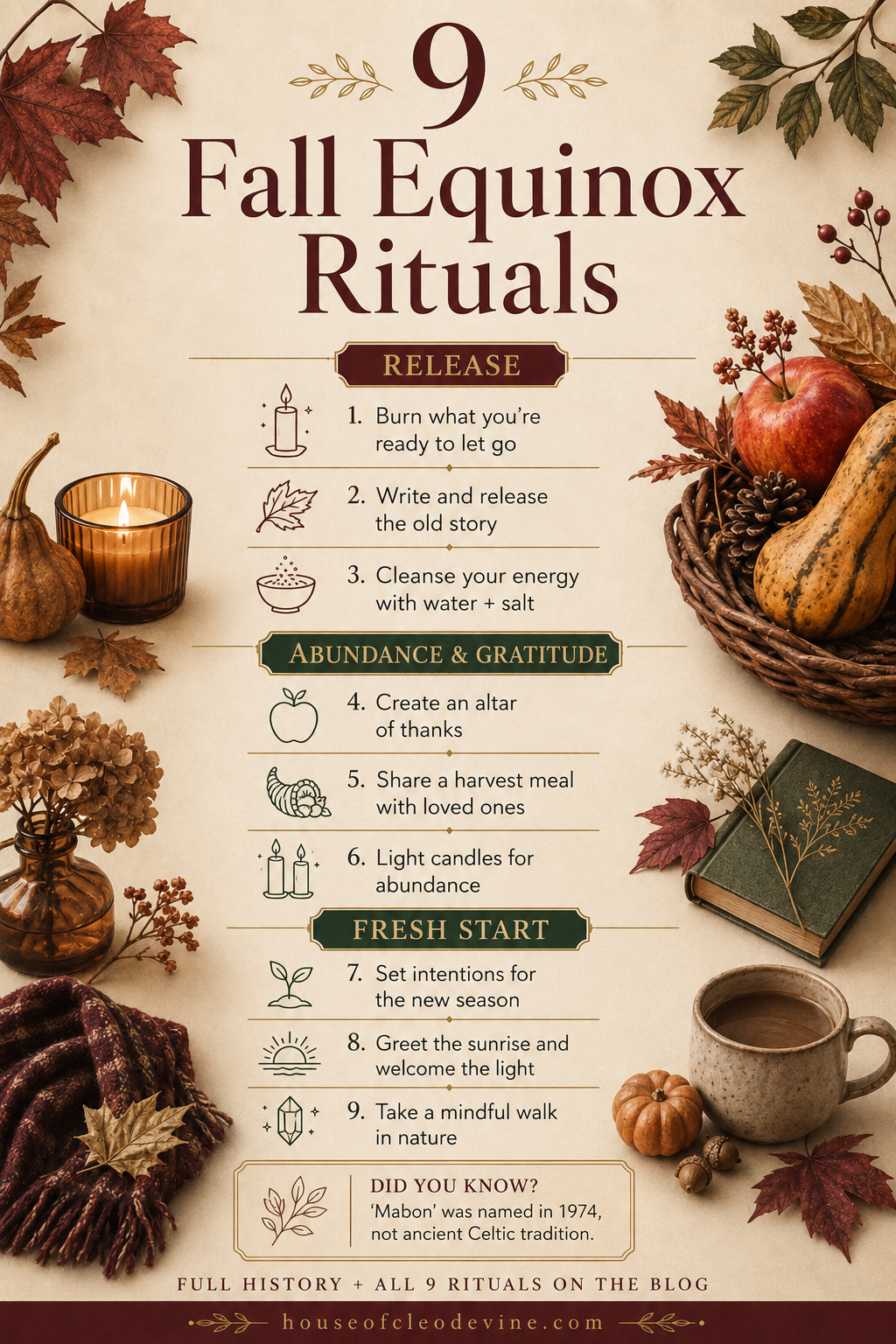
1. Write a letting-go list and burn it. Name specifically what you're ready to release as the year turns toward its darker half, an old grievance, a habit, a version of yourself you've outgrown. Burn the paper safely, letting the physical act mark the release.
2. Clear physical clutter alongside the emotional kind. The equinox has always doubled as a practical seasonal transition, closing up the summer and preparing for the dark months ahead. Clearing a single drawer, closet, or shelf while holding your emotional intention gives the release something concrete to attach to.
3. Do a water-release ritual. Write what you're letting go of on a piece of biodegradable paper and release it into moving water, a stream, a river, even water poured out with intention, letting the current carry the symbolic weight away.
Abundance & Gratitude
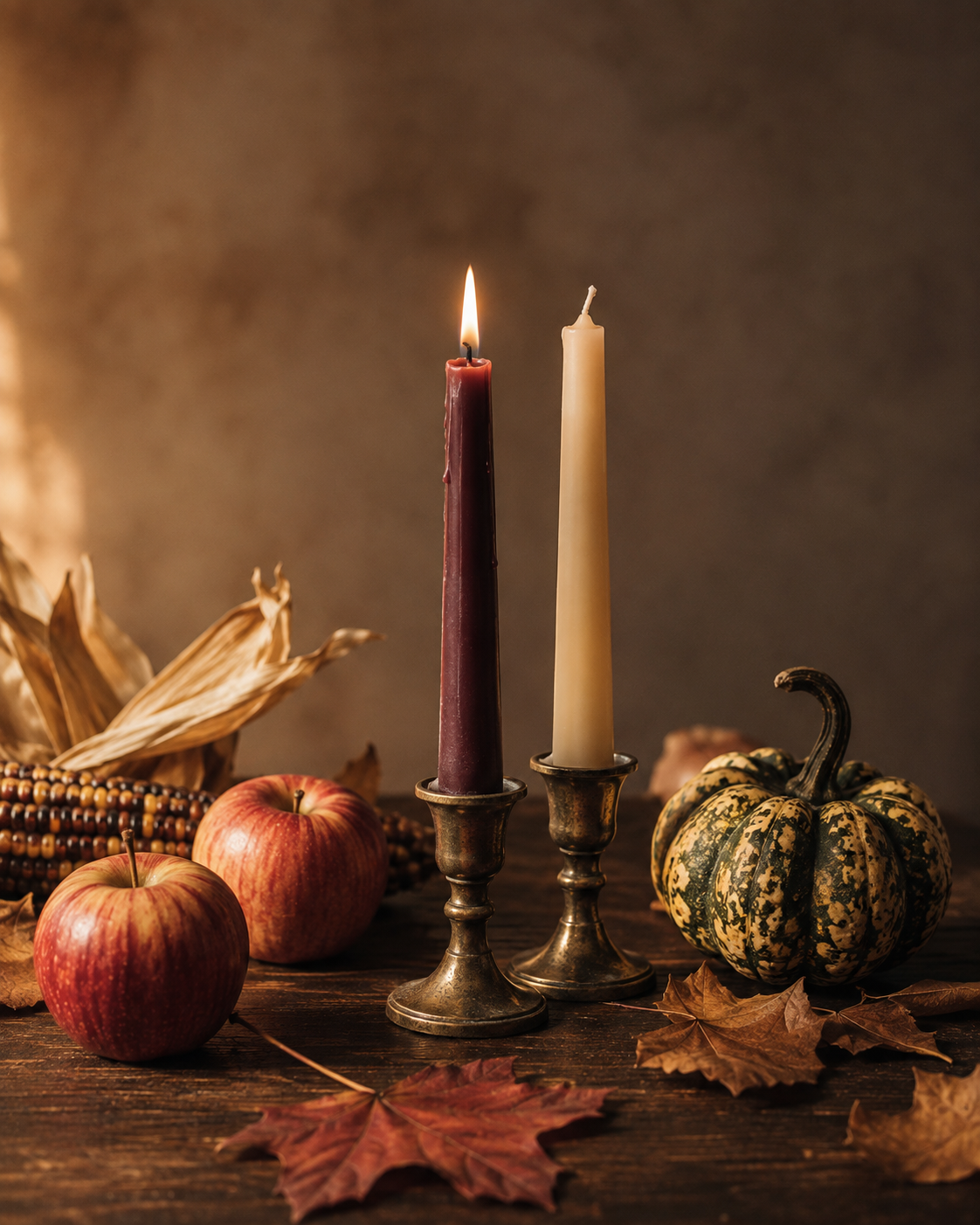
4. Build a small harvest altar. Apples, gourds, dried corn, and seasonal produce have long symbolized the earth's abundance at this time of year. A small, simple gathering of what's actually in season where you live connects the practice to something real rather than purely symbolic.
5. Journal your year's actual harvest. Not just what you're grateful for generally, but what you specifically grew, built, or gathered since the year began. This is a natural moment to take honest stock before the reflective, inward months ahead.
6. Share a meal with intention. Harvest suppers are one of the most historically well-documented parts of this season. A shared meal, even a small one, with a moment of spoken gratitude, connects directly to that older, genuinely documented tradition.
Fresh Start
7. Do a balance ritual. Light a candle representing what you're calling in alongside one representing what you're releasing, letting them burn together as a physical representation of the equinox's actual balance between light and dark.
8. Set intentions for the darker half of the year. Where spring festivals look toward growth, this one turns naturally inward. Use the moment to set intentions for reflection, rest, or a project that benefits from quieter, more internal seasons ahead.
9. Cleanse before you turn inward. Many people find it useful to enter the reflective half of the year with a clear energetic slate rather than carrying summer's accumulated residue into autumn's quieter months. A Distance Aura Cleansing Session offers a supported way to do this if a self-guided cleanse doesn't feel like enough this year.
Building an Equinox Altar
If you want a physical anchor for the season, keep it simple and rooted in what the equinox actually represents: balance and gathered abundance. Seasonal produce, a candle for light and one for encroaching dark, and a piece of jewelry connected to prosperity or grounding all work well here. The Rich Girl Energy Abundance Ritual Oil supports the gratitude and harvest themes of the season, and the Raw Citrine Necklace makes a fitting daily anchor for carrying the season's abundance intention forward once the equinox itself has passed.

Frequently Asked Questions
Is Mabon the same as the fall equinox? The fall equinox is the astronomical event itself, real and ancient. Mabon is the modern pagan name and ritual structure built around that event, coined in 1974. Many people use the terms interchangeably today, but they're not historically the same thing.
Do I need to be Wiccan or pagan to celebrate the equinox? No. The astronomical event and the general themes of balance, harvest, and gratitude are broadly accessible regardless of specific religious or spiritual identity. Many of the rituals here work as secular seasonal practice just as easily as spiritual ones.
What's the difference between the fall equinox and Thanksgiving? Both share themes of harvest and gratitude, but they're separate traditions with different origins, timing, and cultural history. Some modern practitioners describe the equinox as an earlier, more explicitly seasonal counterpart, but they aren't the same holiday.
Why does the equinox date shift between September 21st and 23rd? This happens because the equinox is tied to the Earth's actual orbital position relative to the sun, not a fixed calendar date, so the precise moment shifts slightly year to year, similar to how the exact time of a solstice shifts.
Is it disrespectful to celebrate Mabon if I'm not part of a specific pagan tradition? Since the name and modern ritual structure were deliberately created as an open, non-initiatory practice within 20th-century Wicca, rather than inherited from a closed cultural or religious tradition, most practitioners consider it accessible to sincere practice without requiring initiation.
What if I want to honor the season without the pagan framework at all? The astronomical balance and harvest themes stand entirely on their own. Many of the nine rituals above, gratitude journaling, a shared meal, a letting-go ritual, work perfectly well as secular seasonal reflection.
The equinox itself has been marked by human beings for thousands of years, genuinely, provably. The specific shape of how we celebrate it today is newer than most seasonal content admits, and that's not a reason to take it less seriously. It's a reason to hold the tradition honestly: real balance, real harvest, and a ritual practice still very much being written.
If you're building out a fuller seasonal practice, the Rich Girl Energy Abundance Ritual Oil and Raw Citrine Necklace support the gratitude and abundance side of the season, and the Distance Aura Cleansing Session offers a supported way to enter the year's quieter half with a clean slate.
Further Reading From House of Cleo Devine
How to Manifest Money: A Spiritual Abundance Ritual for Removing Financial Blocks
Road Opener Ritual: How to Clear Spiritual Blockages and Invite New Opportunities
Stir the cauldron of transformation. Inspired by Cerridwen of Welsh tradition and her legendary cauldron, this oil is made for transformation, wisdom, inspiration, creative awakening, study, initiation, and becoming something you could not have become without passing through the process.