

The Spiritual Meaning of Winter: Why You're Being Called Inward Right Now
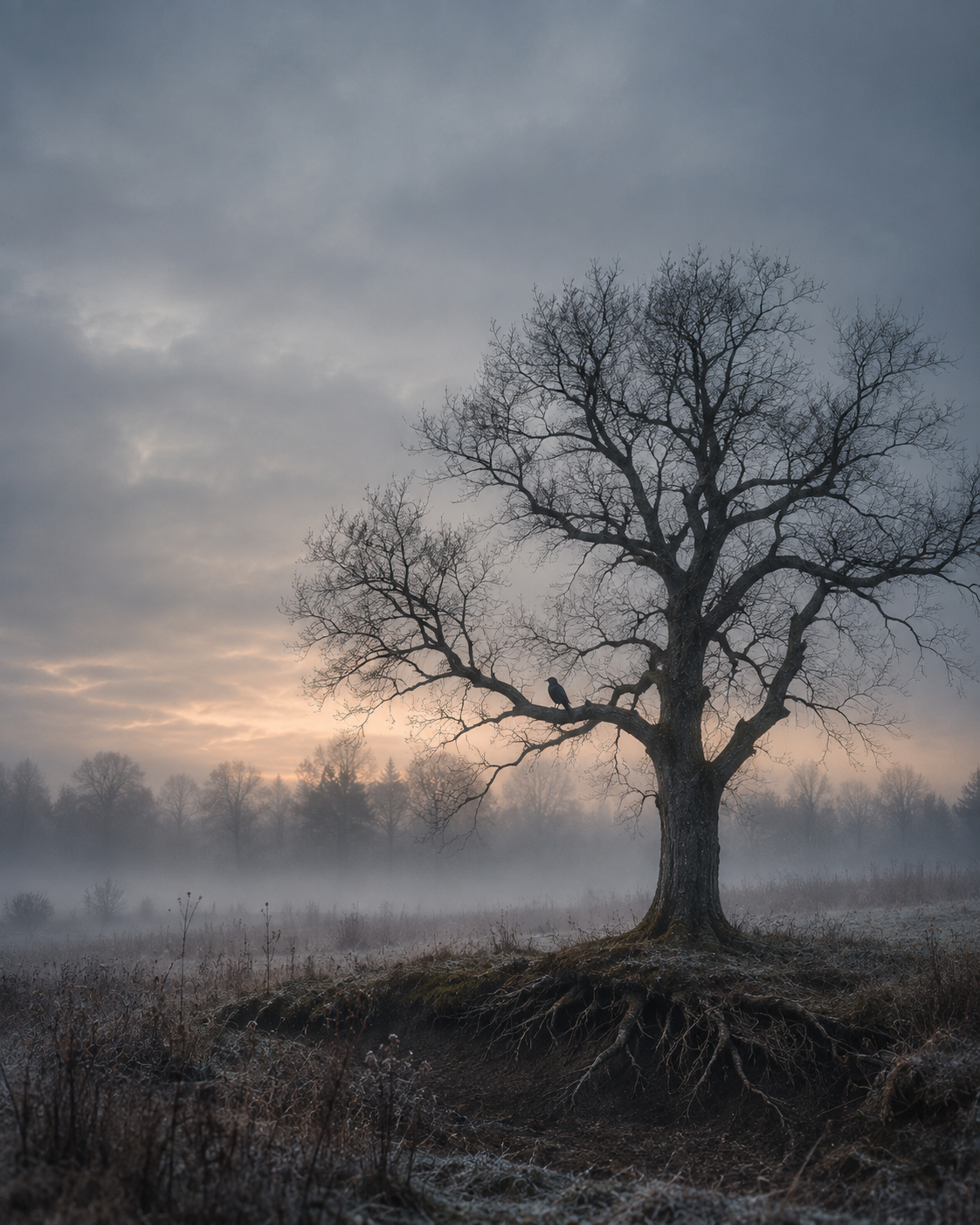
There's a particular kind of guilt that shows up this time of year, the sense that you should be doing more, producing more, feeling more festive than you actually feel. If something in you has been quietly retreating instead, wanting less noise, less obligation, more stillness than the season seems to permit, it's worth asking a different question than "what's wrong with me." The question worth asking is older, and it has an answer myth has been offering for thousands of years: what if you're not falling behind. What if you're descending.
The Descent Is Not Failure: What Myth Has Always Known
The Greek myth of Persephone is usually told as a story about loss. Demeter's daughter is taken into the underworld by Hades, and in her grief, Demeter lets the earth go barren, creating winter itself. But the myth was never only a story explaining the seasons. It was the foundation of the Eleusinian Mysteries, one of the most significant religious rites of the ancient world, ceremonies built specifically around Persephone's descent and return, offering initiates a way to make peace with mortality by rehearsing exactly this pattern: going down, and coming back changed.
This pattern runs far deeper and wider than one Greek myth. What mythologist Joseph Campbell called "the belly of the whale," the hero's descent into darkness before any transformation can occur, appears across cultures with no direct contact with one another. The Sumerian goddess Inanna's descent into the underworld, one of the oldest recorded myths in human history, predates Persephone by over a thousand years and follows the same essential shape: a willing or unwilling journey down, a period of genuine death or near-death, and a return that isn't a simple resumption of the old life but the beginning of a new one. Campbell noted that this structure corresponds precisely to what anthropologists have identified as the pattern of initiation rites across virtually every human culture that's left a record: separation, a liminal period of transition, and reintegration as someone changed.
What this tells us is worth sitting with. The instinct to associate darkness, withdrawal, and descent with failure is a modern one. Nearly every tradition that came before ours understood the descent as necessary, not as a detour from the real journey but as the part of the journey where the actual transformation happens. You cannot skip the underworld and still come back different.
What Your Body Already Knows
This isn't only myth. There's real, measurable biology underneath the instinct to slow down as the light recedes. A 2015 study published in Current Biology examined sleep patterns in three pre-industrial societies, communities without electric light, and found that all three groups naturally slept significantly longer during winter months than in summer, their bodies responding directly to the shortened daylight in ways modern, artificially lit life has largely overridden. Separate research on the circadian basis of seasonal mood shifts has found that the body's internal clock genuinely responds to changing light exposure across the year, not as a malfunction, but as an ordinary biological response nearly erased by how most of us now live entirely indoors, under consistent artificial light, regardless of season.
In other words: the part of you that wants to sleep more, do less, and turn inward as the days shorten is not being dramatic or lazy. It's responding to something real, something your ancestors' bodies did as a matter of course, before electric light made it possible to override winter entirely. Modern life asks you to produce at a constant, unseasonal rate all year round. Your body was never actually built for that.
The Work That Can Only Happen in the Dark
Carl Jung, writing in the mid-twentieth century, described what he called the shadow as, in his own precise phrase, "the thing a person has no wish to be." It's the reservoir of everything we've pushed out of conscious awareness because it didn't fit the version of ourselves we present to the world, not only the traits we consider ugly, but sometimes strength, ambition, or tenderness we never learned it was safe to claim either. Jung believed that real psychological wholeness, what he called individuation, required eventually turning toward this hidden material rather than continuing to outrun it.
Shadow work, as a practice, asks for exactly the conditions winter naturally provides: less external noise, more solitude, permission to sit with what's uncomfortable rather than performing wellness at it. This is not incidental. The introspective quality of the darker months has been recognized as fertile ground for this kind of inner reckoning across many traditions independently, long before anyone called it "shadow work" specifically. Grief that got postponed during a busier season. An identity you've outgrown but haven't yet let go of publicly. A version of yourself formed to survive a circumstance that no longer applies. Winter doesn't create these things. It simply removes enough of the noise that they finally have room to surface.
What This Season Is Actually Asking of You
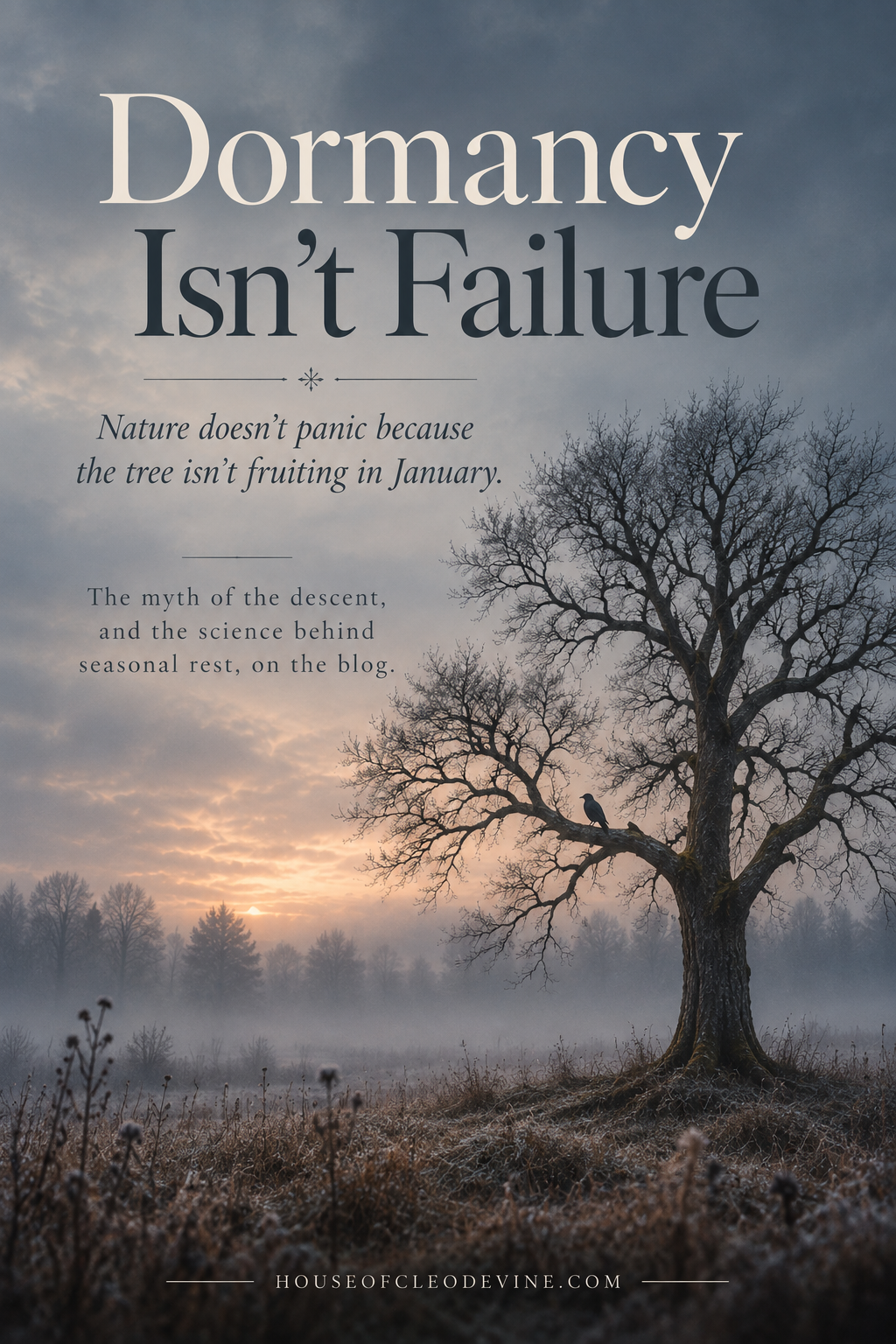
Probably not what you think. Not a rigorous new practice, not five new rituals to perform before the solstice, not a productivity system for your inner life. Nature doesn't panic because a tree isn't fruiting in January. The tree isn't failing. It's doing exactly what a tree does at this point in its cycle, conserving what it has, going quiet at the roots, trusting a return it cannot yet see any evidence of.
What winter actually seems to ask is smaller and harder than a new practice: permission. Permission to want less from yourself for a season. Permission to let some things stay unresolved a little longer, since a body and a mind that never rest rarely produce anything of lasting quality anyway. Permission to grieve what needs grieving without a deadline for when you should be finished. If part of you has been quietly retreating, that's not a sign you're falling behind everyone who seems to be thriving through the holidays. It may be a sign you're finally listening to something the season has been offering the whole time.



















If You're in the Middle of the Descent Right Now
Some winters are just winters. Others arrive alongside something heavier, a real ending, a loss, an identity genuinely dissolving before whatever comes next has taken shape. If that's where you are, it's worth naming plainly: you are not behind schedule. Descents don't run on a calendar, and the pressure to have "moved on" by a specific date, especially one as arbitrary as a new year, often does more harm than the descent itself.
If you're navigating a genuine transition right now, one that feels less like an ordinary seasonal lull and more like the ground actually shifting beneath you, a General Tarot Reading can offer a quiet space to look at what's actually unfolding, without needing to have language for it yet. Some descents also benefit from real spiritual support alongside the internal work, clearing what's ready to be released, or simply having a witness to what's shifting. If either resonates, House of Cleo Devine's offerings include several paths built specifically for genuine life transitions, not just quick fixes.
A journal kept specifically for this season, somewhere private to actually sit with what surfaces rather than performing insight for anyone else, tends to matter more here than any particular technique. [Affiliate link opportunity: a simple, undated shadow-work journal] A warm blanket, a slow pot of tea, and permission to be somewhere quiet without producing anything from it, these are not indulgences during a genuine descent. They're closer to the entire point.
Frequently Asked Questions
Is it normal to feel more withdrawn or less social in winter? Yes, and there's real biological grounding for it, not just cultural mood. The body's circadian responses to shortened daylight are well documented, and historically, humans without artificial light slept and rested measurably more during winter months.
How is shadow work different from just being sad or unmotivated? Shadow work is a deliberate, conscious turning toward material you've previously avoided, memories, traits, unresolved grief, rather than an unexamined low mood. It can coexist with sadness, but it's an active practice of integration rather than passive withdrawal.
Does the Persephone myth mean winter is inherently a punishment? Not within the myth's own framework, and this article treats that reading as a common misunderstanding. Persephone's descent became the foundation of a mystery tradition specifically about transformation and eventual return, not a story of pure punishment.
Should I try to fight the urge to slow down in winter? Not necessarily. Given the real biological and historical basis for seasonal rest, honoring some of that instinct, rather than overriding it entirely with year-round productivity expectations, is a reasonable and increasingly well-supported choice.
What if my "winter" doesn't line up with the actual season? Descents don't run on a calendar. A genuine life transition can happen at any time of year and follow this same underworld pattern regardless of the season outside your window; the myths and this article's framing apply just as well outside literal winter.
Is it healthy to stay in this inward state indefinitely? The mythic pattern is specifically cyclical, descent and eventual return, not permanent withdrawal. If a low, inward state persists without any shift for an extended period and significantly affects your daily functioning, that's worth bringing to a mental health professional alongside any spiritual reflection.
The dark half of the year has always asked something different of us than the light half does, and for most of human history, our bodies and our myths agreed on what that something was. Not more output. Not forced cheer. Just permission to go down for a while, trusting, the way Persephone eventually did, that going down was never the same thing as being lost.
If you're moving through a genuine transition this season, a General Tarot Reading or a conversation about deeper spiritual support is available whenever you're ready, not before.
Poetry, smithcraft, sacred wells, and the hearth fire. Flame of Brigid is made for creativity, inspiration, renewal, home blessings, purification, protection, and spiritual workings centered on restoration and tending what needs to grow strong again.