Building a Kitchen Magic Altar: Tools and Incense We Recommend
Every practice benefits from a home base, a small, dedicated spot that reminds you this work matters. In kitchen magic, that home base does not need to be elaborate. A single shelf, a corner of your counter, or even a tray tucked into a cabinet can hold everything you need.
This post covers the essential tools and incense worth adding to your kitchen altar, plus exactly how to set the whole space up, even if your kitchen is small.
A kitchen magic altar is a small, dedicated space in or near your kitchen that holds your working tools, herbs, and incense, giving your practice a physical home base you can return to consistently. A mortar and pestle, a cast iron cauldron, and a few pieces of kitchen witch incense form a strong, simple foundation for this space.
What Is a Kitchen Magic Altar?
A kitchen magic altar is a small, intentional space, often a shelf, tray, or corner of a counter, where you keep your working tools and herbs so your practice feels grounded and easy to return to daily. Unlike a formal ceremonial altar, a kitchen altar stays practical and close to your everyday cooking space, reflecting the hands on nature of Southern folk magic itself.
This space does not need to be large or elaborate. What matters most is that it feels like yours, and that it holds the tools you actually use.
3 Essential Tools and Incense for Your Kitchen Altar
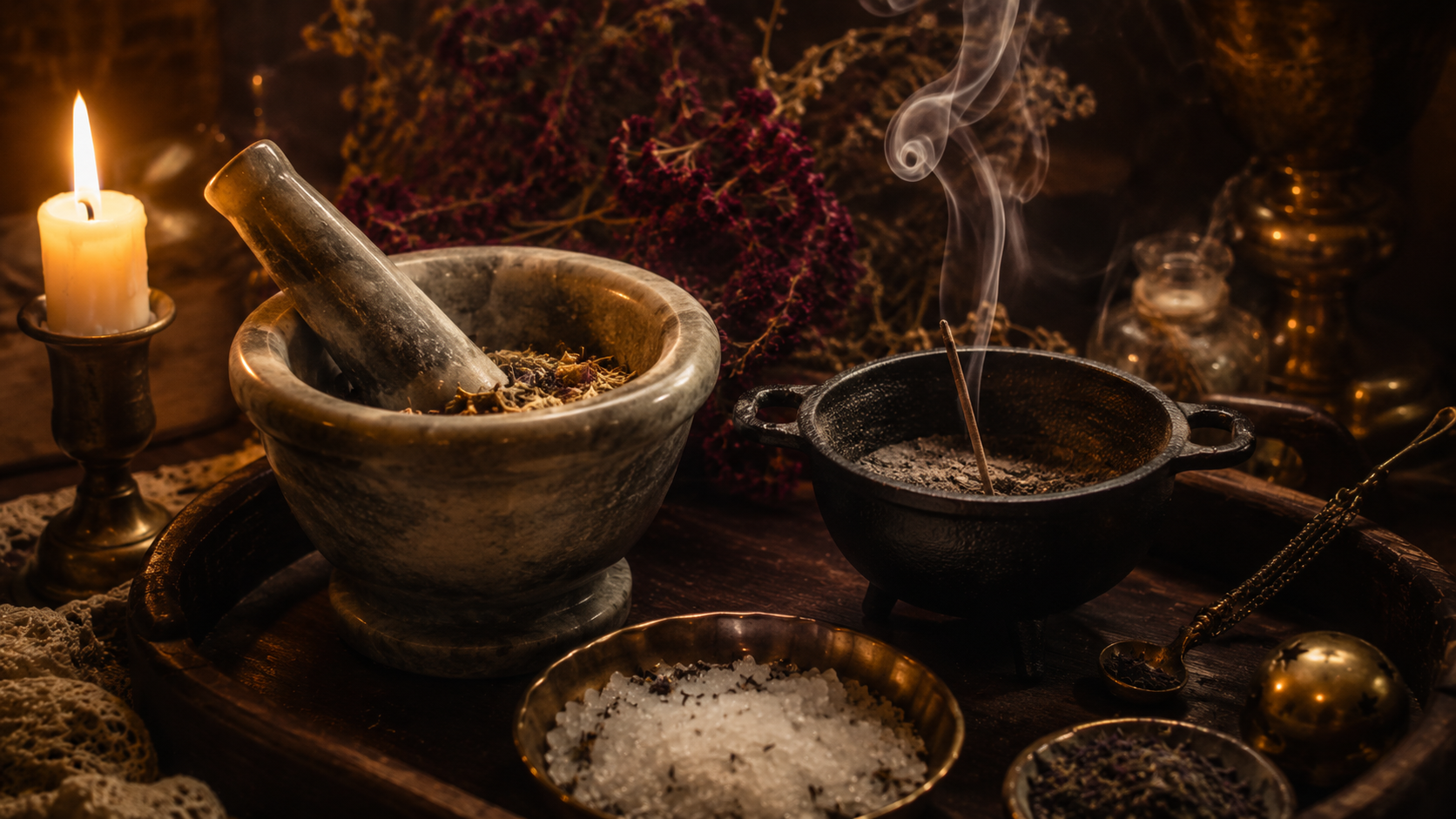
Mortar and Pestle Set. Used to grind herbs, roots, and spices by hand, this tool adds real intention to your ingredient preparation, turning a simple task into part of the ritual itself. Stone or cast iron versions tend to hold up best for regular kitchen use.
Cast Iron Cauldron. A small cast iron cauldron works beautifully for burning herbs safely, mixing dry ingredients, or simply serving as a grounded, traditional centerpiece for your altar space. It connects your kitchen practice visually and symbolically to generations of hearth based magic.
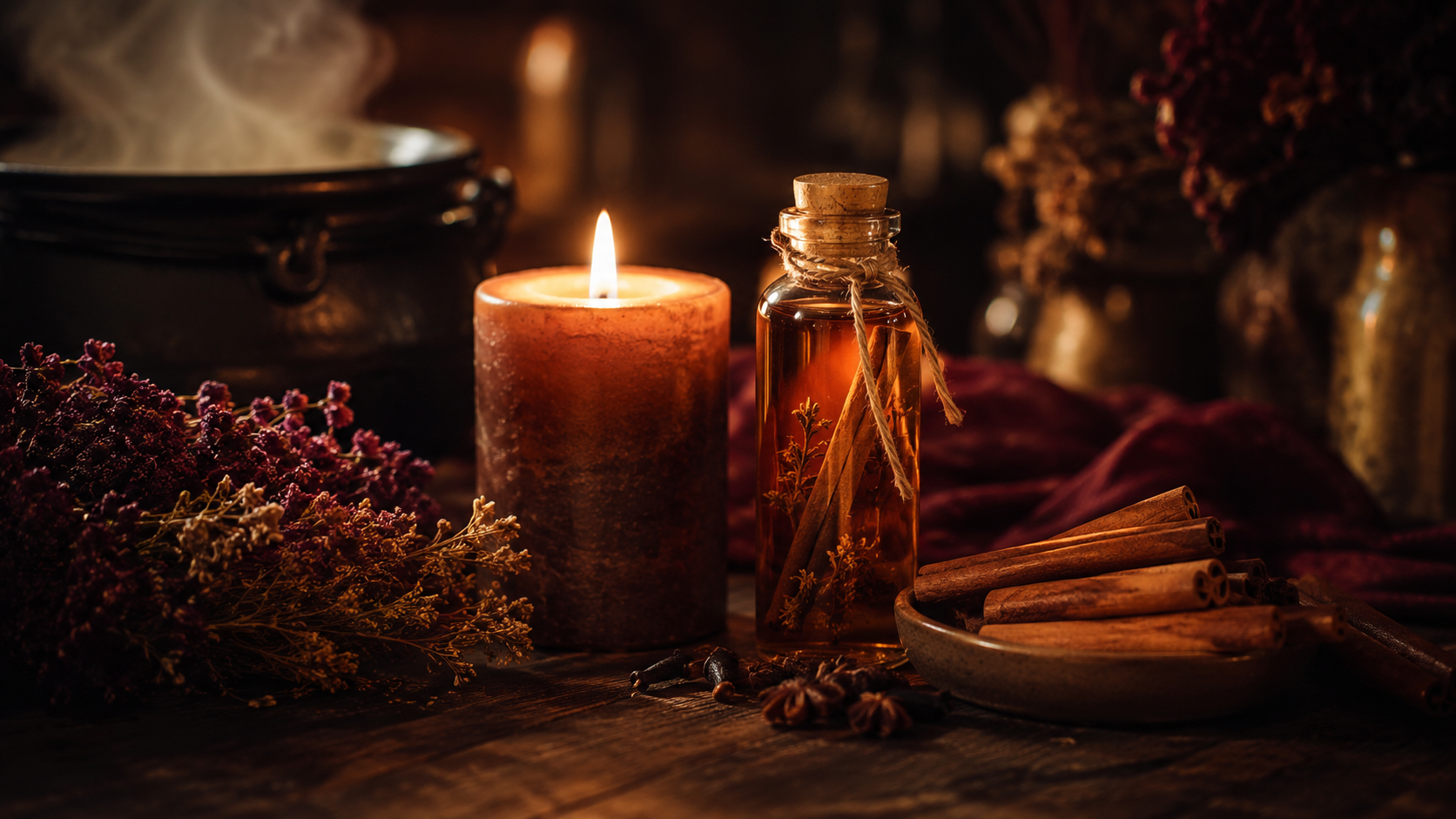
Kitchen Witch Incense. A well chosen incense blend, often featuring herbs like rosemary, sage, or cinnamon, clears the energy of your kitchen and marks the beginning of an intentional cooking or ritual session.
Together, these three tools cover preparation, containment, and energetic clearing, the three core functions of any working altar.
What Incense Is Best for Everyday Kitchen Magic?
The best everyday kitchen magic incense includes rosemary for clarity, sage for cleansing, cinnamon for abundance, and dragon's blood resin for strong protection, each suited to a different common intention. Choose your incense based on what your space needs most that day, rather than assuming one scent must be used for every occasion.
A simple rotation of two or three incense types covers most everyday needs without requiring an overwhelming collection.
How Do I Set Up a Kitchen Altar in a Small Space?
You set up a kitchen altar in a small space by choosing one shelf, tray, or drawer specifically for your tools, then keeping only your most used items there so the space stays functional rather than cluttered. A small wooden tray on a counter corner works just as well as a dedicated shelf, especially in a compact kitchen.
Focus on function over size. A tray holding your mortar and pestle, a small dish of salt, and a stick of incense already forms a complete, working altar.
Simple Steps to Build Your Kitchen Altar Today
Choose one small, visible spot, like a shelf, tray, or clear corner of your counter
Place your mortar and pestle there as your central working tool
Add your cast iron cauldron nearby for burning incense or mixing dry ingredients
Keep one or two incense sticks or cones within easy reach
Add a small dish of salt or your most used correspondence herb
Clean and reset the space weekly, removing anything that no longer feels relevant
This entire setup can be completed in under twenty minutes using tools you may already partially own.
How Do I Use a Mortar and Pestle in Kitchen Magic?
You use a mortar and pestle by placing your chosen herb or spice inside the bowl, then grinding it slowly with the pestle while holding a clear intention in mind, turning simple preparation into a focused ritual act. The physical effort of grinding by hand adds a layer of intention that a food processor or electric grinder cannot replicate.
This tool works especially well for preparing herbs before adding them to a meal, a floor wash, or an incense blend, giving you a consistent starting ritual across many different workings.
Why Does Having a Dedicated Altar Space Matter for My Practice?
A dedicated altar space matters because it gives your practice a consistent physical anchor, making it far easier to return to your work regularly instead of scattering rituals inconsistently across different parts of your home. Consistency of place tends to build consistency of practice, the same way a dedicated workspace supports a work habit.
Over time, simply standing at your altar space can trigger the same calm, focused feeling you associate with your practice, even before you begin any specific ritual.
Should I Use Real Cast Iron Tools, or Are Modern Substitutes Okay?
Modern substitutes work perfectly well, and the choice mostly comes down to what is realistic and accessible for your space, since intention matters far more than material authenticity. A stainless steel pot can serve the same function as a cast iron cauldron. A sturdy ceramic bowl can stand in for a traditional mortar and pestle.
That said, cast iron and stone tools carry a long traditional association with Southern folk magic specifically, so investing in at least one traditional piece can add meaningful weight to your practice if it feels accessible to you.
Common Mistakes When Building a Kitchen Altar
Trying to build an elaborate, Pinterest perfect altar before ever using it
Collecting tools that never actually get touched or used regularly
Placing the altar somewhere inconvenient, making it easy to forget
Overcrowding the space with too many items at once
Neglecting to clean and reset the space regularly, letting it become cluttered
A small, well used altar will always outperform a large, ignored one.
Choosing Incense by Intention
Beyond the basics, consider building a small rotation of incense tied to your most common intentions. Rosemary supports mental clarity before important decisions. Cinnamon supports quick moving luck and abundance work. Sage supports a clean reset after a stressful week. Dragon's blood resin supports strong protection during particularly difficult seasons.
Keep two or three types on hand rather than a large, overwhelming collection. A focused rotation is easier to actually use consistently than a large, scattered one.
Caring for Your Altar Tools
Clean your mortar and pestle after each use, especially if you are switching between herbs with strong or distinct scents. Wipe down your cauldron regularly, especially after burning incense or resin, to prevent buildup over time. Treating your tools with this kind of regular care reflects the same respect you bring to the rest of your practice.
Store your incense somewhere cool and dry, away from direct sunlight, to help it stay potent for longer. A small tin or wooden box near your altar keeps everything organized and easy to reach.
Bringing the Whole Month Together
Over the past two weeks, you have built a real, working foundation, correspondences, crystals, tarot, candles, oils, books, jewelry, and now the physical tools to hold it all together. A kitchen altar is not a separate addition to this practice. It is the quiet center that all of it naturally gathers around.
You do not need to have every tool perfectly in place to begin. Start with one mortar and pestle, one small dish, and one stick of incense. Let the rest of your altar grow slowly, the same way your entire practice has grown, one honest, intentional step at a time.
Ready to give your kitchen magic practice a real home base? Explore the mortar and pestle, cast iron cauldron, and kitchen witch incense listings linked above, and pair them with the Southern Folk Magic Correspondence Guide to bring your full practice together.