The History of Kitchen Magic in Southern Folk Magic Traditions
Somewhere in your family, a woman stood over a pot and knew things. She knew which herb calmed a sick child. She knew what to whisper over a simmering pot when money was short. She never called it magic out loud. She called it cooking, or common sense, or just something her mother taught her.
That woman was part of a very old tradition. Kitchen magic did not start on social media or in a trendy cookbook. It has deep roots in Southern folk magic, and much of what we now call kitchen magic grew directly out of Hoodoo, a spiritual tradition built by enslaved African Americans who refused to let their power be taken from them.
Understanding this history is not just interesting trivia. It changes how you hold the practice. It turns a fun kitchen ritual into something with real weight and real respect behind it.
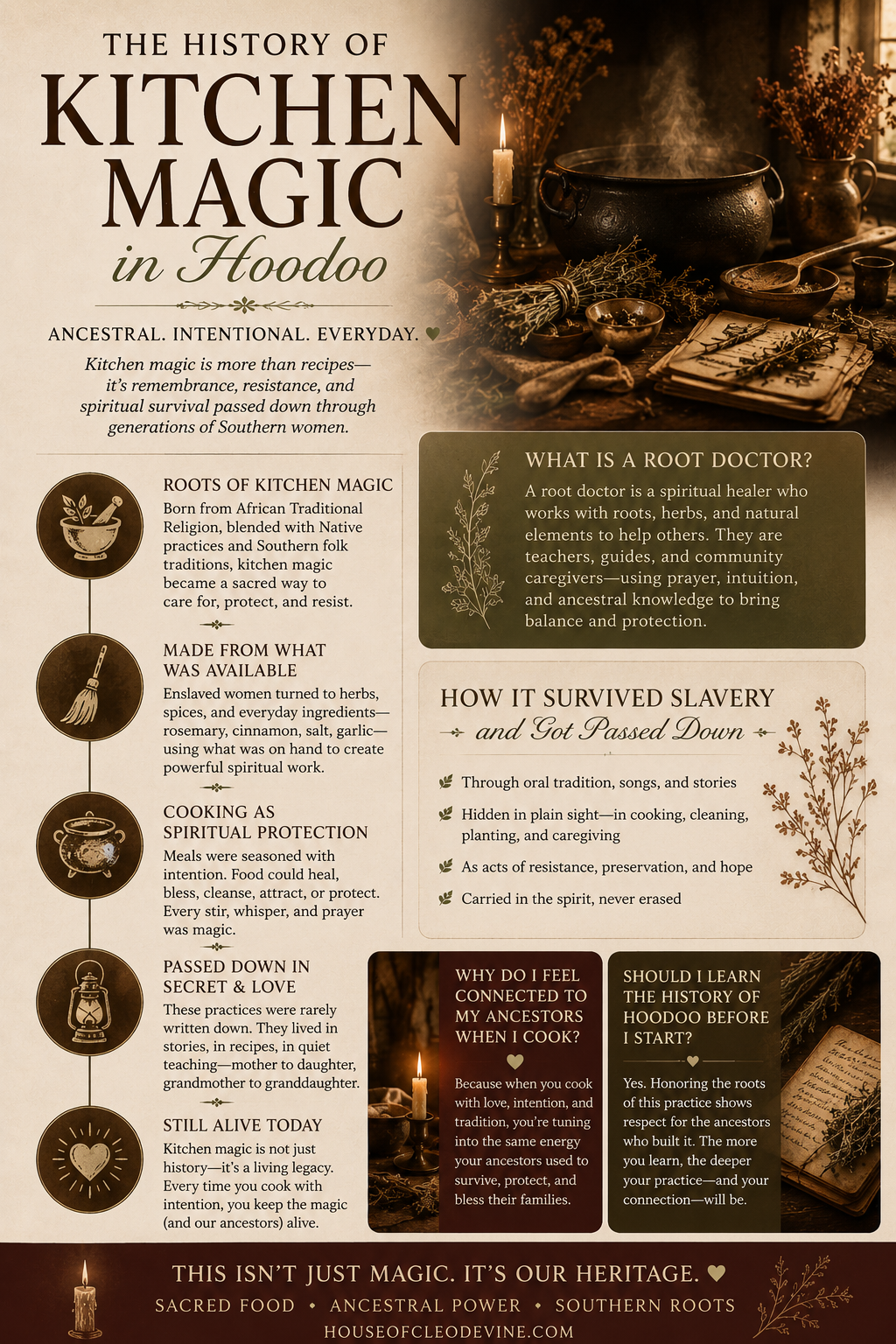
Kitchen magic in Southern folk traditions began as a survival practice, blending African spiritual knowledge, Native American herbal wisdom, and European folklore into one working system carried out through everyday cooking. It let people protect their families and hold onto power even when almost everything else had been stripped away from them.
What Is the History of Kitchen Magic in Hoodoo?
The history of kitchen magic in Hoodoo starts with the transatlantic slave trade, when enslaved Africans were forcibly brought to the American South and forbidden from openly practicing their traditional religions. They could not always carry their gods or their temples with them. What they could carry was knowledge, of herbs, of intention, of ritual, held quietly in memory and passed through daily tasks like cooking.
Over time, this African spiritual knowledge blended with Native American plant wisdom and the Christian, and sometimes Jewish and European folk, traditions found in the American South. The result became Hoodoo, also called conjure or rootwork. It was never a religion on its own. It was a practical system of spiritual work meant to solve real problems, protection, healing, luck, and justice.
The kitchen became one of the safest places to keep this practice alive. Cooking looked ordinary to anyone watching. Nobody questioned a woman adding certain herbs to a pot or sweeping her doorway with salt. Underneath the surface, real spiritual work was happening the entire time.
What Is a Root Doctor?
A root doctor, also called a conjure man or conjure woman, was a respected community healer and spiritual worker who used herbs, roots, prayers, and folk knowledge to help people with health problems, protection, and justice. Root doctors were trusted the way we might trust a doctor or a therapist today, except their work covered both body and spirit.
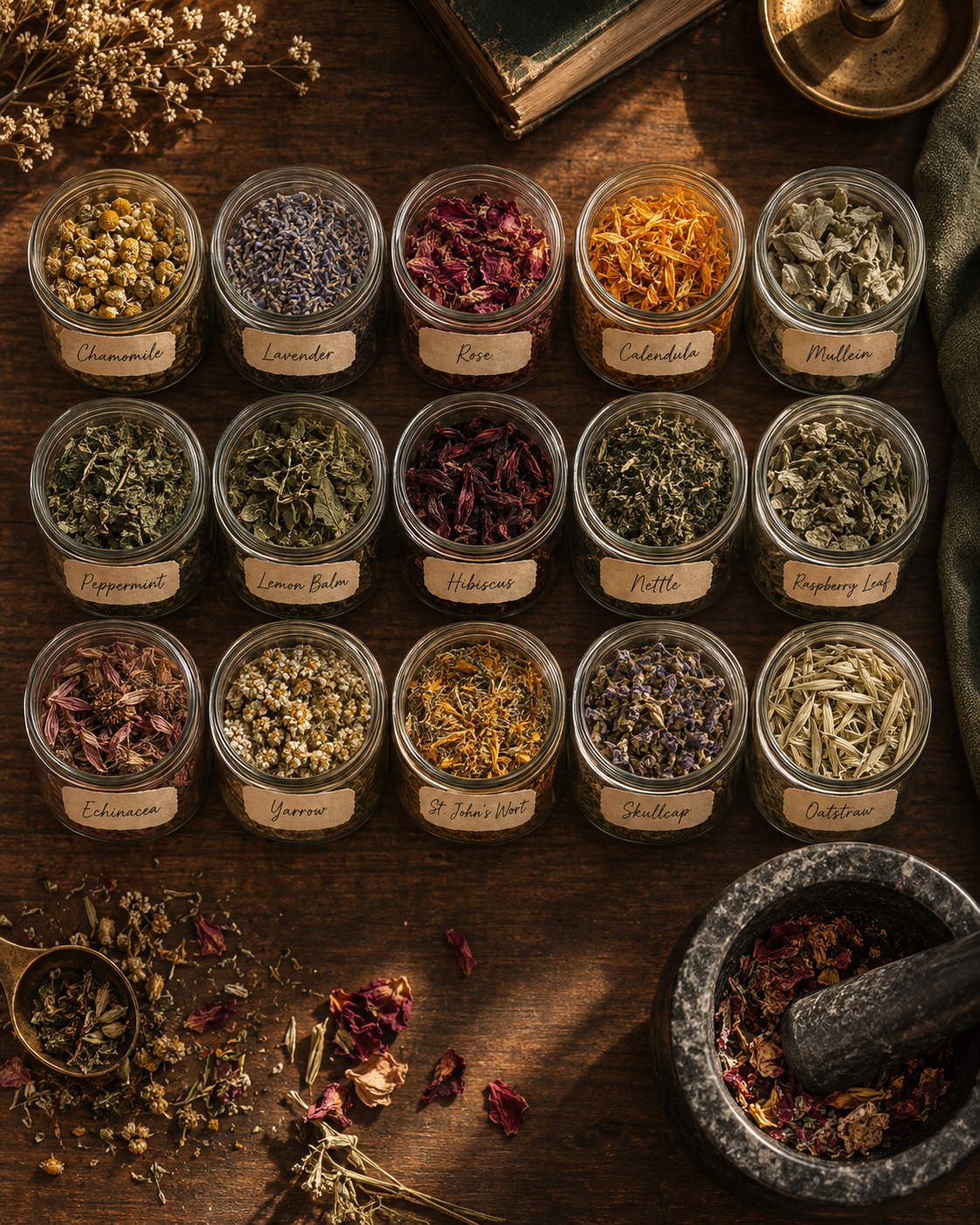
Root doctors often worked quietly out of their own kitchens and gardens. They grew their own herbs, made their own oils, and passed their knowledge down through apprenticeship, usually to a family member or close community member they trusted. Much of what modern practitioners now call a correspondence guide grew directly out of the private knowledge these root doctors carried in their heads and passed down by mouth.
What Root Doctors Actually Carried
A root doctor's knowledge covered far more than a single herb list. It often included which plants healed a fever, which roots eased a broken heart, which oils protected a home from ill intent, and which words spoken over food could calm a hostile situation. This knowledge was memorized, tested, and refined over a lifetime, then handed down carefully to the next generation.
Because so little of this was written down at the time, much of it could have easily been lost. The fact that so many of these correspondences survived into today's practice is a testament to how seriously this knowledge was protected and passed along.
How Did Kitchen Magic Survive Slavery and Get Passed Down Through Families?
Kitchen magic survived because it was disguised as ordinary domestic work, which allowed it to be passed down safely from mother to daughter, generation after generation, without drawing dangerous attention. Cooking was one of the few tasks enslaved women were allowed to control with any independence, and it became a hidden vessel for spiritual practice.
A pinch of a certain herb added to a pot could carry a real intention behind it. A specific way of stirring, a specific day chosen to cook a certain dish, a certain psalm whispered while kneading bread, these small acts held enormous meaning. They were taught quietly, kitchen table to kitchen table, without ever needing to be written down.
This oral, hands on transmission is part of why so many modern women feel a strange pull toward their grandmother's recipes or kitchen habits. That pull is memory. It lives in the body, not just in books.
How Did Enslaved Women Use Cooking as Spiritual Protection?
Enslaved women used cooking as spiritual protection by hiding specific herbs, prayers, and intentions inside everyday meals, turning a required chore into a private act of power and resistance. A meal prepared with a protective herb could shield a household from harm. A dish cooked with a certain intention could soften a harsh overseer or bring comfort during grief.
This was quiet resistance. Nobody could take away a woman's ability to season a pot with intention, even when almost every other freedom had been stolen. Food became one of the last places where personal power could not be fully controlled by someone else.
The Role of Prayer and Psalms in Kitchen Magic
Christianity became deeply woven into Hoodoo, often as a form of protection and disguise. Specific Psalms were spoken over food, over doorways, and over sick loved ones, blending scripture with older African spiritual practices in a way that looked acceptable to onlookers. A woman praying over her cooking pot could not easily be accused of anything improper, even while she was doing focused spiritual work.
This blending was not a loss of the original tradition. It was adaptation, a skill enslaved communities relied on constantly to keep their spiritual lives intact under enormous pressure. Many modern kitchen magic practices still carry small echoes of this, like saying a quiet prayer or blessing before a meal is served.
A Short Timeline of Southern Kitchen Magic
Here is a simple timeline to help this history feel less abstract.
1500s to 1800s, enslaved Africans bring spiritual knowledge and herbal wisdom to the American South, adapting it under extreme hardship
1800s, African spiritual practice blends with Native American plant knowledge and European folk traditions, forming early Hoodoo and rootwork
Late 1800s to early 1900s, root doctors and conjure workers become trusted, semi hidden figures in Southern Black communities
Early to mid 1900s, the Great Migration carries Hoodoo and kitchen magic practices from the rural South into cities across the country
Mid to late 1900s, mail order spiritual supply catalogs begin selling herbs, oils, and candles, making rootwork tools more widely available
Today, southern folk magic and kitchen magic are being reclaimed, studied, and taught openly, often for the first time in generations
Why Do I Feel Connected to My Ancestors When I Cook?
You likely feel connected to your ancestors when you cook because cooking is a physical, repeated action that was historically used to carry memory, protection, and intention across generations. Your body may be responding to something learned long before you, even if nobody explained it to you directly.
This is one reason ancestral veneration and kitchen magic sit so closely together. The kitchen was never just about food. It was a meeting place between the living and the ones who came before them.
Should I Learn the History of Hoodoo Before I Start Kitchen Magic?
Yes, at least the basics. Understanding where kitchen magic and Hoodoo come from helps you practice with respect instead of picking pieces out of context. You do not need to become a historian, but you should know this tradition was built by African American communities under conditions of extreme hardship, and that history deserves to be honored, not erased.
This matters even if your own family background is different. Respecting the roots of a practice is part of doing the work honestly.
Southern Folk Magic Is Bigger Than One Tradition
It helps to know that "Southern folk magic" is often used as a broader umbrella term. It can include Hoodoo, along with Appalachian folk magic, Native American herbal traditions, and European immigrant folk practices that all settled and blended in the American South over time. These traditions are related, but they are not identical, and each one deserves to be named and respected on its own terms.
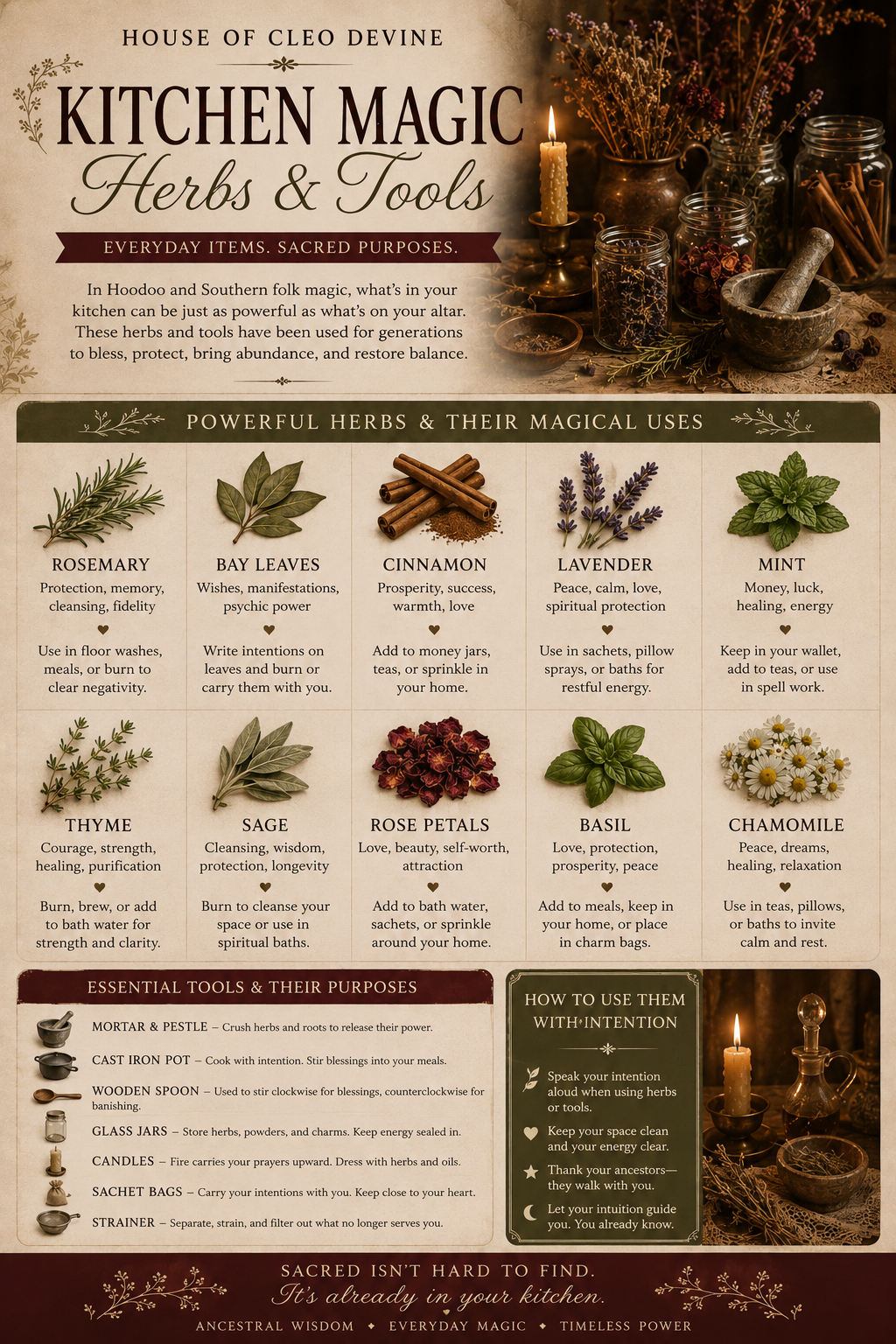
A good Southern Folk Magic Correspondence Guide helps you understand which herb or practice comes from which tradition, so you are working with knowledge and respect instead of guessing.
Appalachian folk magic, sometimes called granny magic, grew out of European settlers, especially Scots Irish and German immigrant communities, who brought their own herbal remedies and folk beliefs into the mountains of the South. Over time, these European traditions lived alongside African American Hoodoo and Native American plant knowledge in the same region, sometimes overlapping, sometimes staying distinct. Knowing which thread you are pulling on helps you practice with clarity instead of blending everything into one vague idea of "old Southern magic."
Common Mistakes People Make With This History
Treating Hoodoo and general Wiccan kitchen witchery as the exact same thing
Skipping the history entirely and only focusing on the herbs
Assuming this practice is just old fashioned superstition instead of a real survival system
Never crediting the African American communities who built and protected this tradition
Rushing into deep practice without learning the basic respect this history calls for
Taking the time to learn this history is part of doing kitchen magic the right way.
A Word From Cleo
I did not learn this history from a textbook first. I learned it from my own family, in small comments and half told stories about women who "knew things." It was not until I got older that I understood how much of that knowledge came from a much bigger, much harder history. Every time I write a correspondence guide or teach a client their first kitchen ritual, I try to carry that history forward with the respect it deserves, not just the aesthetic of it.
Do I Need African Ancestry to Practice Southern Folk Magic?
You do not need African ancestry to practice general kitchen magic or Southern folk magic as a broad tradition, since it includes several cultural threads. But if you are drawing specifically from Hoodoo, it matters to learn from Black teachers and practitioners, credit the origin honestly, and avoid presenting the tradition as if it belongs to no one in particular.
Why Does This History Matter If I Just Want to Cook With Intention?
This history matters because it turns a casual habit into a meaningful practice. Knowing that your cinnamon in the coffee or your bay leaf in the stew connects to generations of resilience changes how it feels in your hands. It stops being a trend and becomes a thread you are choosing to carry forward.
Carrying This History Forward Respectfully
What matters most is honesty about where the practice comes from. When you learn kitchen magic through a Southern folk magic lens, you are stepping into a long line of resilience, memory, and quiet power.
Every herb you use, every intention you set, connects back through generations of women who kept this work alive under conditions we can barely imagine today. That is not a small thing. That is a legacy.
If you want to practice kitchen magic with real understanding instead of guesswork, the Southern Folk Magic Correspondence Guide was built to teach both the how and the why, so the herbs in your kitchen carry meaning instead of just trend.
Ready to practice with real roots behind you? Get the Southern Folk Magic Correspondence Guide and start learning the history behind every herb in your kitchen.