

What Is the Evil Eye? Signs, Symptoms, Protection & Spiritual Cleansing
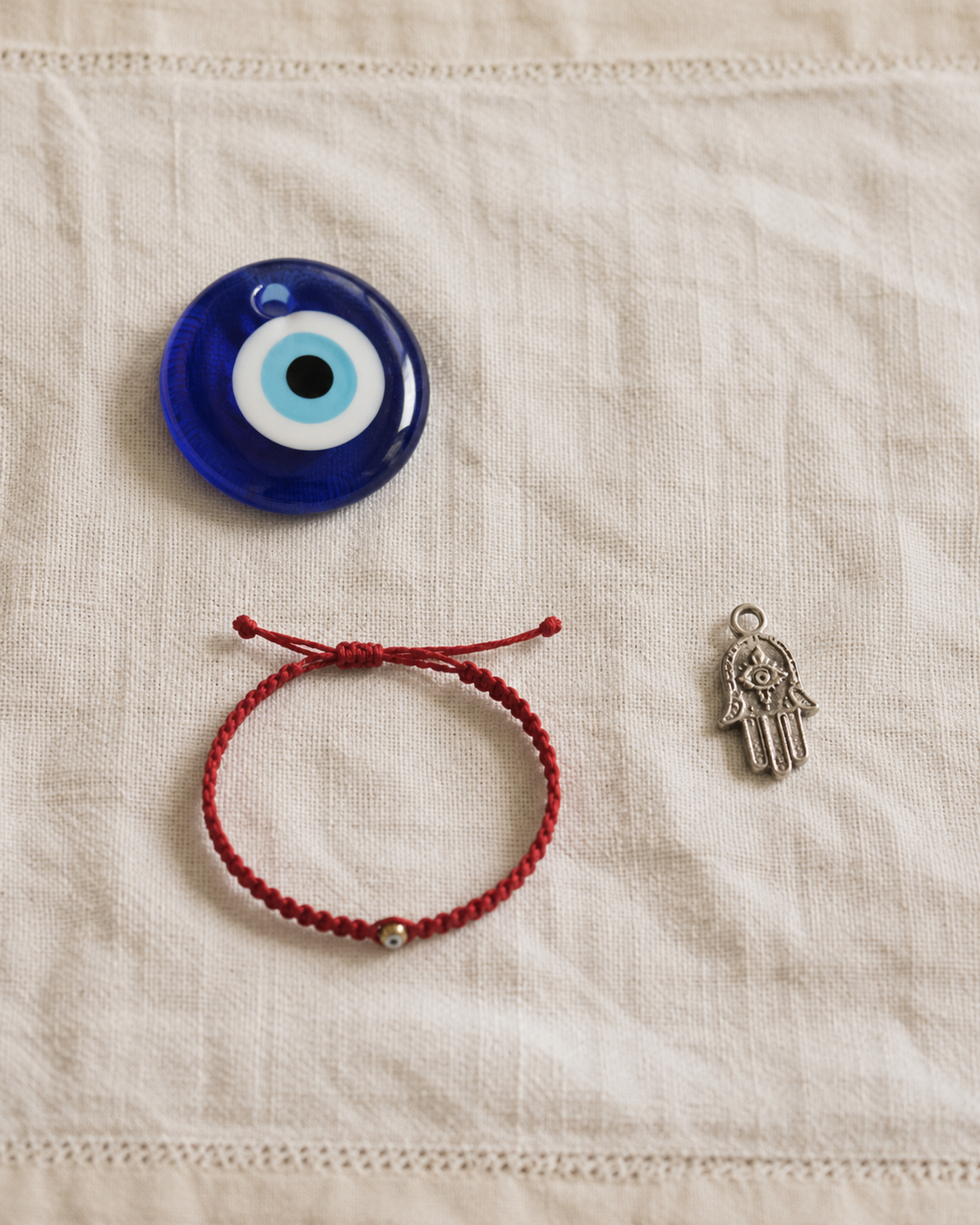
Unlike a lot of what circulates online as ancient wisdom, the evil eye actually is ancient. Written references date back over 5,000 years to Mesopotamian texts, and some version of this belief exists in nearly every culture that borders the Mediterranean and beyond, independently arrived at, over and over, across thousands of years and thousands of miles. That kind of staying power is worth taking seriously. Here's what the evil eye actually is, where it comes from, what it's traditionally believed to cause, and how different cultures have protected against and cleansed it for millennia.
What Is the Evil Eye?
The evil eye is the belief that a look, usually driven by envy, admiration, or jealousy, can cause real harm to the person it lands on: illness, misfortune, a run of bad luck, or a general sense of heaviness. Crucially, the person casting it doesn't need to intend harm consciously. In most traditions that hold this belief, an admiring glance can carry the same effect as a resentful one; the emotional charge behind the look matters more than the sender's stated intentions.
How Old Is This Belief, Really?
It's worth being precise here, because a lot of spiritual content online calls things "ancient" without evidence. The evil eye earns the word. The earliest known written references appear in Mesopotamian texts dating back more than 5,000 years, with archaeological evidence from the ancient city of Tell Brak dating belief in the evil eye to at least 3,300 BCE. By Classical Greece, around 500 BCE, the concept, known as mati, appears in surviving literature, and it spread from there throughout the Mediterranean world. This is genuinely different from many modern spiritual concepts that get labeled ancient without real historical grounding; the evil eye has an unusually well-documented, continuous presence across millennia and cultures.
The Evil Eye Across Cultures
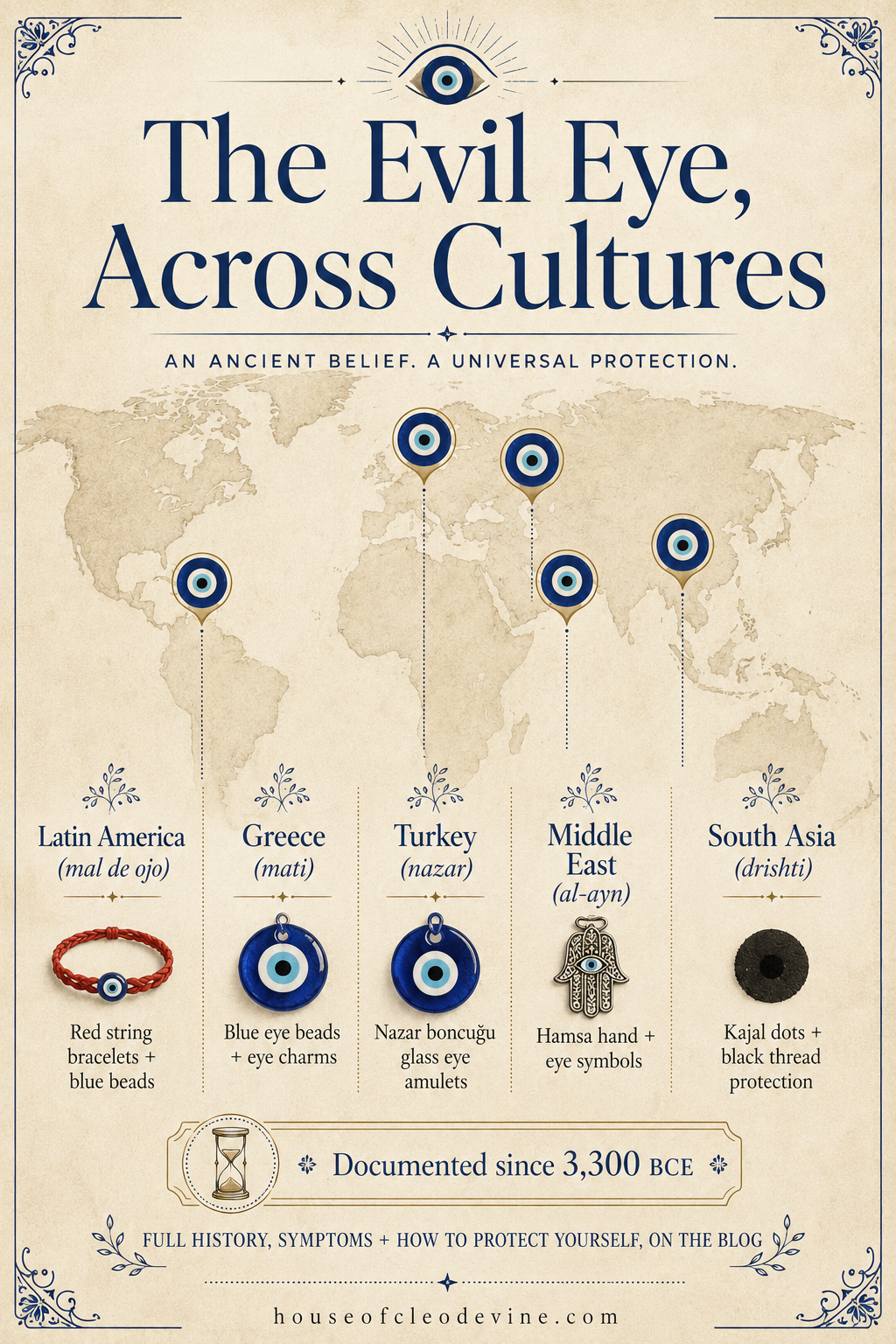
Part of what makes the evil eye remarkable is how many unconnected cultures arrived at strikingly similar beliefs independently. It's worth naming these traditions specifically rather than collapsing them into one generic idea, since each carries its own vocabulary, symbols, and practice.
In Greece, the belief is called mati, and the traditional remedy, xematiasma, involves a person reciting specific prayers while making the sign of the cross over the affected person's forehead.
In Turkey and much of the Near East, the concept is nazar, and the blue glass eye bead, the nazar boncuğu, is one of the most widely recognized protective symbols in the world, appearing in doorways, cars, cribs, and jewelry.
Across Latin America, the belief is known as mal de ojo, "the bad eye," with particular emphasis on protecting infants and young children, who are traditionally considered especially vulnerable to an admiring gaze.
In the Middle East and within Islamic tradition, the evil eye is referenced as al-ayn or ayn al-hasud (eye of the envious), and is mentioned within Islamic teaching; protective practice often includes specific prayers and a form of spiritual recitation called ruqyah.
In South Asia, the concept appears as drishti or nazar, with its own distinct rituals and protective marks used especially for children.
These are related beliefs, not one single tradition wearing different names. Treating them as interchangeable flattens real cultural and religious distinctions worth respecting.
Common Signs and Symptoms
Traditional accounts across these cultures describe a fairly consistent cluster of symptoms, though the specific emphasis varies by tradition:
Sudden, unexplained fatigue or heaviness
Headaches, sometimes described as shifting from one part of the head to another
Uncontrollable yawning, particularly noted in several traditions as a sign during cleansing
A run of bad luck or a string of small misfortunes arriving close together
Emotional heaviness, sadness, or anxiety with no clear cause
In infants and young children specifically: excessive fussiness, disrupted sleep, and loss of appetite
It's genuinely important to say this plainly: headaches, fatigue, disrupted sleep, and stomach upset are common symptoms of countless ordinary medical conditions, and this is especially true for infants and children. Traditional folk belief itself generally emphasizes discernment here, a single symptom on its own isn't typically treated as significant; it's the cluster of several symptoms arriving together, often following a specific moment of attention or admiration, that traditional accounts describe as meaningful. If a child is showing genuine signs of illness, a pediatrician should always be the first call, not a spiritual remedy in place of one.
Is It the Evil Eye, or Something Else?
If you've read our recent pieces on energy vampires and signs someone is sending you negative energy, you'll notice real overlap here, and that's worth addressing directly. The evil eye is best understood as one specific, culturally rooted form of a broader pattern: harm attributed to another person's emotional charge, in this case, envy or admiring attention specifically, arriving in a fairly sudden, clustered way, often following visible good fortune, praise, or attention. General energy drain tends to build gradually through ongoing exposure to a person; the evil eye, in traditional accounts, is more often described as a single, sudden event tied to a specific moment of being seen.
Protection: Amulets and Practices
Protective practice across these traditions centers on wearable or displayed symbols meant to deflect the gaze before it lands. The blue nazar eye, the mano fica and mano de Fátima hand charms found across the Mediterranean and, through Iberian colonization, into Latin America, and red string worn on an infant's wrist across many Latin American families, all serve a similar function: an object that visibly "returns the look" rather than passively absorbing it.
A worth-knowing folk detail: in several traditions, when a nazar amulet cracks or breaks without an obvious physical cause, this is traditionally read not as bad news but as the opposite, evidence that the amulet did its job and absorbed a blow that would otherwise have landed on the wearer. If you're drawn to this kind of protective piece, the Mystery Evil Eye Necklace offers a wearable version of this tradition for daily protection.
Cleansing If You Suspect It's Already Happened
If protection wasn't in place before the fact, or if symptoms are already present, most traditions turn to cleansing rather than only prevention. Across Mexican and broader Latin American curanderismo, the limpia con huevo, egg cleanse, is one of the most consistently used tools for both diagnosing and removing the evil eye specifically. An egg is passed over the body and later read for patterns believed to indicate the eye's presence, offering something rare in this space: an actual diagnostic step rather than only speculation. Our Egg Cleanse session addresses this directly, alongside the broader clearing our earlier piece on checking for negative energy walks through in more depth.
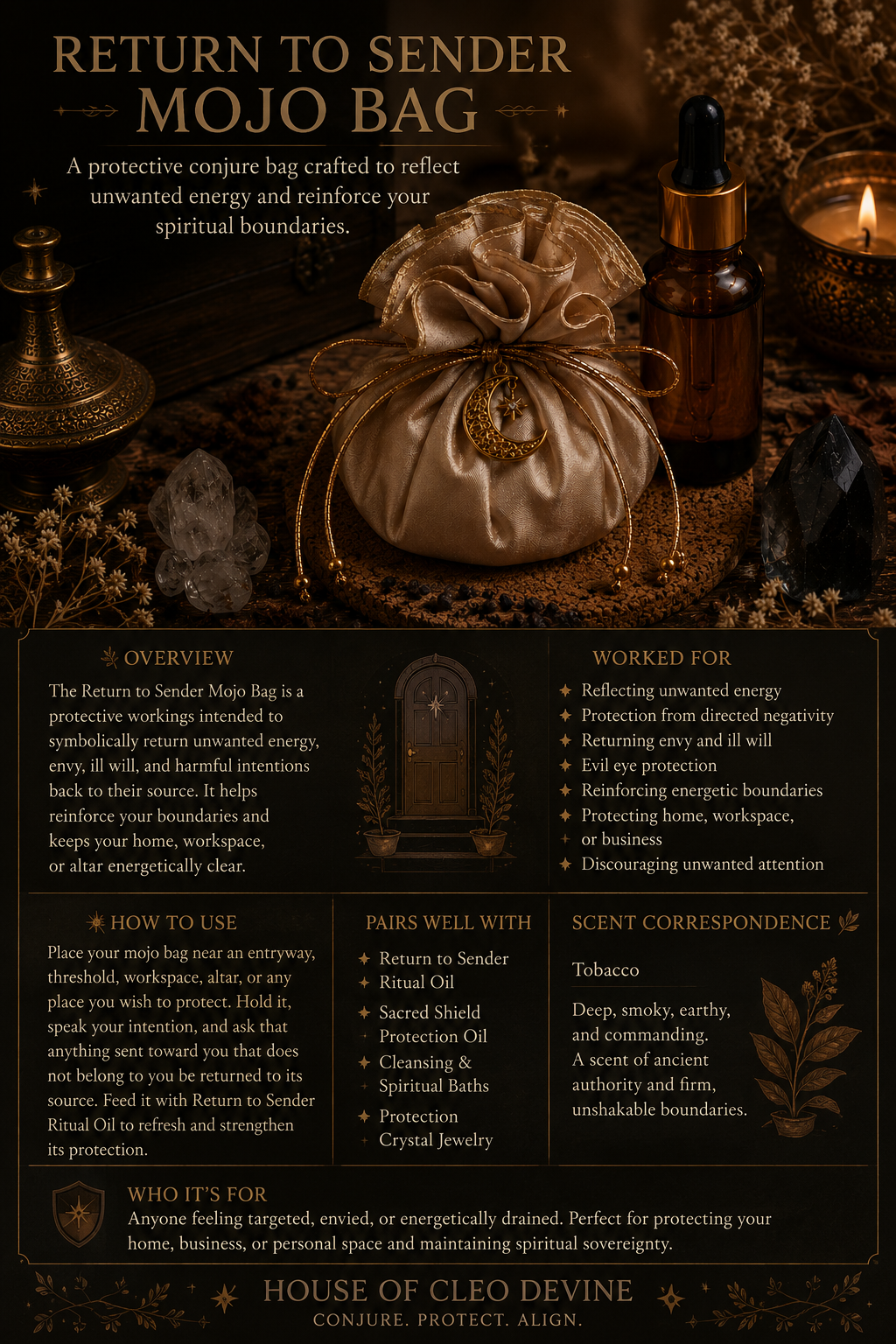
If you've identified a specific person whose envy or attention you believe triggered the pattern, and the symptoms are persistent rather than a single passing episode, a Return to Sender working focused on evil eye and jealousy is built specifically for this more targeted situation, reflecting the energy back to its source rather than only clearing your own field.
Frequently Asked Questions
Is the evil eye a religious belief or a cultural superstition? Both, depending on the tradition. It appears within religious contexts, including references within Islamic teaching, and also exists as a broader cultural folk belief independent of any single religion. Different communities hold it with different degrees of religious versus cultural weight.
Can you give yourself the evil eye through your own pride? Some traditions do describe this possibility, sometimes called self-inflicted evil eye through excessive pride or self-admiration, though this is a less universally emphasized aspect of the belief than envy directed from another person.
Does wearing an evil eye amulet mean I believe in curses? Not necessarily. Many people wear the nazar or similar protective jewelry as a cultural practice, a nod to heritage, or simply an aesthetic choice, without holding a literal belief in the underlying tradition. Others wear it with full spiritual conviction. Both are common.
Is it disrespectful to wear an evil eye symbol if it's not part of my own culture? This is a genuinely debated question with no single answer. Given how many distinct cultures share versions of this belief, some see the symbol as a broadly shared human tradition; others feel strongly that specific versions, like the Turkish nazar, carry cultural weight that deserves particular care and context. If this matters to you, it's worth learning the specific tradition behind whichever version of the symbol you're drawn to.
How is the evil eye different from a curse or a hex? The evil eye is traditionally understood as often unintentional, arising from ordinary human emotion like envy or even excessive admiration, rather than deliberate spellwork. A curse or hex, by contrast, typically implies conscious intention to cause harm.
Should I see a doctor if I think a child has the evil eye? Yes, always, for any genuine symptoms of illness in a child. Traditional spiritual remedies are not a substitute for medical care, and this article isn't offering medical guidance. A pediatrician should rule out physical causes before or alongside any spiritual practice.
Few spiritual concepts online can genuinely claim thousands of years of continuous, cross-cultural documentation, and the evil eye is one of the rare ones that can. Whatever your own relationship to the belief, the tradition itself has always emphasized the same two things: protection before the fact, and cleansing after it.
If you want a daily layer of protection, the Mystery Evil Eye Necklace offers that in wearable form. If you suspect it's already happened, the Egg Cleanse provides both diagnosis and cleansing, and if a specific source feels clear, the Return to Sender for evil eye and jealousy addresses that directly.



























A money-return working for situations where someone owes you money, a payment is overdue, or funds that rightfully belong to you have not made their way back. It is worked to draw what is owed toward you and open the path for repayment.