 Image 1 of 5
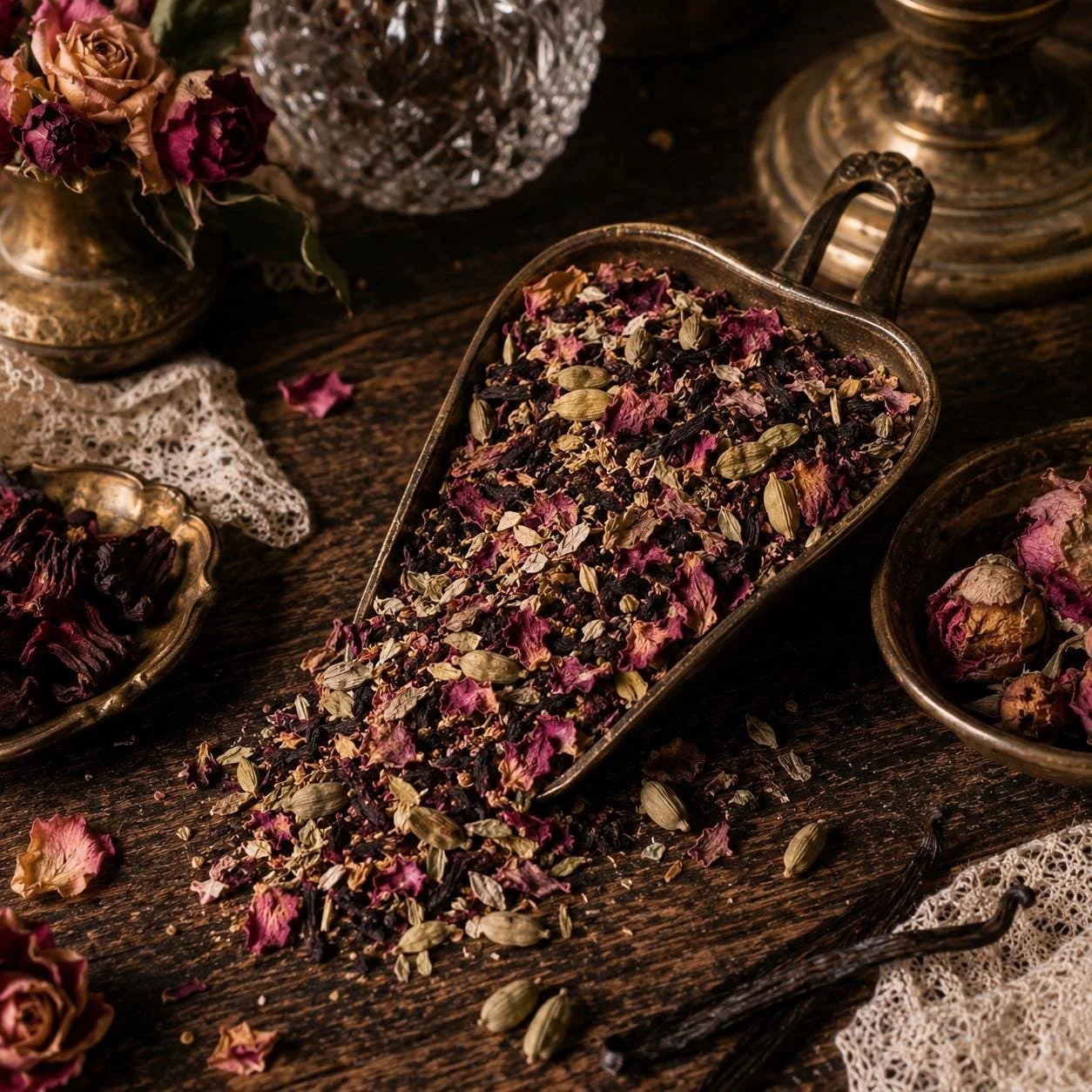 Image 2 of 5
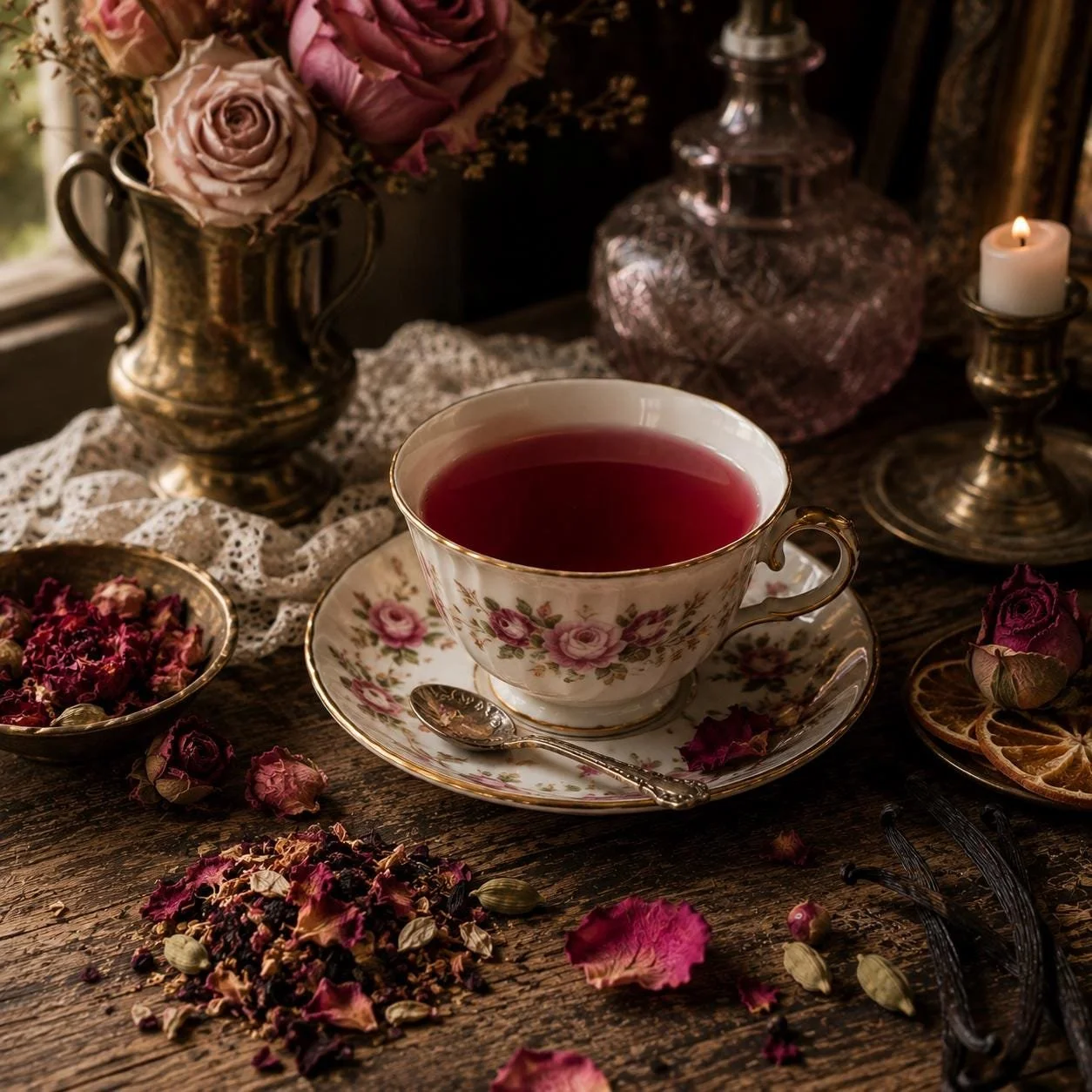 Image 3 of 5
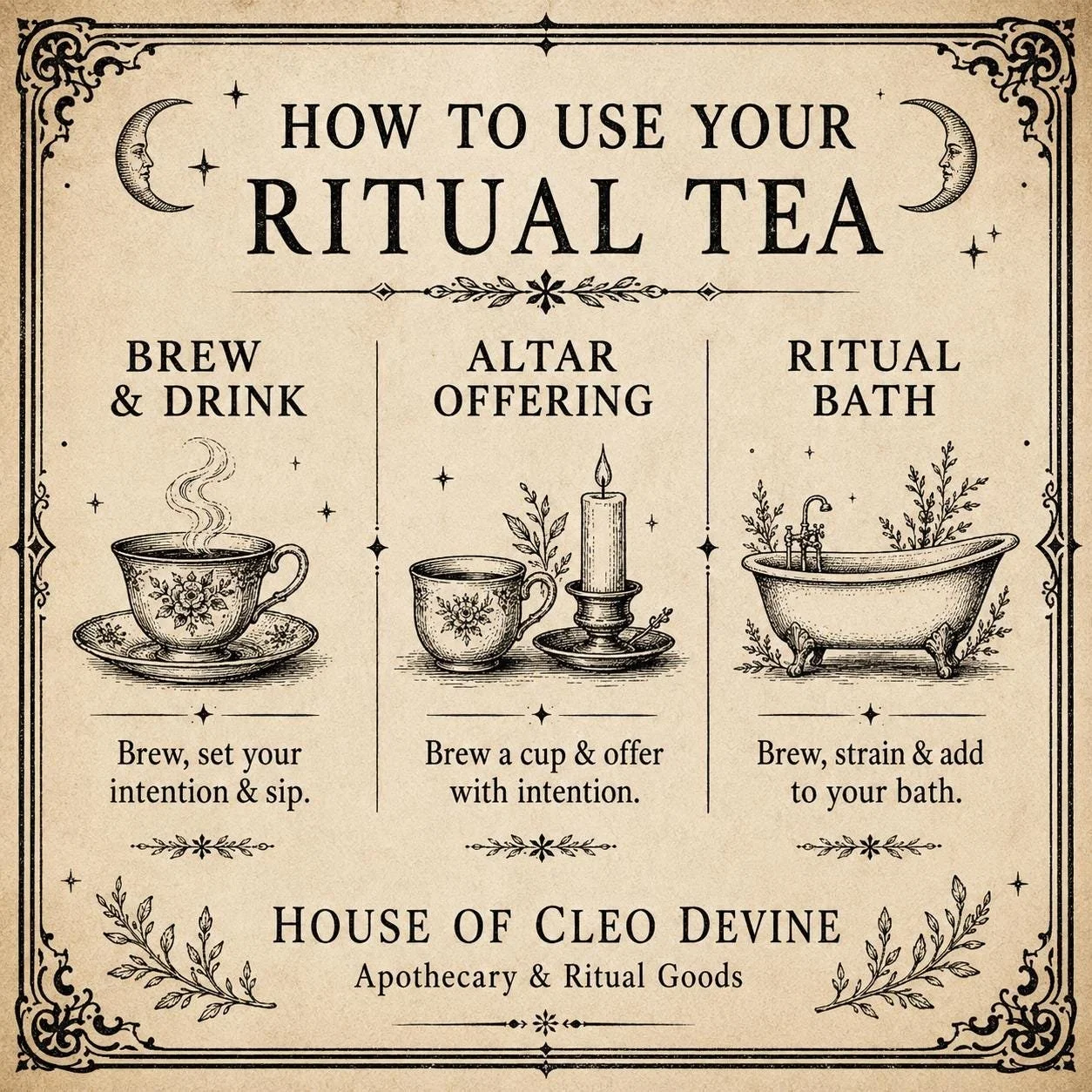 Image 4 of 5
 Image 5 of 5
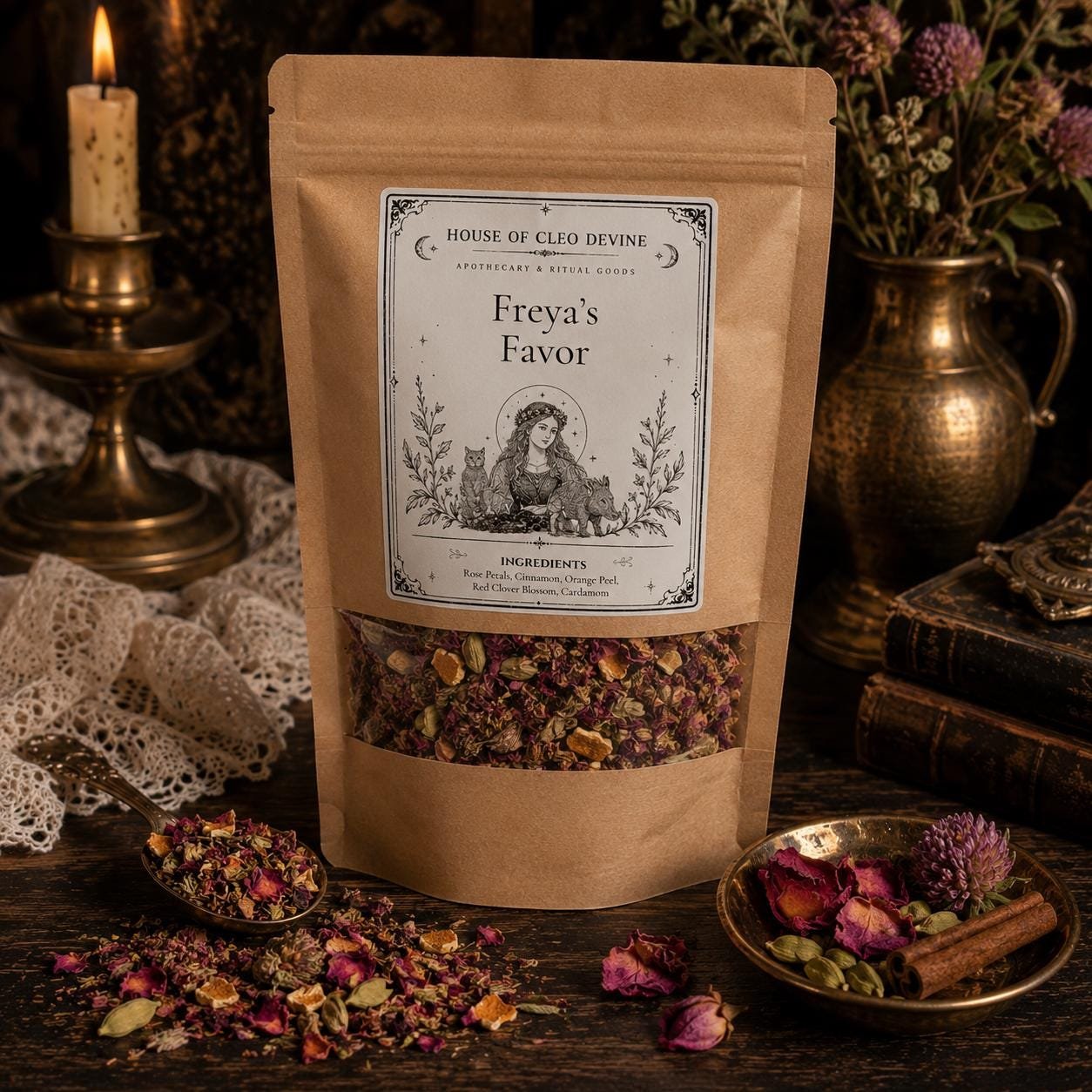
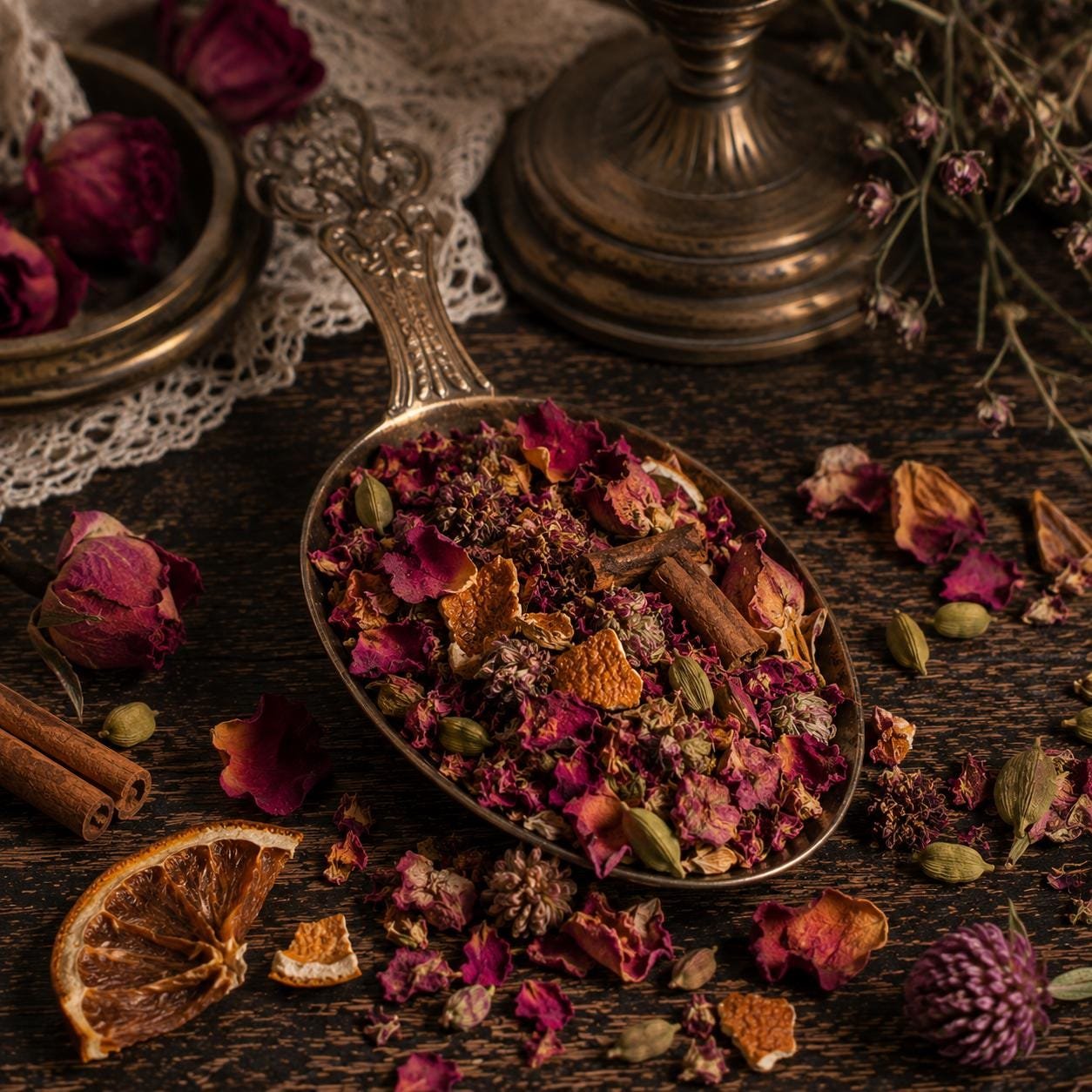
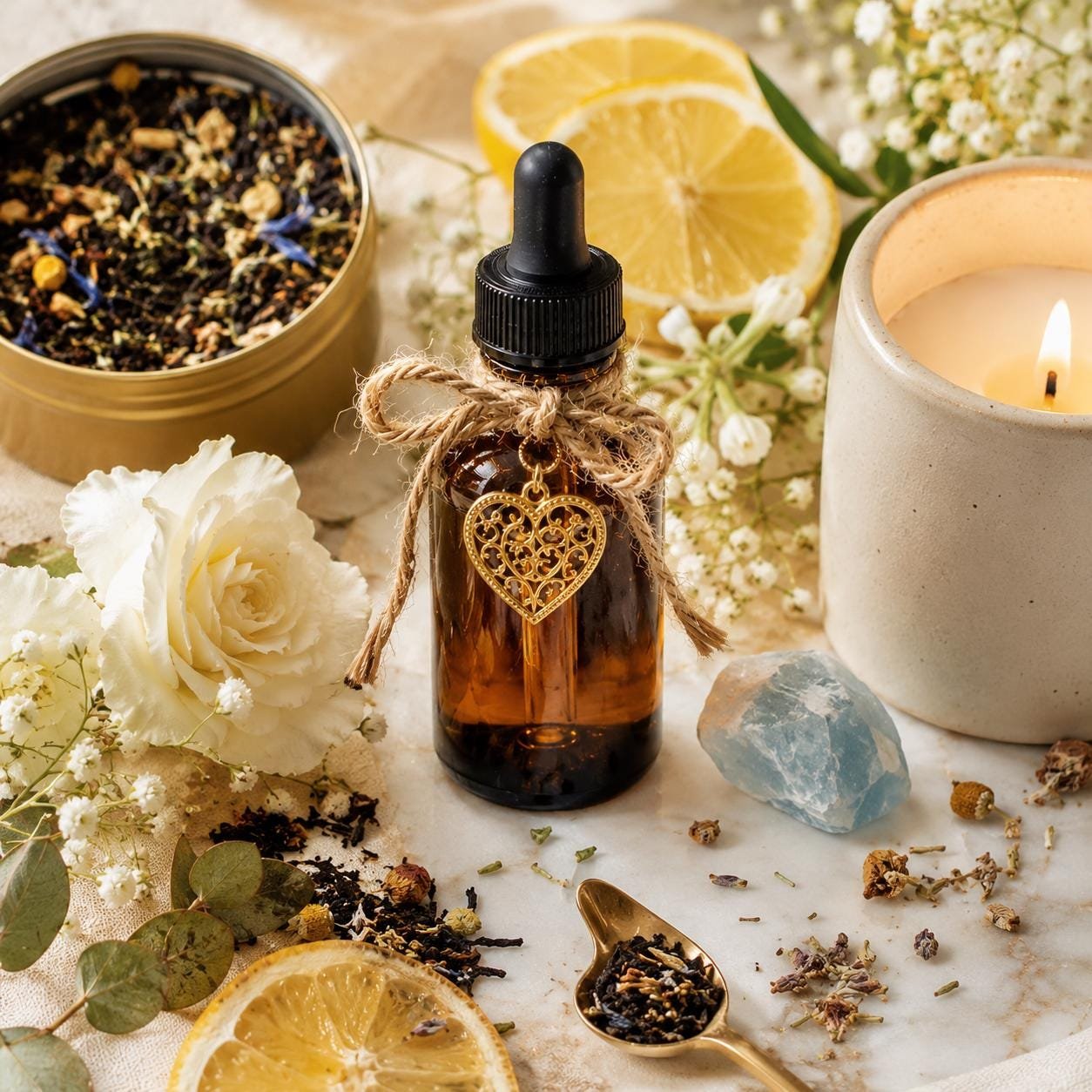
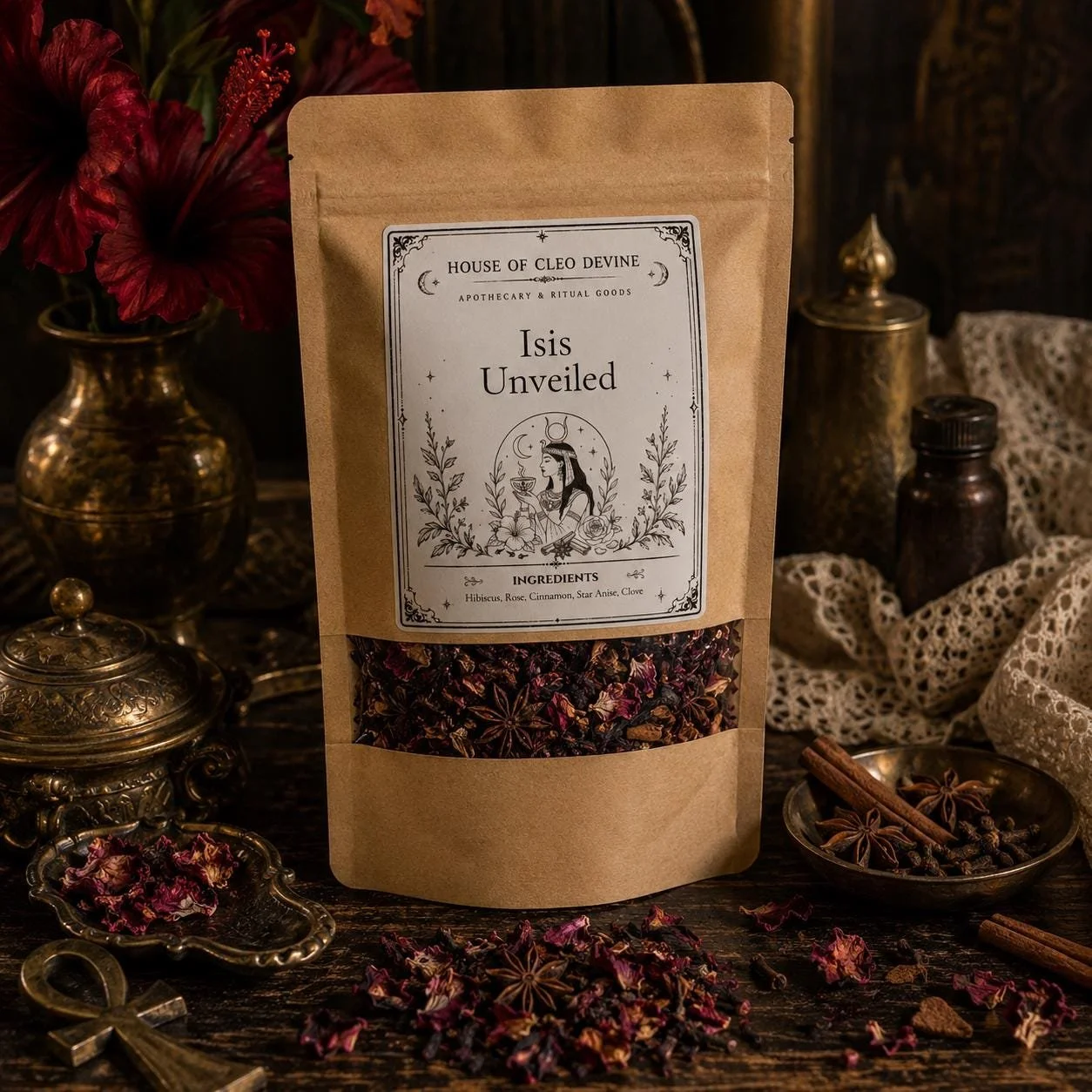
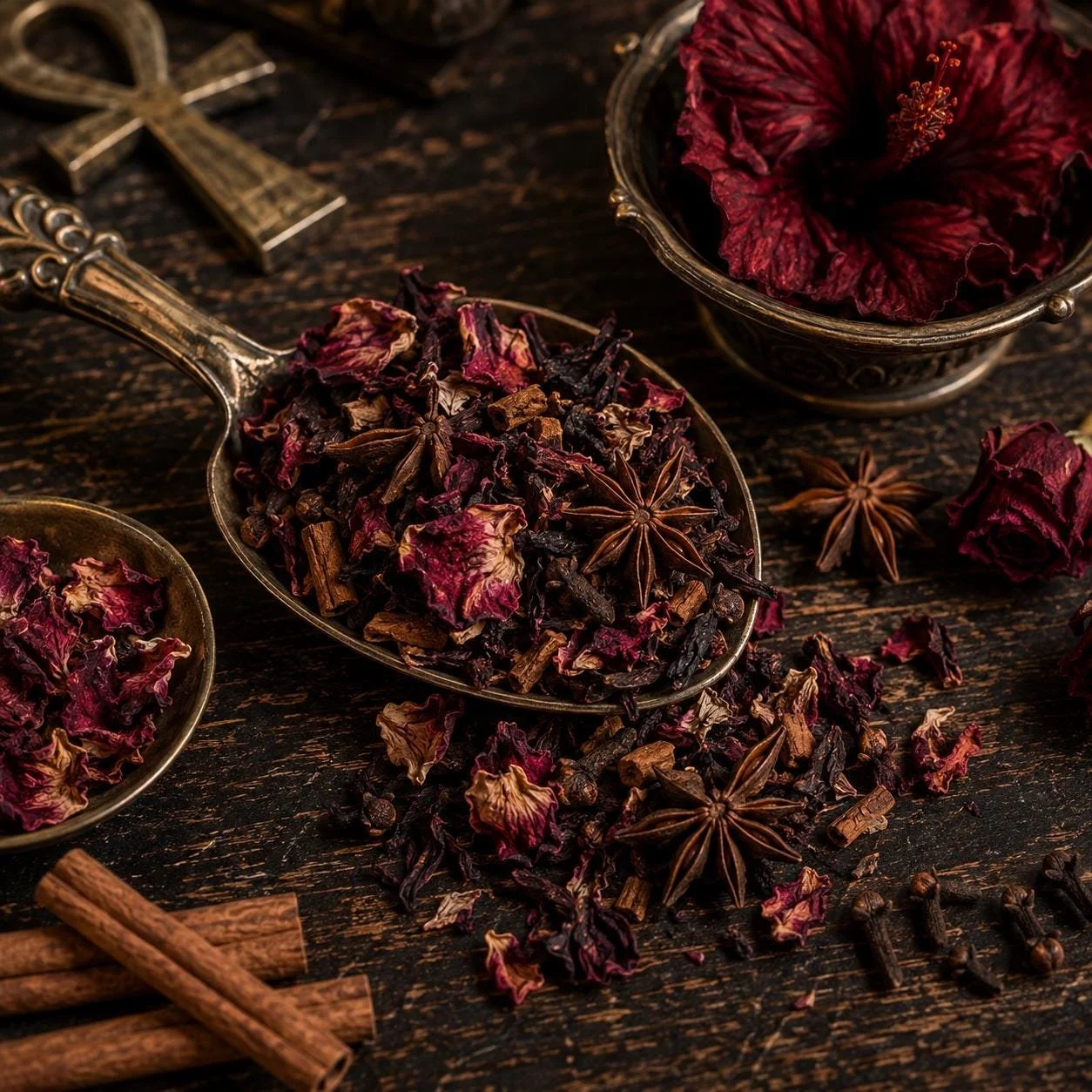
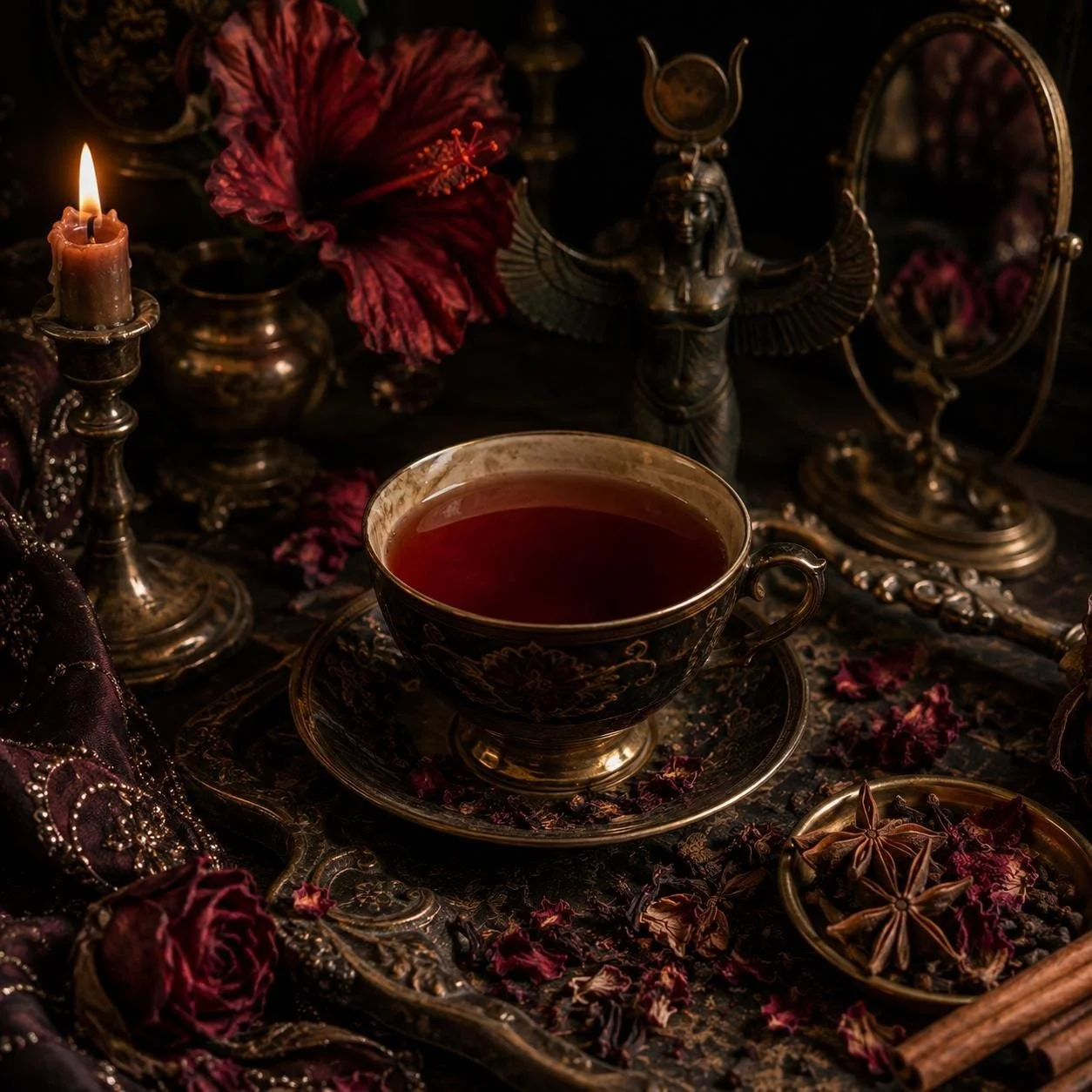
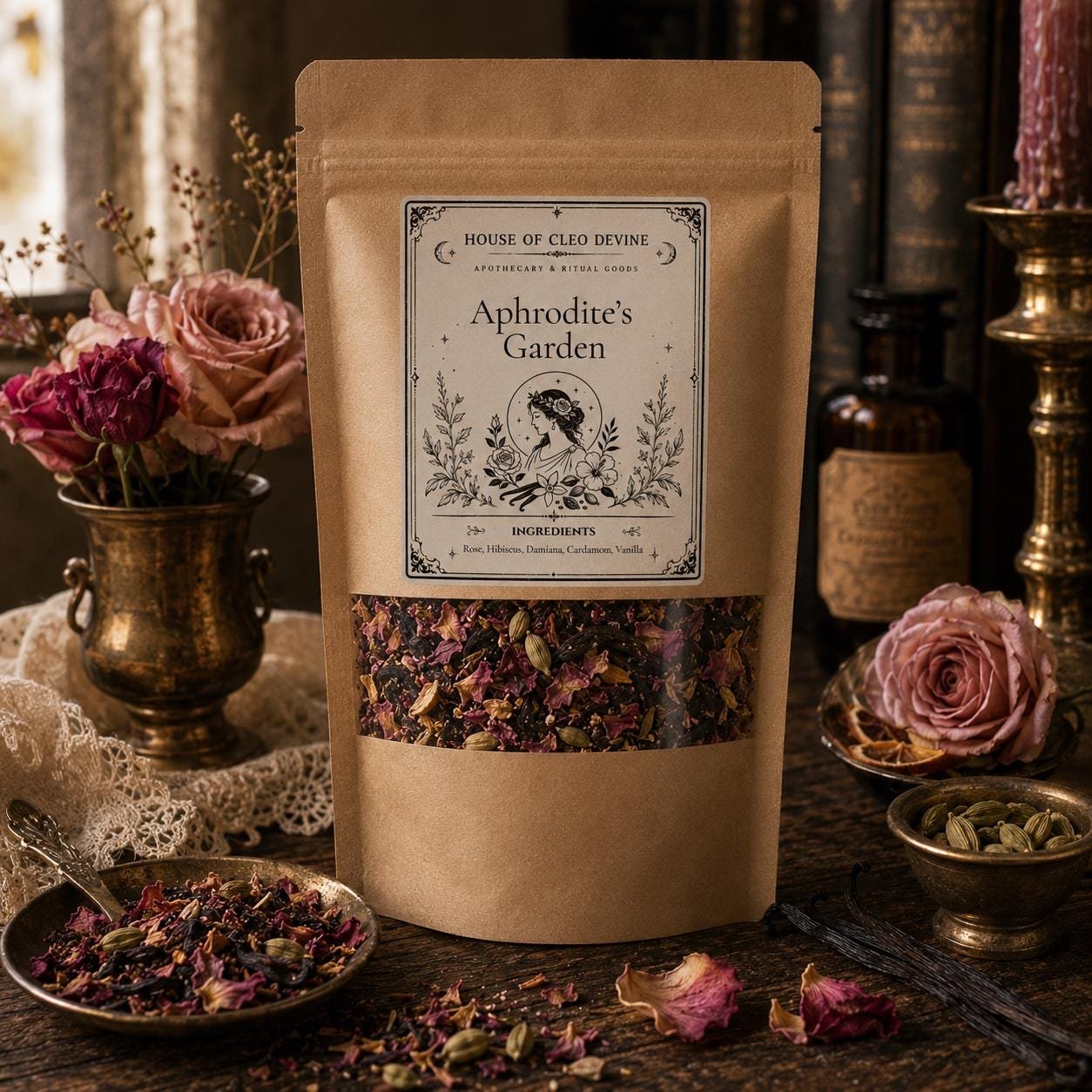
Aphrodite’s Garden is a loose leaf ritual herbal tea inspired by Aphrodite, the Greek goddess of love, beauty, pleasure, desire, and procreation. Rose petals meet crimson hibiscus, damiana, fragrant cardamom, vanilla bean, and a touch of orange peel in a sensual botanical blend created for self-love rituals, Aphrodite devotional practice, beauty rituals, altar offerings, and intentional moments of pleasure.
The rose provides the blend's strongest historical connection to Aphrodite: ancient sources explicitly describe the rose as sacred to the goddess. Damiana brings another tradition entirely—one rooted in the Americas, where Turnera diffusa has a longstanding reputation as an aphrodisiac botanical.
Together, they create something that feels less like asking love to arrive and more like entering Aphrodite's garden yourself.
✦ THE RITUAL
Aphrodite’s Garden was created around a different kind of love ritual.
Not chasing. Not convincing. Not becoming beautiful enough to be chosen.
Receiving. Enjoying. Adorning. Desiring. Being desired. And remembering that pleasure can belong to you before anyone else enters the room.
Reach for this blend when tending your vanity or altar, preparing for a date, journaling about self-love, creating a beauty ritual, taking a ceremonial bath, or simply choosing to make an ordinary evening feel more deliberate.
As the herbs steep, consider what pleasure means when it isn't being performed for someone else.
What makes you feel beautiful?
What makes you feel alive?
What would change if you allowed yourself to receive beauty and pleasure rather than continually earning them?
Aphrodite's Garden does not promise attraction, romance, confidence, or any other supernatural or personal outcome. It is an intention tea and ritual tool designed to give those themes a physical place in your practice.
✦ TRADITIONAL SPIRITUAL PROPERTIES
Rose — Love, Beauty & Aphrodite
Rose is the botanical heart of Aphrodite's Garden—and unlike many modern goddess/herb correspondences, this one has genuine historical grounding.
Ancient sources explicitly associate the rose with Aphrodite. Pausanias wrote that the rose and myrtle were sacred to her, while other surviving Greek and Greco-Roman literature repeatedly connects roses with Aphrodite, Eros, the Graces, love, and beauty.
Across later folk and magical traditions, rose accumulated broader associations with love, romance, beauty, affection, attraction, reconciliation, and matters of the heart.
Here, rose represents the garden itself: beauty that blooms because blooming is its nature.
Damiana — Desire & Sensuality
Damiana (Turnera diffusa) comes from an entirely different cultural and botanical tradition and should not be mistaken for an ancient herb of Aphrodite.
The plant is native to the Americas and has a longstanding ethnobotanical reputation as an aphrodisiac. Scholarly reviews describe Turnera diffusa as particularly valued among traditional aphrodisiac plants, and damiana leaves have historically been prepared as teas and other herbal preparations.
Within this modern ritual blend, that traditional reputation makes damiana a fitting symbol of desire, sensuality, embodied pleasure, and erotic vitality.
Hibiscus — Passion & Attraction
Hibiscus brings vivid crimson color and tartness to the formula.
Within contemporary herbal-magic traditions, hibiscus is commonly incorporated symbolically into workings concerning passion, attraction, love, desire, and sensuality.
In Aphrodite's Garden, its role is both sensory and symbolic: the lush red note beneath the softness of rose.
Cardamom — Warmth & Sensuality
Cardamom contributes fragrant warmth and spice.
In later folk-magical and contemporary herbal traditions, cardamom is often associated with love, attraction, passion, warmth, and desire.
Here it provides the heat beneath the flowers—a reminder that Aphrodite's domain encompasses not merely romantic love, but desire and pleasure.
Vanilla — Sweetness & Pleasure
Vanilla lends softness and sweetness to the composition.
Modern magical correspondences commonly associate vanilla with love, attraction, sweetness, sensuality, and pleasure. Within this blend, it serves primarily as a sensorial and symbolic ingredient rather than something presented as historically sacred to Aphrodite.
Orange Peel — Joy & Radiance
A small amount of orange peel brightens the blend.
In folk and contemporary magical practice, citrus is often incorporated into workings concerning joy, vitality, attraction, good fortune, and solar brightness.
Here, orange peel represents radiance—the pleasure of feeling alive in one's own skin.
A note on tradition
Aphrodite's Garden is a modern ritual herbal blend, not a reconstruction of an ancient Greek beverage.
Rose has a documented historical relationship with Aphrodite. Damiana's traditional reputation comes instead from the Americas. The remaining ingredients have been chosen for flavor, aroma, color, and their broader symbolic associations.
We would rather preserve those distinctions than invent an ancient tradition that never existed.
✦ APHRODITE — LOVE, BEAUTY & PLEASURE
Aphrodite was the Greek goddess of love, beauty, pleasure, desire, and procreation.
Her imagery is rich with sensuous symbols: roses and myrtle, doves, apples, shells, the sea, Eros, and the Graces. Ancient sources identify the rose and myrtle among her sacred plants, while the apple and pomegranate also appear among her attributes and myths.
And that makes Aphrodite more interesting than the flattened modern idea of a "love goddess."
Her domain isn't merely finding a romantic partner.
It encompasses beauty. Desire. Pleasure. Attraction. Fertility. Sensuality. The erotic. The adornment and enjoyment of life itself.
That distinction is the heart of Aphrodite's Garden.
Using Aphrodite's Garden devotionally
If Aphrodite is part of your personal spiritual practice, brew a cup while tending her altar, offering prayer, journaling, studying her mythology, adorning yourself, or contemplating your relationship with beauty, pleasure, desire, and receiving.
A freshly prepared cup may also be placed on an Aphrodite altar as a personal devotional offering according to your own tradition.
Rose makes an especially meaningful botanical presence because of its documented connection with the goddess.
Using this tea does not guarantee contact with Aphrodite or any deity, nor is the formula presented as a historically documented ancient Greek offering.
It is a modern devotional and ritual blend inspired by genuine mythology alongside later herbal traditions.
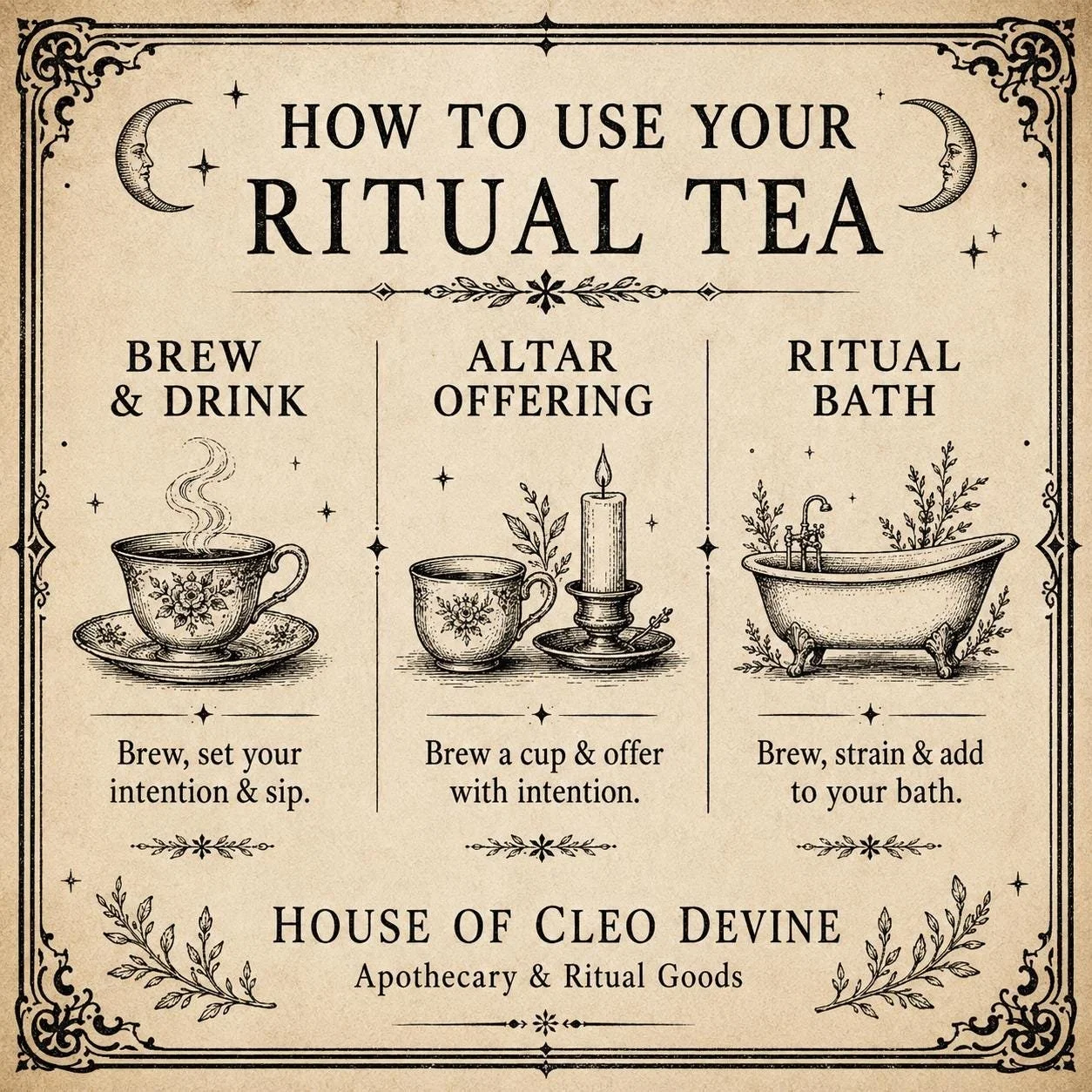
✦ WAYS TO USE
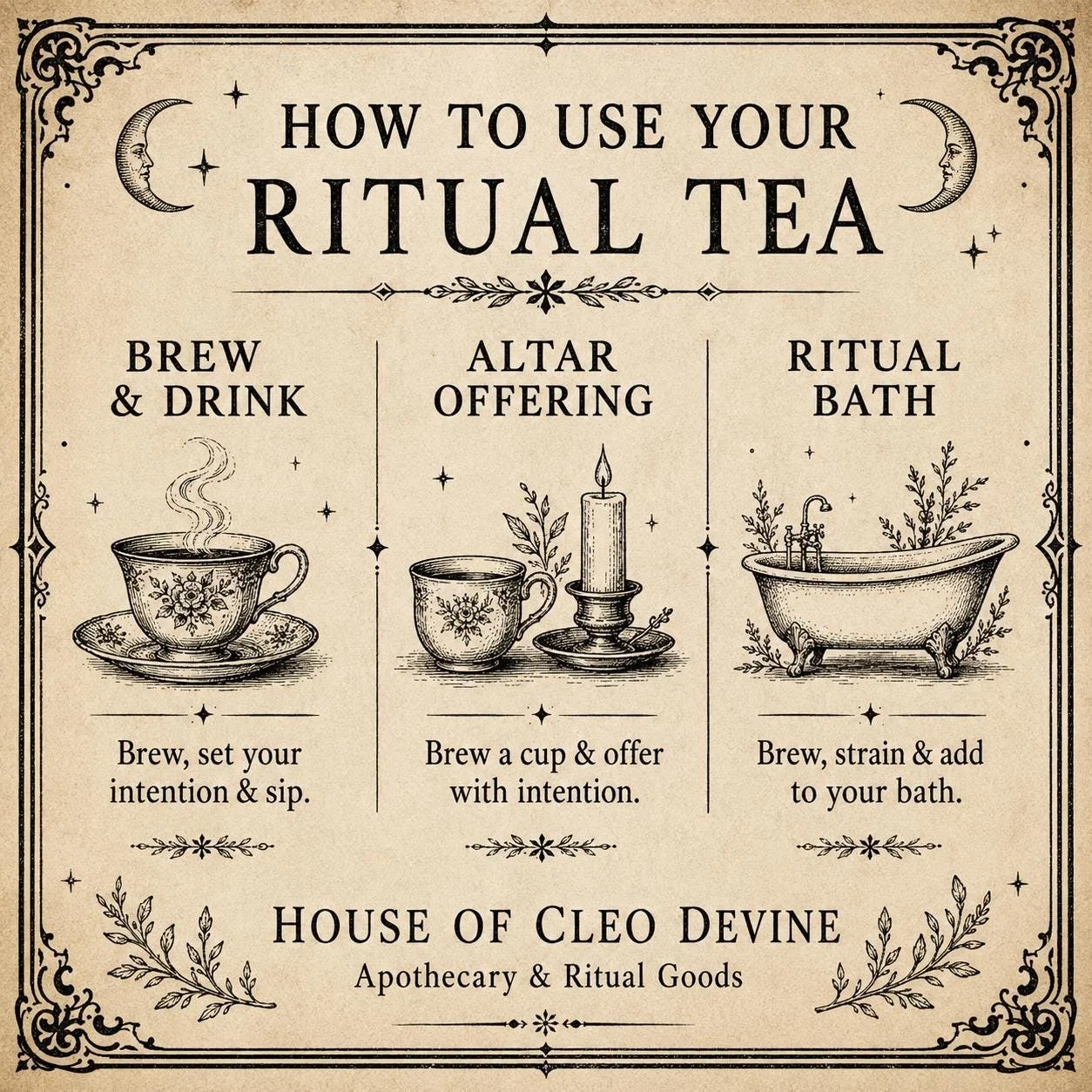
1. BREW & DRINK
Prepare Aphrodite's Garden normally and allow the act of brewing to become part of the ritual.
Set an intention before taking your first sip.
You might journal on:
What makes me feel beautiful when nobody else is watching?
Where have I made pleasure something I have to earn?
What do I genuinely desire?
How would I treat myself if I considered myself worthy of being cherished?
Then drink slowly.
Use it before journaling, dressing for an evening out, tending your altar, performing a beauty ritual, or simply creating a beautiful moment for yourself.
2. ALTAR OFFERING
Brew a fresh cup and place it on an Aphrodite altar or devotional space as a personal offering, where appropriate within your spiritual practice.
It can accompany other symbols already meaningful to your practice, particularly roses or other historically associated Aphrodite imagery.
Remove food and beverage offerings according to the customs and practical considerations of your tradition.
3. RITUAL BATH
Brew the herbs separately in hot water and strain thoroughly.
Add only the strained botanical infusion to your bathwater.
Pair the bath with your existing self-love, beauty, pleasure, attraction, or Aphrodite devotional ritual. Candles, music, beautiful linens, journaling, or deliberate personal adornment can turn the practice into something more immersive without making it complicated.
Do not place loose botanical material directly into plumbing.
4. VANITY & BEAUTY RITUAL
Brew a cup before getting ready.
Rather than using beauty practices to correct something "wrong," approach adornment as ritual.
Apply your perfume. Choose your jewelry. Style your hair. Anoint yourself according to your practice.
Let beauty become celebration rather than correction.
5. SELF-LOVE JOURNALING
Aphrodite's Garden is particularly suited to journaling around self-worth, pleasure, receiving, beauty, desire, and your relationship with being seen.
The goal doesn't have to be "loving everything about yourself."
Start smaller:
What would it look like to stop treating yourself as someone who must constantly be improved before she is allowed to enjoy her life?
✦ BREWING
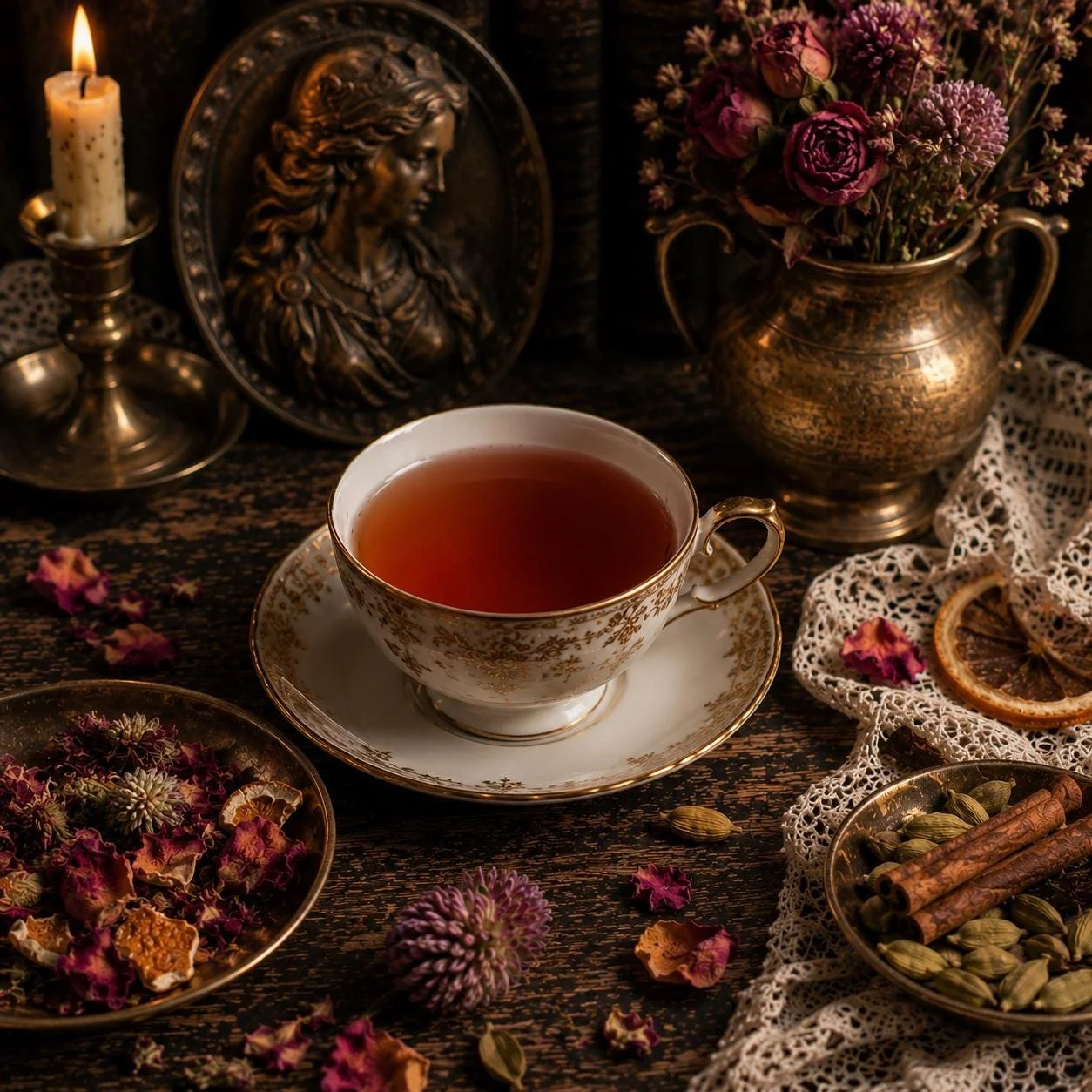
1 tsp per 8 oz water, steep covered 5 min. Sip slowly while journaling on self-love, or before a bath ritual.
✦ INGREDIENTS
Rose Petals
Hibiscus
Damiana Leaf
Cardamom
Vanilla Bean
Orange Peel
✦ WHO THIS BLEND MAY SPEAK TO
Aphrodite's Garden may especially resonate with someone who is:
• creating a self-love or beauty ritual
• beginning or deepening an Aphrodite devotional practice
• looking for a symbolic Aphrodite altar offering
• exploring pleasure, sensuality, desire, and receiving
• creating a ritual before a date or special evening
• reclaiming beauty as something experienced for herself rather than performed for others
✦ CHOOSE YOUR SIZE
Ritual Sample — Approx. 1–2 Cups
A small introduction to the garden. Ideal for discovering a new blend or adding several ritual teas to your order.
Ritual Pouch — Approx. 5–8 Cups
Made for occasional ritual use, altar work, devotional practice, baths, or rotating among several blends.
Apothecary Pouch — Approx. 20–30 Cups
Our full-size offering for those who want to make the blend a recurring part of their ritual practice.
Approximate servings may vary slightly depending on how each serving is measured.