

Cinnamon, Bay Leaf, and More: A Kitchen Magic Correspondence List for Beginners
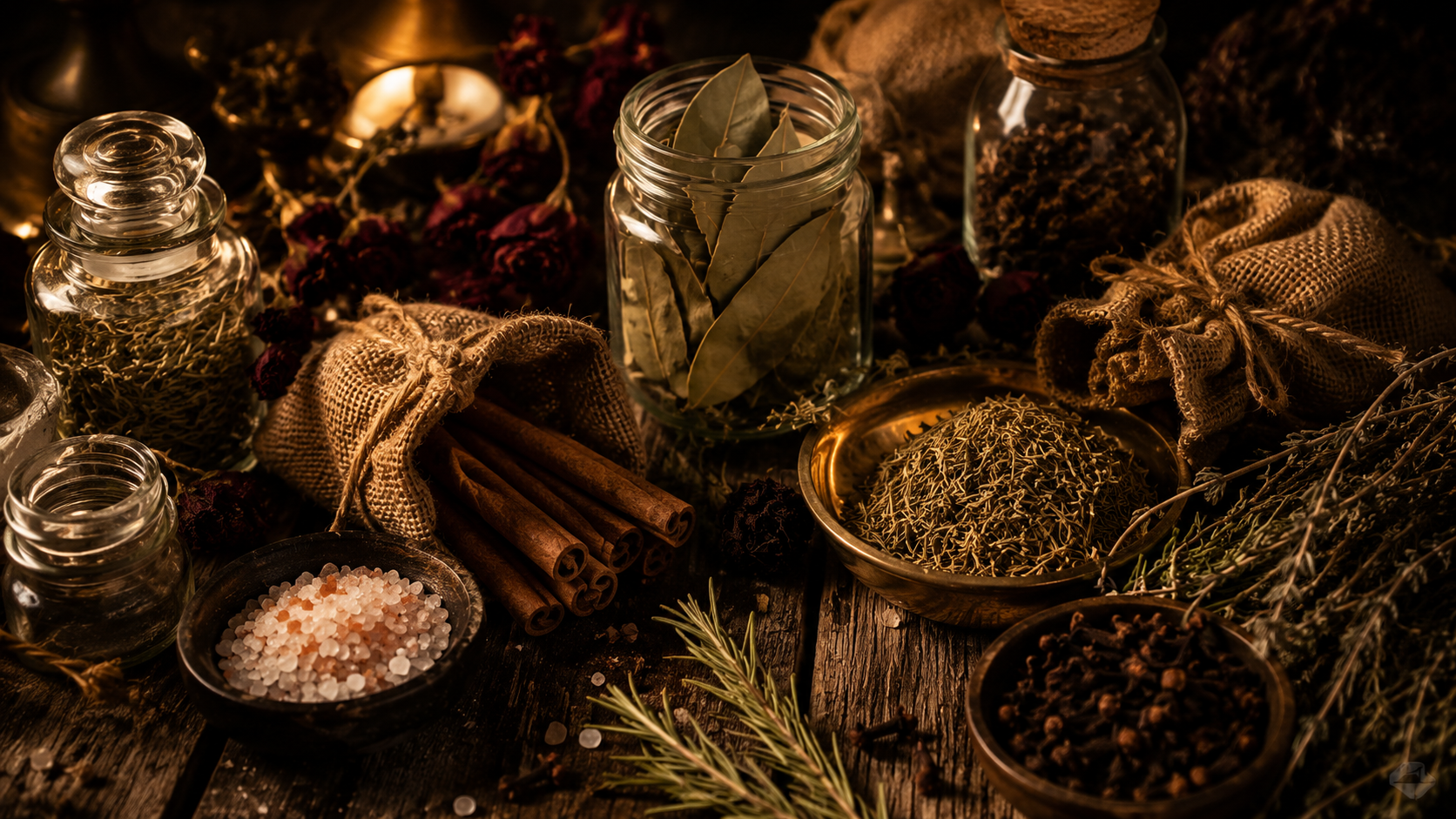
Open your spice cabinet right now. Look closely. You are probably standing in front of more magical tools than half the spell kits sold online. Cinnamon, bay leaf, salt, garlic, these are not just dinner ingredients. In Southern folk magic, they carry real, working power.
You do not need anything rare or expensive to start. You need to know what you already have and what it can do. This list breaks down the most common kitchen herbs used in Hoodoo and Southern folk magic, so you can start working with intention tonight.
A kitchen magic correspondence list is a simple reference that matches common herbs and spices to their traditional spiritual uses, like protection, luck, love, or money. Once you know what each item means, your spice rack becomes a working toolkit instead of just a place to grab dinner ingredients.
What Is a Kitchen Magic Correspondence List?
A kitchen magic correspondence list is a beginner friendly chart that pairs everyday pantry herbs with the intentions they traditionally support, based on Southern folk magic and Hoodoo practice. It works like a quick lookup tool. Instead of memorizing everything at once, you check the list, find your intention, and use the matching herb.
This is different from a full academic herbal guide. It is meant to be practical and fast, something you can glance at while you are already cooking dinner.
What Is the Difference Between a Culinary Herb and a Magical Herb?
Culinary herbs and magical herbs are often the exact same plant, and the difference lies entirely in the intention behind how they are used, not the herb itself. Cinnamon in your morning coffee is just cinnamon until you add a clear intention behind it. The moment you set that intention, the same jar in your cabinet becomes a working magical tool.
This means you likely already own every ingredient you need to begin. Nothing needs to be relabeled or repurchased. It simply needs purpose.
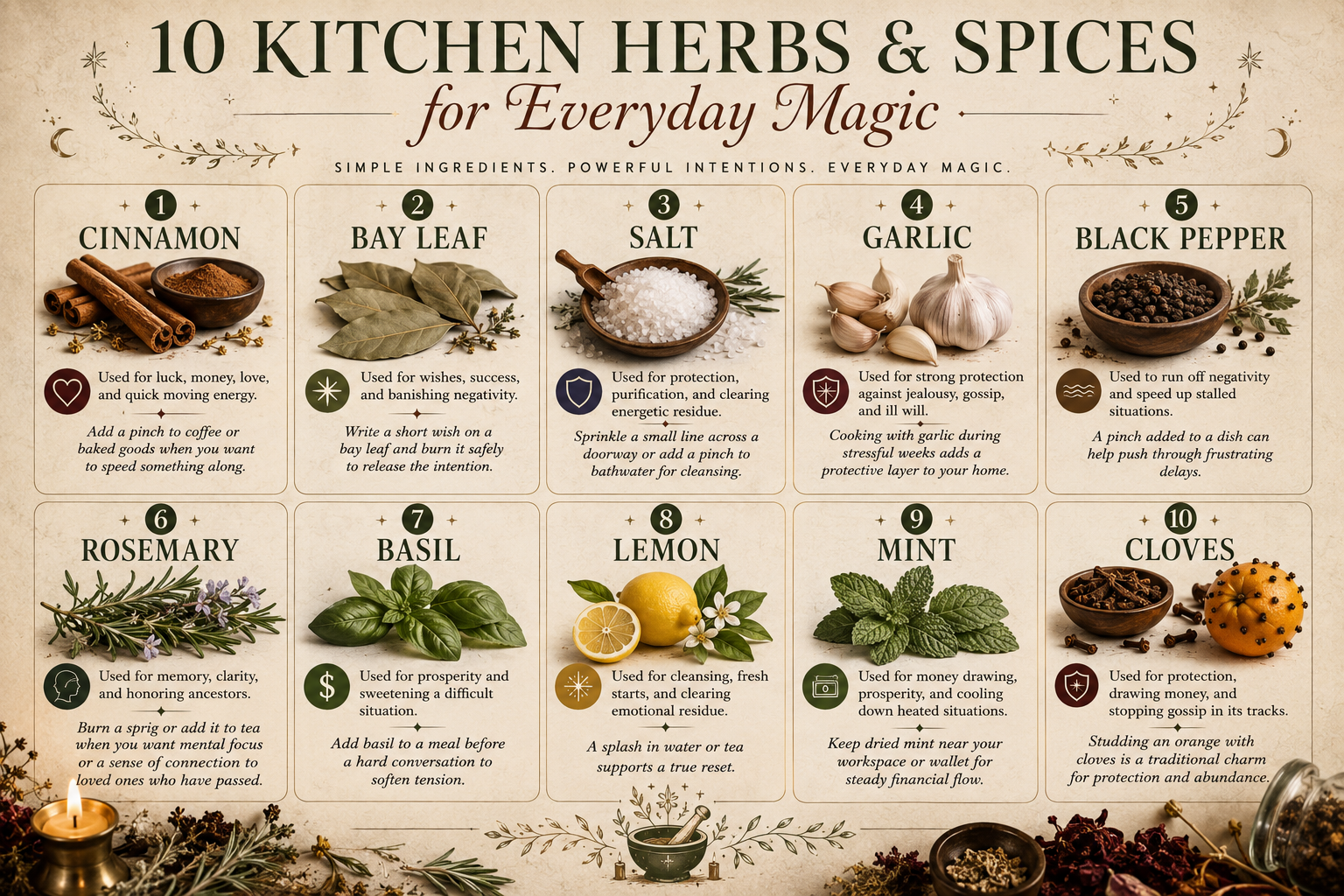
10 Kitchen Herbs and Spices for Everyday Magic
Cinnamon. Used for luck, money, love, and quick moving energy. Add a pinch to coffee or baked goods when you want to speed something along.
Bay leaf. Used for wishes, success, and banishing negativity. Write a short wish on a bay leaf and burn it safely to release the intention.
Salt. Used for protection, purification, and clearing energetic residue. Sprinkle a small line across a doorway or add a pinch to bathwater for cleansing.
Garlic. Used for strong protection against jealousy, gossip, and ill will. Cooking with garlic during stressful weeks adds a protective layer to your home.
Black pepper. Used to run off negativity and speed up stalled situations. A pinch added to a dish can help push through frustrating delays.
Rosemary. Used for memory, clarity, and honoring ancestors. Burn a sprig or add it to tea when you want mental focus or a sense of connection to loved ones who have passed.
Basil. Used for prosperity and sweetening a difficult situation. Add basil to a meal before a hard conversation to soften tension.
Lemon. Used for cleansing, fresh starts, and clearing emotional residue after conflict. A splash in water or tea supports a true reset.
Mint. Used for money drawing, prosperity, and cooling down heated situations. Keep dried mint near your workspace or wallet for steady financial flow.
Cloves. Used for protection, drawing money, and stopping gossip in its tracks. Studding an orange with cloves is a traditional charm for protection and abundance.
You do not need to use all ten right away. Choose the two or three that feel most relevant to what you need this week.
Two Bonus Pantry Items Worth Knowing
Ginger. Used for speed, courage, and adding power behind any other herb it is paired with. A small amount stirred into tea can help push a stuck situation forward.
Honey. Used for sweetness, smoothing over conflict, and drawing love or favor. A spoonful added to tea or a dish can soften a tense conversation before it happens.
Both of these pair easily with the herbs listed above and are almost always already sitting in a kitchen cabinet.
How Do I Use Cinnamon in Kitchen Magic?
You use cinnamon in kitchen magic by adding it with clear intention to food or drink, most often for luck, money, or love, while holding your specific goal in mind as you stir it in. A simple method is sprinkling cinnamon into your morning coffee while stating an intention out loud, like calling in a fast financial win or an easier day ahead.
Cinnamon works quickly compared to many other herbs, which is why it shows up so often in luck and money correspondences. A small amount, used consistently, tends to work better than a large amount used only once.
How Do I Combine More Than One Herb Safely in a Single Dish?
You combine herbs safely by choosing items that support the same overall intention, rather than mixing herbs meant for opposite outcomes in one working. Cinnamon and basil pair well for prosperity. Salt and rosemary pair well for protection and ancestral connection. Avoid combining something meant to speed things up, like black pepper, with something meant to calm things down, like mint, unless you have a clear reason for wanting both effects together.
When in doubt, keep it simple. Two well matched herbs will always outperform five conflicting ones.
Why Do Certain Herbs Feel More Powerful to Me Than Others?
Certain herbs may feel more powerful to you because of personal memory, scent association, or an intuitive pull that is just as valid as traditional correspondence, especially in folk practice built on lived experience. If rosemary always reminds you of your grandmother, that connection adds real personal power on top of its traditional meaning.
Trust this response. Southern folk magic was never meant to be practiced from a book alone. It grew out of real relationships between people and the plants they used every day.
Should I Buy Special Magical Herbs, or Can I Use What Is Already in My Pantry?
You can absolutely use what is already in your pantry, since most traditional kitchen magic correspondences are built around common, easy to find herbs rather than rare or specialty ingredients. Southern folk magic grew out of resourcefulness, using what was on hand rather than what was expensive or hard to source.
If you ever want to expand into less common roots or herbs later, that is a personal choice, not a requirement. Your kitchen cabinet is already a complete starting toolkit.
How Do I Know Which Herb Is Right When Several Seem to Fit My Intention?
It is common to find more than one herb that seems to match what you need. When this happens, notice which one you are physically drawn to reach for first. That small, instinctive pull often matters more than picking the option that sounds the most impressive on paper. Folk magic rewards the practitioner who trusts her own hands, not just the one who memorizes the longest list.
A Simple Ritual Using This List
Here is a short ritual to try tonight using anything from the list above.
Choose one intention, like calm, protection, or a small financial win
Pick the herb from the list that matches your intention most closely
Hold the herb in your hand for a moment and state your intention clearly
Add it to a simple meal or drink while continuing to focus on that intention
Eat or drink slowly, letting the intention settle into your body
Write down what you used and how you felt afterward
This ritual takes less than ten minutes and requires nothing you do not already own.
[LINK TO: Distance Reiki Session]
Common Mistakes When Using a Correspondence List
Trying to use every herb on the list in one single working
Choosing an herb because it sounds powerful instead of because it matches the actual intention
Forgetting to set a clear intention before adding the herb to food
Assuming a bigger amount of an herb automatically means stronger results
Ignoring personal intuition in favor of only following the list exactly
A short, focused working beats a crowded, unclear one every time.
Building Your Own Expanded List Over Time
As you get comfortable with these ten herbs, you can slowly add others, like rue for strong protection, patchouli for money and love, or angelica root for warding off harm. There is no rush. A full, complex herbal practice is built the same way any skill is built, one small, consistent step at a time.
Keep a simple notebook nearby as you experiment. Note which herbs you reach for most often and which ones feel most aligned with your own intentions. This personal record becomes more valuable than any printed list, because it reflects your own lived practice.
A Few Notes on Sourcing and Storing Your Herbs
Fresh herbs and dried herbs both carry real power, so do not feel like you need to grow your own garden to practice properly. Dried herbs from your regular grocery store work just as well as anything sold in a specialty metaphysical shop, especially when you add clear intention on your end. Store your working herbs somewhere you will actually see them, like a small jar near your stove, rather than tucked away and forgotten in the back of a cabinet.
If a recipe calls for an herb you do not have on hand, do not stress over finding the exact match. Look at the intention behind the missing herb, then choose the closest one from your own shelf. Folk magic has always adapted to what was actually available, not what was ideal on paper.
Your Kitchen Is Already Stocked for Magic
You do not need a trip to a specialty shop to start real kitchen magic. You need the herbs already sitting in your cabinet and a willingness to use them with intention instead of habit. Every jar on your shelf has a history and a purpose far older than the label on the front.
If you want a full, organized reference that goes beyond this beginner list, with deeper correspondences, timing, and rituals included, the Southern Folk Magic Correspondence Guide was built to be your next step.
Ready to turn your spice rack into a working toolkit? Grab the Southern Folk Magic Correspondence Guide and start your first intentional meal tonight.