

Kitchen Magic and the Mind: The Great Mother and Hearth-Keeper Archetype Explained
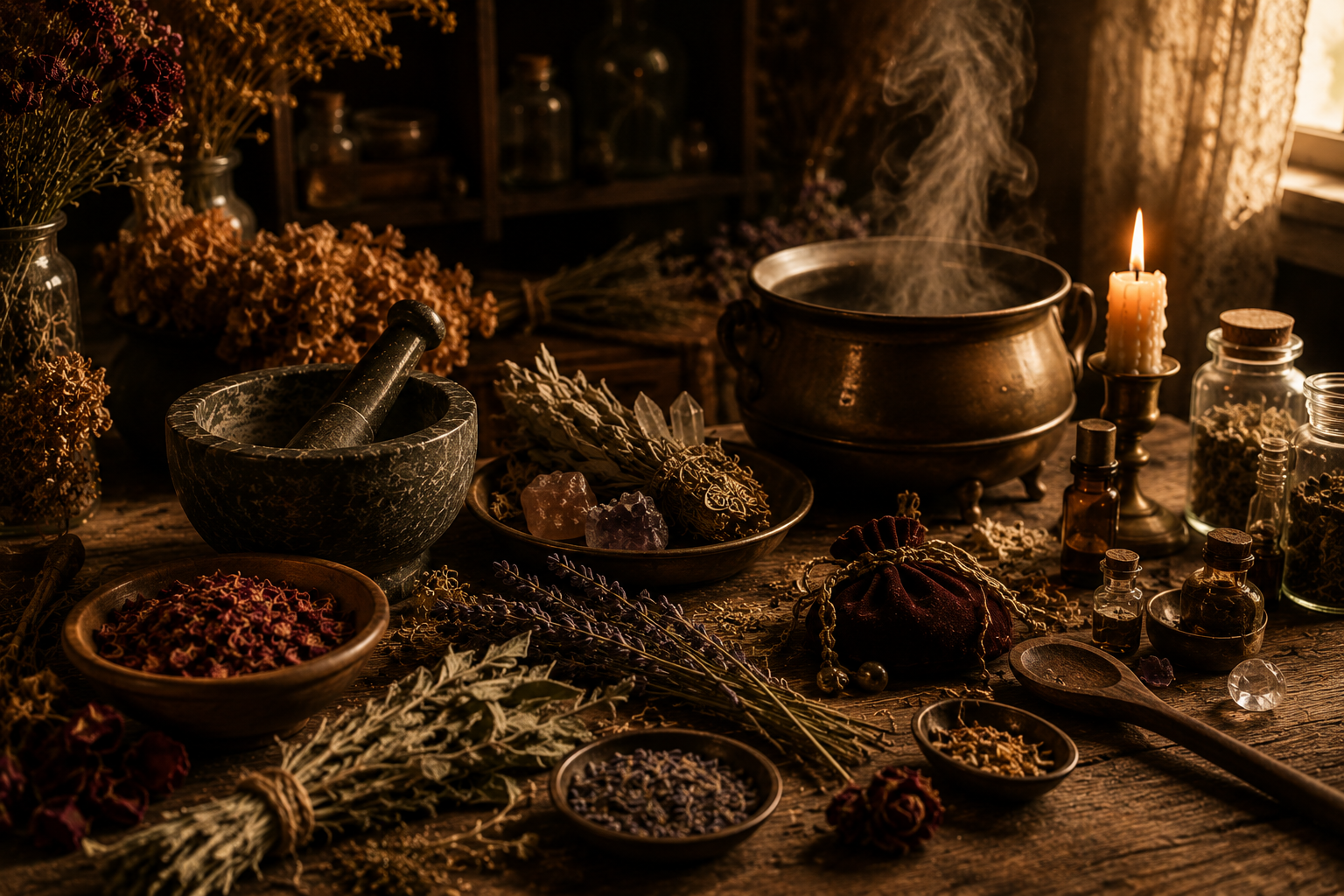
There is a reason you feel calm the moment your hands start moving in the kitchen. There is a reason a simmering pot settles your chest faster than a deep breathing app ever could. This is not just comfort food logic. It runs deeper than that, straight into the oldest parts of your psyche.
Psychologist Carl Jung called this pattern the Great Mother archetype, one of the most powerful images living inside the human mind. In folk magic, we often call her the hearth-keeper. Same energy, different language. Once you understand her, kitchen magic stops feeling like a hobby and starts feeling like something ancient waking back up inside you.
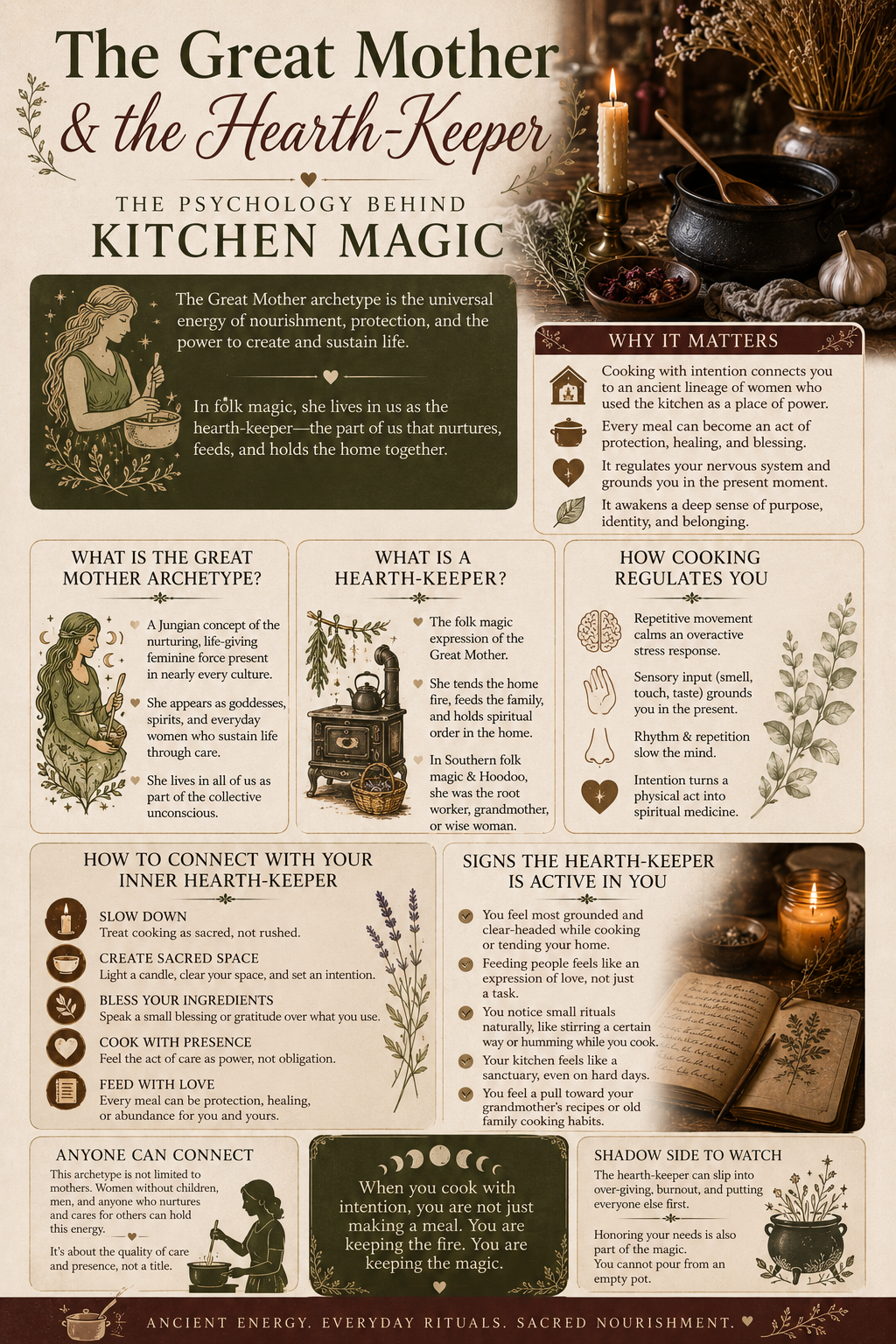
The Great Mother archetype is a universal psychological pattern representing nourishment, protection, and the power to create and sustain life, and it shows up in kitchen magic through the hearth-keeper, the part of you that nurtures, feeds, and holds a home together. Understanding her helps explain why cooking with intention can feel so emotionally powerful.
What Is the Great Mother Archetype?
The Great Mother archetype is a concept from Jungian psychology describing a universal, deeply rooted image of the nurturing, life giving feminine force present across nearly every culture and mythology. She shows up as goddesses, as protective spirits, and as ordinary women who hold their households together through steady, repeated acts of care.
Jung believed this archetype lives inside all of us, regardless of gender, as part of the collective unconscious. She is not just your literal mother. She is a pattern, a psychological force that can be called on, worked with, and understood more deeply.
What Is a Hearth-Keeper Archetype?
The hearth-keeper archetype is the folk magic expression of the Great Mother, representing the woman, or the part of a woman, who tends the home fire, feeds the family, and holds spiritual order inside the household. In Southern folk magic and Hoodoo tradition, this figure was often the root worker, the grandmother, or the quiet woman who kept the family's spiritual practices alive through cooking and daily ritual.
She is not passive. The hearth-keeper holds real power. Every meal she prepares with intention becomes an act of protection, healing, or blessing for the people she feeds.
How Does Cooking Regulate My Nervous System?
Cooking regulates your nervous system through repetitive physical movement, grounding sensory input like smell and touch, and a sense of control over a small, manageable task, all of which calm an overactive stress response. Chopping, stirring, and kneading give your hands something steady to do while your mind settles.
This is not a coincidence or a small side effect. Your body responds to rhythm and repetition the same way it responds to rocking or slow breathing. Kitchen magic simply adds intention on top of a nervous system response that was already working in your favor.
How Do I Connect With My Inner Hearth-Keeper Through Kitchen Magic?
You connect with your inner hearth-keeper by slowing down while you cook, treating the process as sacred instead of rushed, and allowing yourself to feel the caretaking role as a source of power instead of obligation. Try lighting a candle before you start a meal. Say a small blessing over your ingredients. Let the act of feeding yourself or others feel intentional, not automatic.
This does not require a big ritual. It requires presence. The hearth-keeper archetype awakens the moment you stop treating cooking as a chore and start treating it as a practice.
Signs the Hearth-Keeper Archetype Is Active in You
You feel most grounded and clear headed while cooking or tending your home
Feeding people feels like an expression of love, not just a task on your list
You notice small rituals naturally, like always stirring a certain way or humming while you cook
Your kitchen feels like a sanctuary, even on hard days
You feel a pull toward your grandmother's recipes or old family cooking habits
If several of these sound like you, the hearth-keeper archetype is already alive in your daily life, whether you have named her or not.
Why Do I Feel Most Like Myself When I Am Cooking or Caring for My Home?
You likely feel most like yourself in this role because the hearth-keeper archetype taps into a deep, ancestral sense of purpose, safety, and identity that feels more stable than roles built around performance or approval. Caretaking through cooking connects you to something bigger than a single task. It connects you to generations of women who found meaning and power in the exact same role.
This feeling is real and valid. It becomes something to watch closely only when it starts replacing your own needs entirely, which is where the shadow side of this archetype comes in.
Can Anyone Connect With This Archetype, Not Just Mothers?
Yes. The Great Mother and hearth-keeper archetypes are psychological patterns, not literal roles tied only to biological motherhood. Women without children, men, and anyone who tends a home or nurtures the people around them can carry this energy. What matters is the quality of care and presence brought to the role, not a specific title or life circumstance.
How Is This Different From People Pleasing?
The hearth-keeper archetype and people pleasing can look similar on the surface, since both involve caring for others. The difference sits underneath. The hearth-keeper cares from a full, grounded sense of self, while people pleasing cares from fear of rejection or conflict. One fills you. The other quietly empties you, even when the actions look almost identical from the outside.
The Shadow Side: The Devouring Mother
Jung was clear that every archetype carries a shadow. The Great Mother is no exception. Her shadow is sometimes called the devouring mother, the version of nurturing that turns into over giving, self erasure, or using caretaking to avoid your own needs and boundaries.
This shadow often shows up in empaths and sensitive women who learned early that their worth came from what they gave others. If cooking and caretaking start feeling less like power and more like obligation, resentment, or exhaustion, that is a sign the shadow side is running the show instead of the healthy archetype.
Is It Healthy to Feel Most Powerful in a Caretaker Role, or Is That a Trauma Pattern?
It can be both, and the difference lies in whether the caretaking comes from choice and joy or from fear, guilt, and self abandonment. A healthy hearth-keeper cooks and cares because it feels meaningful and freely chosen. A trauma driven pattern cooks and cares because it feels unsafe to stop, or because your worth feels tied entirely to how much you give.
If you are unsure which one is happening for you, ask yourself a simple question. Does this caretaking feel like power, or does it feel like proof you have to earn your place. Your honest answer tells you almost everything.
Reclaiming the Hearth-Keeper as Power, Not Obligation
The goal is not to abandon this archetype. The goal is to reclaim her on your own terms. Southern folk magic never asked women to disappear into caretaking. It asked them to use the kitchen as a place of real spiritual authority, not quiet self sacrifice.
Here is a simple practice to shift the energy back toward power.
Before cooking, pause and ask what you need, not just what others need
Choose one meal this week to cook only for yourself, with full intention
Say a small phrase out loud, like "This is my power, not my burden"
Notice if the task feels lighter once it is chosen instead of assumed
Let yourself stop before exhaustion, even if the task is not finished
Small shifts like these retrain your nervous system to associate the kitchen with power again, instead of quiet depletion.
Ancestral Threads in the Hearth-Keeper Archetype
This archetype rarely lives in isolation. Many women feel her most strongly through ancestral veneration, sensing the presence of grandmothers and great grandmothers whenever they cook a familiar dish. This is not imagination. Jung believed archetypes carry across generations through the collective unconscious, which lines up closely with how folk magic understands ancestral memory living inside everyday practice.
When you cook with intention, you are not only feeding your body. You are participating in a lineage of women who understood the kitchen as sacred ground long before modern psychology gave it a name.
Bringing the Archetype Into Daily Practice
You do not need a formal ritual to work with this archetype every day. Small, consistent choices matter more than occasional big gestures.
Notice when you are cooking from joy versus cooking from guilt
Let one meal a week be entirely about your own nourishment
Use a correspondence guide to add real intention instead of rushing through meals on autopilot
Speak to your kitchen the way you would speak to a trusted elder, with respect, not resentment
Rest without guilt once the meal is finished
Over time, these small choices reshape your relationship with caretaking from the ground up.
What If I Do Not Feel Connected to This Archetype at All?
That is completely normal, and it does not mean anything is wrong with you. Some women connect more strongly with other archetypes, like the warrior, the seer, or the wild woman, and that is just as valid. The hearth-keeper is simply one thread among many. If cooking and caretaking do not feel meaningful to you right now, other parts of Southern folk magic, like tarot or protection work, may resonate more strongly, and that is worth honoring instead of forcing.
Your Kitchen Was Never Just a Kitchen
The hearth-keeper archetype has lived inside women for generations, long before psychology gave her a clinical name and long before folk magic gave her a spiritual one. She is not asking you to disappear into service. She is asking you to remember your own power while you nurture the people and space around you.
When you understand both the light and shadow sides of this archetype, cooking becomes something entirely different. It becomes a conscious practice of power, presence, and ancestral connection, held in your own two hands.
If you want to deepen this practice with real structure behind it, the Southern Folk Magic Correspondence Guide helps you turn everyday cooking into intentional, empowered ritual.
Ready to reclaim your kitchen as a place of power instead of quiet exhaustion? Grab the Southern Folk Magic Correspondence Guide and start cooking with intention tonight.